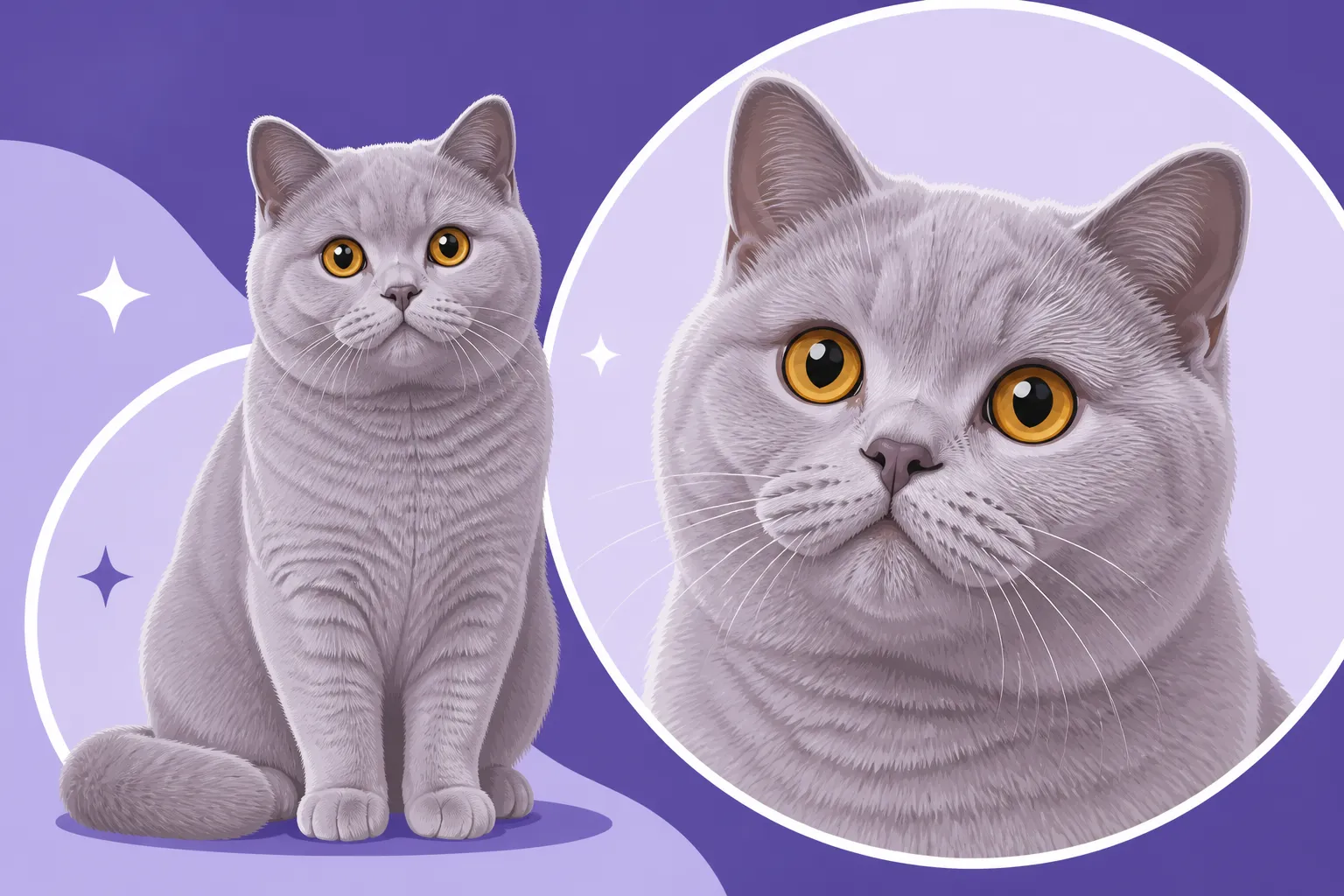
What a Lilac British Shorthair Looks Like
A lilac British Shorthair can look grey at first glance, especially in a photograph or dim room. The clue is its softer, warmer cast: the coat often has a pale lavender-pink tone rather than the cooler blue-grey of a blue British Shorthair. This guide explains the color, the features to check, and how lilac kittens may change as they grow.
What a lilac British Shorthair looks like
The coat is pale, warm grey with a lavender cast
“Lilac” is a cat-coat color term, not a promise that the cat looks visibly purple. A lilac British Shorthair usually appears as a light, muted grey with a subtle pinkish or lavender warmth. In certain lighting, the color may look almost beige-grey; in cooler light, it can seem more obviously lilac.
The effect is generally soft and understated. You are unlikely to see a bold purple hue. Instead, look for a gentle warmth across the coat, especially when comparing the cat side by side with a blue British Shorthair. Blue tends to read as a cooler, clearer grey, while lilac often looks paler and more powdery.
Lighting can make identification tricky. A phone photo taken indoors may flatten the coat’s undertones, while bright daylight can reveal them more clearly. Screens also vary in how they display color. If you are evaluating a kitten, try to view it in natural, indirect light rather than relying on a heavily edited image.
Color should look even across the body
A lilac British Shorthair is generally expected to have an even-looking coat color. The head, back, sides, legs and tail should read as parts of the same overall shade, although lighting and the way fur lies can make areas appear slightly different in a photograph.
Look beyond the first impression of the cat’s back. Check the face, chest, belly and tail as well. A patchy appearance, obvious stripes or strong contrasting areas may mean you are looking at a different color or pattern, or that the kitten’s coat has not yet settled into its adult appearance. A breeder can explain how the kitten is registered and what color its pedigree records.
Color descriptions can vary between casual listings and formal breed terminology. If you are comparing lilac with other British Shorthair colors, Which Colors a British Shorthair Comes In offers a broader look at the palette. For judging one cat in person, though, the overall impression matters more than a single snapshot or label.
The nose and paw pads can support the color impression
The nose leather and paw pads may have a muted pinkish-lilac appearance that complements the coat. These details can help you assess the overall coloring, but they should not be treated as a stand-alone test. A kitten’s pigmentation, lighting and individual variation can all affect what you see.
The eyes are another detail people notice. British Shorthairs may have different eye colors depending on coat color and the cat’s age, so eye color alone does not confirm that a cat is lilac. A young kitten’s eyes can also change as it matures. For the breed’s overall facial structure and proportions, see What Shape a British Shorthair's Head Should Be.
How lilac differs from similar British Shorthair colors
Lilac versus blue
Blue is the comparison that causes the most confusion. Both colors are grey-based, and both can appear lighter or darker depending on the coat, lighting and camera settings. The difference is usually in the undertone: blue often looks cooler or more slate-like, while lilac tends to have a warmer, pinkish-grey cast.
If you are choosing between the two, avoid making the call from a single image. Look at the cat’s coat in daylight and compare the color across several areas. A blue cat may appear pale in bright light, and a lilac cat may look simply grey in a shadowed room. A breeder familiar with the litter can clarify how the kitten’s color is recorded.
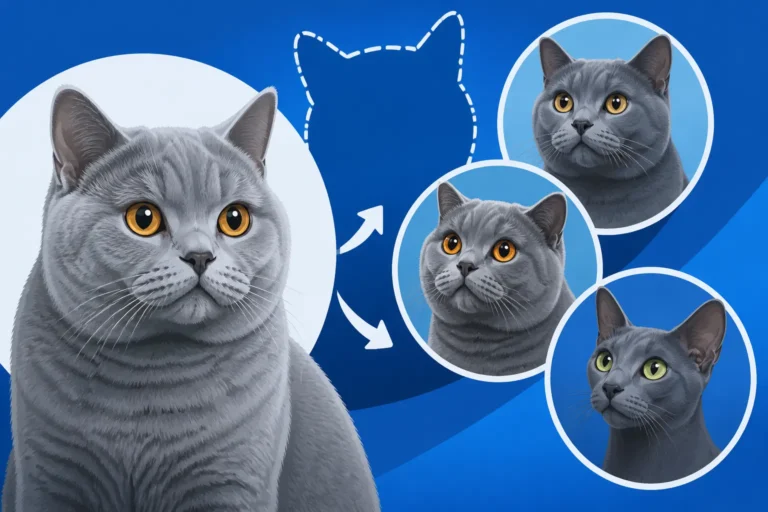
The two colors also share the same basic British Shorthair build. A round face, dense coat and sturdy body do not tell you whether a cat is lilac or blue. For a closer look at the blue color, see What a Blue British Shorthair Looks Like. If you are comparing breeds as well as shades, How a British Shorthair Differs From a Russian Blue explains why two grey-looking cats can have quite different overall appearances.
Lilac versus chocolate, cream and fawn
Lilac is associated with a diluted chocolate color, which helps explain why its appearance is softer and paler than a rich chocolate coat. It is not simply a light brown cat, however; the visible effect is usually a muted grey-lavender tone rather than an obvious brown one.
Cream is typically warmer and more buff or creamy in appearance. Fawn can also look light and soft, but its tone may appear more beige than the cool-warm grey impression people associate with lilac. These distinctions can be subtle, particularly in kittens or poor-quality photos, so coat color is best assessed in person and with reliable pedigree information.
A listing’s wording is not always enough to settle the question. Ask the breeder what color is recorded for the kitten and whether the parents’ colors are known. A responsible breeder should be willing to explain the description rather than relying on a color name as a selling point.
| Feature | Lilac | Blue | Cream or fawn |
|---|---|---|---|
| General impression | Pale grey with a soft pinkish or lavender warmth | Grey with a cooler, often slate-like cast | Creamy or beige-toned, usually warmer overall |
| How photos can mislead | May look plain grey or beige-grey | May look lighter or darker depending on light | May appear nearly white or pale grey in some lighting |
| Helpful comparison | Look for a subtle warm undertone | Look for a cooler grey impression | Look for a more clearly creamy or beige tone |
| Best way to confirm | Check the coat in natural light and ask about recorded color | Compare in the same lighting as other cats | Ask the breeder to explain the recorded color |
How the coat and body shape affect the look
The British Shorthair’s dense coat softens the color
A British Shorthair’s coat is dense and stands away from the body, giving the cat its rounded, plush appearance. On a lilac cat, that volume can make the color look hazy or velvety rather than flat. As the cat turns or moves, light falls differently on the thick coat, so the shade may seem to shift slightly from one angle to another.
That plush outline can also make color comparisons harder. Fur is not a smooth painted surface: individual hairs catch light, and the undercoat can affect the overall impression. Learn more about the breed’s characteristic texture in What a British Shorthair's Coat Is Like and Why a British Shorthair's Coat Feels Crisp. The coat is meant to look dense and springy, not silky and close-fitting.
Routine grooming helps keep the coat clean and comfortable, but it does not change a cat’s genetic color. A suitable comb can lift loose hair without flattening the coat. When comparing grooming tools in a local shop or on Chewy, check that the tool is appropriate for a short, dense coat rather than choosing a harsh deshedding tool simply because the cat looks fluffy. The aim is to remove loose fur gently, not strip the coat.
If you are browsing grooming options on Chewy, product descriptions can help you compare comb shapes and intended uses, but the cat’s comfort matters more than the label. Start with brief, calm sessions and stop if the cat becomes distressed. A gentle grooming routine may be especially useful during seasonal shedding, when loose hairs can collect in the undercoat.
The color does not define the breed’s build
A lilac coat does not make a British Shorthair a different type of cat from a blue, black or tabby British Shorthair. The breed’s body is typically sturdy and rounded, with a broad head, full cheeks, short-to-medium legs and a thick tail. Coat color is only one part of the appearance.
It is easy to focus so much on the unusual shade that other features get overlooked. If you are assessing a kitten, consider its overall structure and how it is being raised, not just whether the coat photographs beautifully. A dramatic color description cannot tell you about the cat’s health, temperament or care needs.
The breed’s coat can take time to develop its mature density and finish. A young cat may look less plush than an adult, and its shade may appear different as the coat grows in. For more on that development, see How Long a British Shorthair's Coat Takes to Come In and How a British Shorthair's Coat Differs From a Plush Coat.
What to check when meeting or choosing a lilac kitten
Look in natural light and ask clear questions
If possible, see the kitten in person in a bright room with indirect daylight. Look at the coat from several angles, and check the face, body, legs and tail rather than judging from one patch. If an in-person visit is not possible, ask for recent, unfiltered photos taken in natural light.
Ask the breeder how the kitten’s color is recorded and whether they can explain the difference between lilac and blue in that particular litter. You can also ask to see the kitten with its mother or littermates, which may make the coat’s undertone easier to compare. A breeder who knows the litter should be able to discuss the color without making exaggerated promises about rarity or value.
Pay attention to the kitten’s general condition too. The eyes should be clear, the coat should look clean, and the kitten should seem appropriately alert for its age and surroundings. Color alone is not a health check. If you want a fuller guide to appearance across the breed, A British Shorthair Comes in More Colors Than You Think can help put lilac in context.
Treat color as appearance, not personality or a health guarantee
There is no reliable way to predict a British Shorthair’s temperament from a lilac coat. Individual personality is shaped by many factors, including genetics, early handling and the cat’s environment. A color label should not be used to promise that a kitten will be especially cuddly, calm or suitable for a particular household.
The coat color also does not guarantee that a cat is healthy or well bred. Ask about the kitten’s veterinary care, its parents, the breeder’s practices and the records they can provide. Give yourself time to consider whether the breed’s needs and temperament suit your home rather than letting a distinctive color rush the decision.
Finally, remember that color perception can be surprisingly subjective. Two people may describe the same cat as grey, lavender-grey or pale taupe, especially under different lights. A thoughtful description combines the visible shade with the cat’s documented color and a clear understanding that lilac is a subtle coat color—not a vivid purple.
Coat color does not determine a British Shorthair’s personality. If you are wondering whether the shade has any bearing on behavior, see Whether Coat Color Changes a British Shorthair's Nature.
Disclaimer
This article is for general informational purposes only and does not constitute professional advice. Laws, prices and regulations vary by location and change over time. Consult a qualified professional for guidance on your specific situation.