What a Blue British Shorthair Looks Like
A blue British Shorthair can look almost silver in bright daylight and deep charcoal in a dim room, which makes it easy to wonder whether you are seeing the right color. This guide explains the breed’s blue-gray coat, typical eye color, sturdy shape, and features that distinguish a blue British Shorthair from other gray cats.
The blue British Shorthair coat
Why the coat looks blue
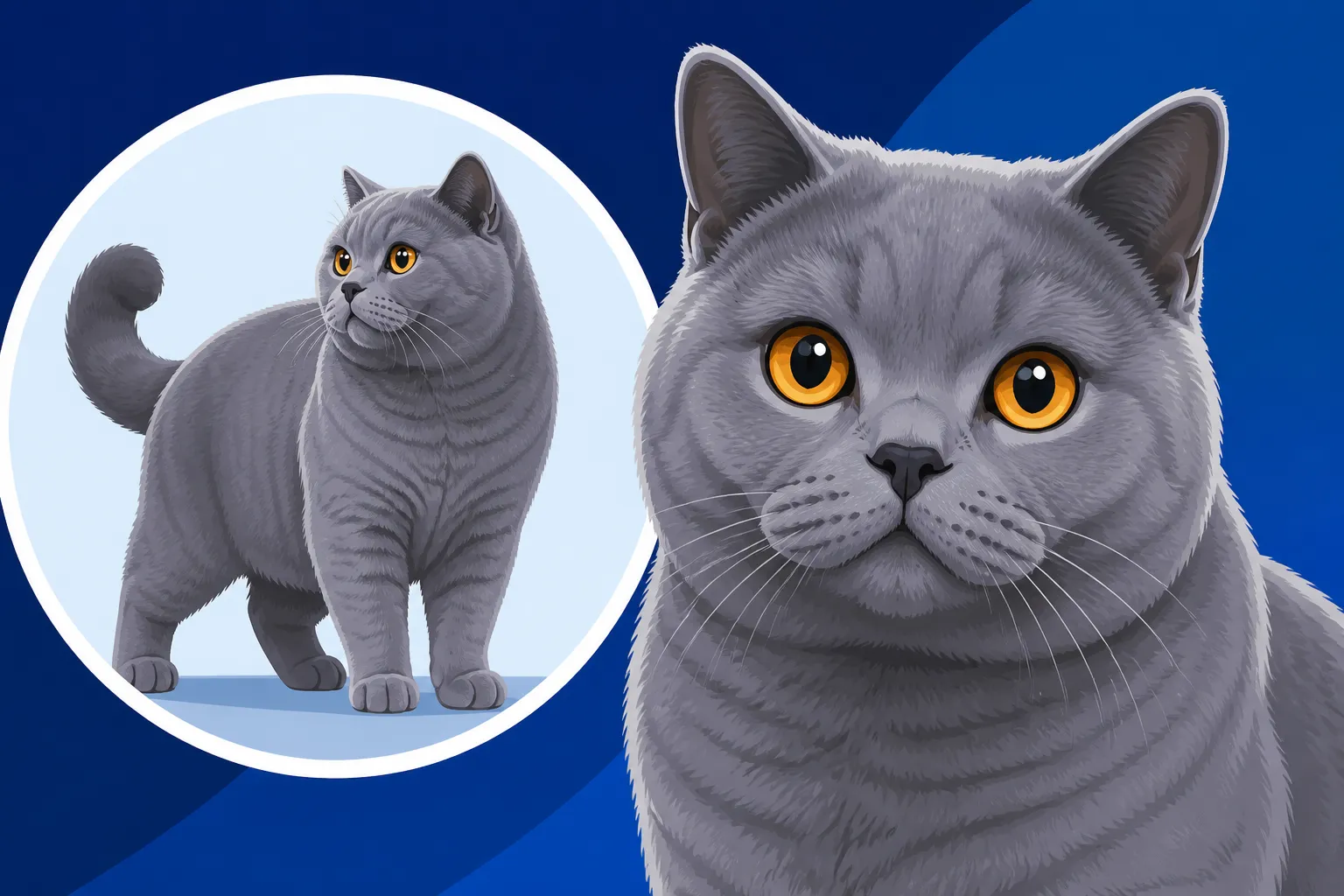
“Blue” is the traditional cat-fancy term for a soft gray coat. It does not mean the fur is truly blue like the sky; in different lighting, it may look slate, silver-gray, or a deeper charcoal. The color comes from diluted black pigment, and a well-defined blue British Shorthair usually appears evenly colored across the body.
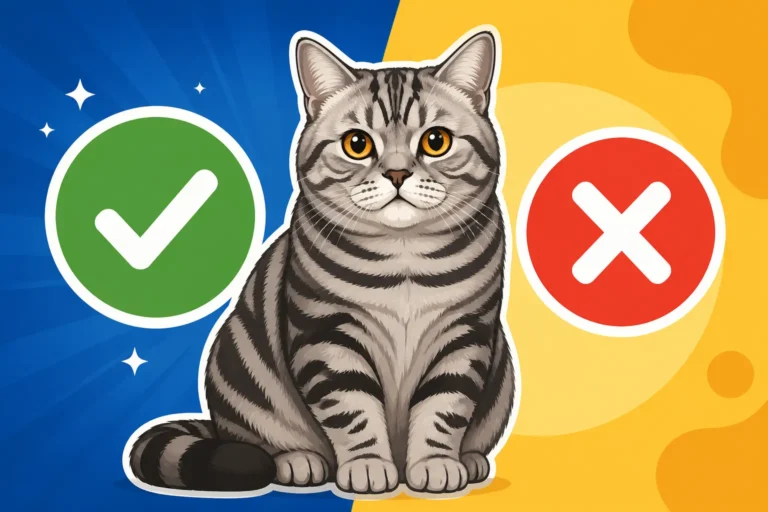
The coat should look solid rather than striped or patched. Individual hairs can seem lighter at the roots or tips when you part the fur, but obvious tabby markings or a white patch may mean the cat has a different pattern or color classification. Lighting, age, and the coat’s condition can all affect how the blue appears in a photo, so a single picture is not always a reliable color guide.
Blue is one of the breed’s most recognizable colors, but it is only one of many. The famous gray look has become so closely associated with the breed that people sometimes use “British Blue” as though it were a separate breed. It is a blue-colored British Shorthair, not a distinct breed. For context on how that familiar image became so popular, see Why the Blue Became the British Shorthair Everyone Pictures.
Texture and density matter as much as color
A British Shorthair’s coat is short, dense, and plush, with a springy feel. It tends to stand away from the body rather than lie sleekly against it. That thick coat helps create the breed’s rounded, teddy-bear appearance, especially around the cheeks, neck, and body.
A blue British Shorthair should not look longhaired or silky. Its coat may feel especially thick during seasonal shedding, when loose undercoat can collect on furniture and clothing. Regular gentle combing helps remove loose hair without roughing up the coat. If you are putting together basic grooming supplies, a suitable metal comb is the kind of everyday item you can compare at a local pet shop or Chewy. Avoid assuming that a more aggressive deshedding tool is automatically better; the goal is to remove loose fur without damaging the coat.
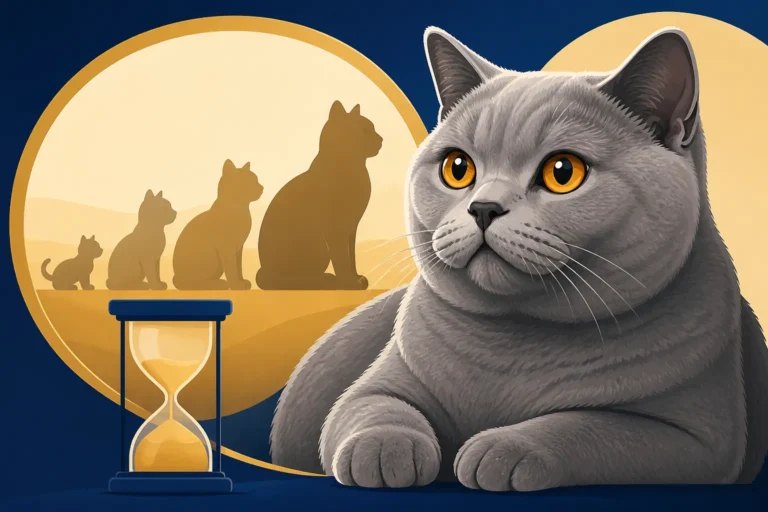
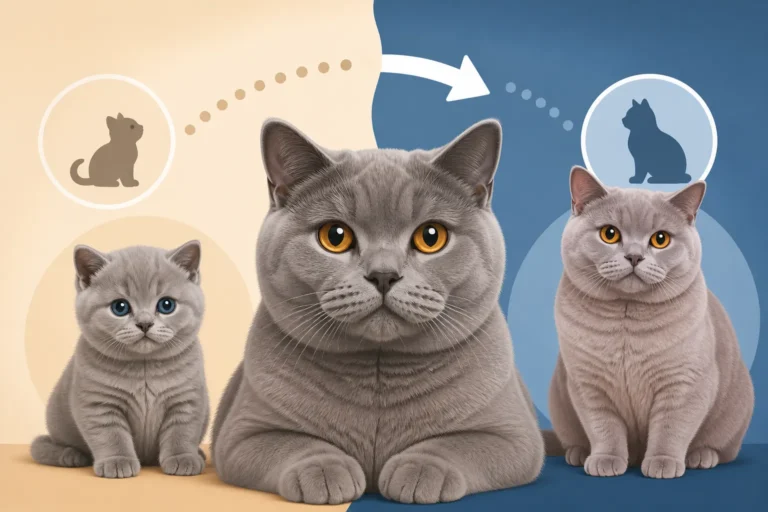
Blue kittens can look softer or less evenly colored than adults, and their coat may change as they mature. A kitten’s appearance is not always a perfect preview of the finished adult coat, so ask about the parents and the breeder’s color descriptions if you are trying to understand how the kitten may look later. For a broader comparison of the breed’s coat shades, see Which Colors a British Shorthair Comes In.
Face, eyes, and other identifying features
The round face and full cheeks
The classic British Shorthair face is broad and rounded, with full cheeks, a short nose, and small, rounded ears set apart on the head. The overall impression should be balanced rather than extremely flat-faced. The eyes are large and round, which contributes to the breed’s open, expressive look.
Adult males often develop especially prominent cheeks and jowls, but the feature is not limited to males, and it does not appear fully in every kitten. A young British Shorthair may have a narrower face that gradually fills out as the cat matures. The rounded head is one part of a whole-body type, not a single feature that proves a cat’s breed. See The Round Head and Copper Eye a British Shorthair Is Judged On for more about those characteristic features.
The blue coat often makes the eyes stand out. Many blue British Shorthairs have copper, gold, or deep amber eyes, creating a strong contrast with the gray fur. Eye color can vary, and kittens’ eyes may change as they grow. If you are comparing eye shades across coat colors, Which Eye Colors a British Shorthair Has covers the broader range.
Nose leather and paw pads
A blue British Shorthair commonly has a blue-gray nose and paw pads that harmonize with the coat. These details may be easy to miss in a quick photograph, especially if the lighting is warm or the cat’s paws are tucked under its body. They can help complete the overall picture, but they should not be used alone to identify a breed.
Color descriptions can also be confusing when breeders, registries, or online listings use different wording. A seller may call a cat “blue,” “gray,” or “British Blue,” while describing essentially the same coat color. If a listing uses a color label that seems inconsistent with the kitten’s visible markings, ask the breeder to explain the registered color and pattern rather than relying on a casual nickname.
A photo can also make nose and paw-pad colors look darker or pinker than they are in person. Ask for clear, natural-light pictures if you are trying to assess a kitten’s coloring, and remember that a photograph cannot establish pedigree. Breed documentation and the cat’s overall features matter more than a single color detail.
Body shape and how to recognize the breed
A compact, sturdy build
A blue British Shorthair should have a solid, muscular build, a broad chest, and a substantial body. The legs are relatively short and strong, and the paws are round. The tail is thick at the base and tapers to a rounded tip. Together, these features give the cat a compact, balanced look rather than a long, fine-boned silhouette.
The plush coat can make the cat appear bigger than it is, and the breed’s naturally sturdy build can make it difficult to judge body condition by sight alone. A healthy British Shorthair should not be mistaken for an overweight one simply because it has a broad frame and dense fur. Body shape, mobility, and a vet’s assessment are more useful than trying to judge by the roundness of the face or coat. For more detail on proportions and size, see What a British Shorthair Weighs and How Big It Gets.
| Feature | Typical blue British Shorthair appearance | What can cause confusion |
|---|---|---|
| Coat color | Even blue-gray, sometimes appearing lighter or darker with the light | Photos may make gray fur look silver, charcoal, or nearly black |
| Coat texture | Short, dense, plush, and slightly springy | A sleek gray coat may belong to a different breed or a mixed-breed cat |
| Eyes | Often copper, gold, or amber in adults | Kitten eye color may change as the cat matures |
| Face | Round head, full cheeks, short nose, and rounded ears | A round face alone does not confirm breed |
| Body | Broad, muscular, compact, with sturdy legs | Thick fur can make body condition hard to assess |
| Nose and pads | Often blue-gray to match the coat | Lighting and photographs can distort the apparent shade |
Distinguishing a British Shorthair from other gray cats
Many domestic cats have gray coats, and coat color alone cannot tell you that a cat is a British Shorthair. A pedigree British Shorthair is identified through its documented lineage and breed characteristics. Shelter cats and mixed-breed cats can have similar coloring and rounded faces without being purebred.
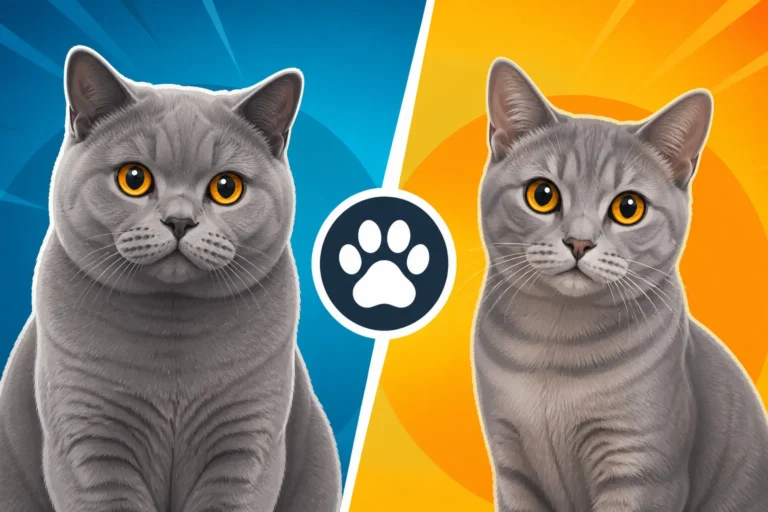
A Russian Blue is a common point of comparison because it also has a blue-gray coat. In general, a Russian Blue is more fine-boned and elegant in outline, with a wedge-shaped head and green eyes as an adult. The British Shorthair is usually more compact and substantial, with a rounder head and often copper or gold eyes. Individual cats vary, so these are broad visual distinctions, not a substitute for pedigree records. See How a British Shorthair Differs From a Russian Blue for a closer comparison.
If you are trying to identify a cat you have met or adopted, consider the entire picture: coat texture, head shape, body structure, eye color, and any available history. A gray cat with a round face may resemble a blue British Shorthair without having the same lineage. How to Tell a British Shorthair From a Moggy explains why appearance alone can be misleading.
Caring for the blue coat and setting expectations
Keeping the coat tidy
A short coat is not a no-maintenance coat. The dense undercoat can shed, and loose hairs may be more noticeable on dark clothing or pale furniture. A gentle combing routine can help, particularly during heavier seasonal shedding. Keep sessions calm and brief at first; some cats prefer a few minutes at a time rather than a long grooming session.
If loose fur becomes a nuisance around the home, a washable throw on a favorite chair and a lint-removal tool can make everyday cleanup easier. Chewy is one place owners may compare basic grooming and cleaning supplies, alongside local pet retailers. Focus on the tool’s suitability for a short, dense coat rather than choosing by appearance or marketing claims.
Notice changes in the coat, too. A sudden dull, greasy, or unkempt appearance can signal that grooming is becoming difficult or that the cat is not feeling well. Extra shedding can be normal at certain times, but bald patches, skin irritation, or a marked change in grooming habits are reasons to contact a veterinarian.
What to look for when viewing a kitten or adult
When meeting a blue British Shorthair, look at the cat in natural light and give it time to move around. A curled-up cat may hide its body proportions, while a flash photograph can flatten the coat’s texture and distort the eye color. Notice whether the coat appears consistently blue-gray, whether the body looks sturdy and balanced, and whether the face has the breed’s characteristic rounded outline.
Ask the breeder or rescue organization what is known about the cat’s background. A responsible breeder should be able to explain the kitten’s registration, parentage, and health history; a rescue may only be able to share the information available to them. If the kitten’s coat has visible stripes, white areas, or a markedly different color, ask how those features are classified rather than assuming the cat is a solid blue.
If you are choosing a cat based mainly on appearance, remember that color does not predict temperament. A blue coat does not make a cat calmer, more affectionate, or easier to handle than another British Shorthair. Spend time learning about the individual cat and the breed’s general needs. To understand the range of coat colors and patterns, revisit Which Colors a British Shorthair Comes In and Why Blue Is the Only British Shorthair Color People Know.
Setting realistic expectations about the look
The familiar blue British Shorthair image is a useful starting point, not a guarantee that every cat will look identical. Some adults have a lighter, silvery cast; others look deeper gray. The coat can seem different under warm indoor bulbs, in direct sunlight, or in a phone photograph. Differences in age and individual build also influence the overall impression.
A kitten may take time to develop the full cheeks, dense adult coat, and substantial body associated with the breed. It is reasonable to ask how the parents look as adults, but no single kitten photo can promise an exact finished appearance. Focus on healthy development and sound care rather than expecting the cat to match a stylized portrait.
For owners buying grooming basics, Chewy or another pet retailer can be a convenient place to compare combs and coat-care supplies; choose gently and adjust based on how your cat responds. And if you are still deciding whether a blue-gray cat is truly a British Shorthair, prioritize reliable background information over color alone. The coat is distinctive, but the breed’s rounded structure, dense plush fur, and documented lineage together tell a fuller story.
Disclaimer
This article is for general informational purposes only and does not constitute professional advice. Laws, prices and regulations vary by location and change over time. Consult a qualified professional for guidance on your specific situation.