How Long a British Shorthair Takes to Reach Full Weight
A British Shorthair can look like a grown cat well before its body has finished filling out. That slow development makes it easy to mistake normal growth for excess weight—or to worry that a young cat is too small. This guide explains when British Shorthairs typically reach adult size, how to track healthy growth, and when a change on the scale deserves a vet’s attention.
When a British Shorthair reaches full weight
Growth is gradual, not a sudden switch to adult size
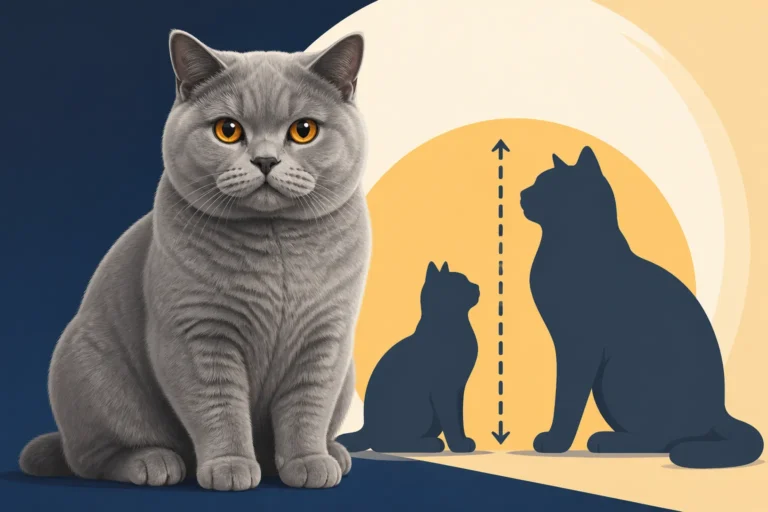
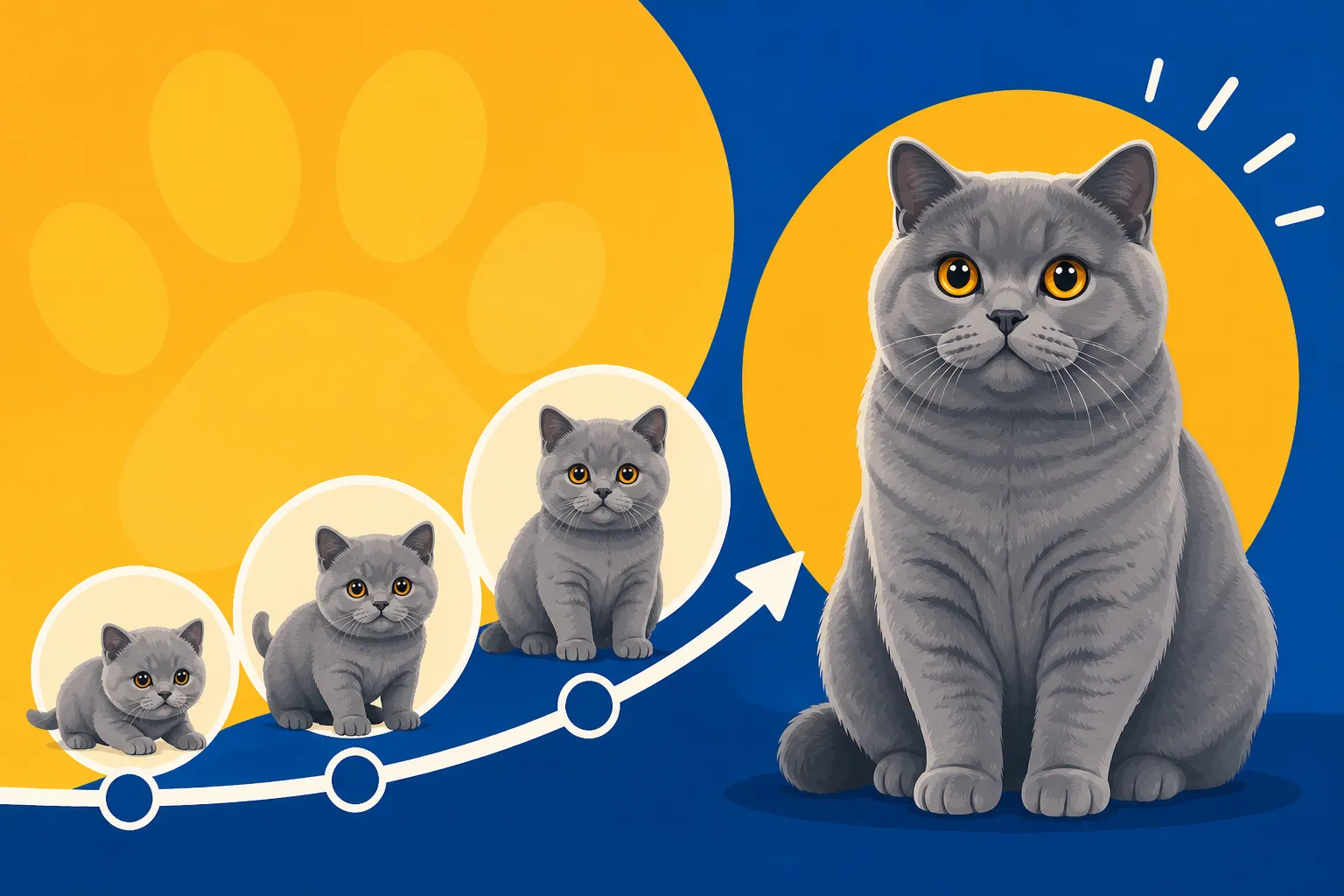
British Shorthairs are slow-maturing cats. Many reach something close to their adult height and length by around a year, but their bodies can keep gaining muscle and filling out for several more years. A cat may look broad and sturdy before its frame and overall build have finished developing.
For many British Shorthairs, adult size becomes more apparent around age three. Some—particularly males—may continue to fill out until around four or five. That does not mean a healthy cat should steadily gain weight for all those years. A mature cat can become broader and more muscular without becoming overweight, while an increase in body fat is not a normal requirement of breed development.
There is no exact birthday when every British Shorthair reaches full weight. Genetics, sex, diet, neutering status, activity, and health all influence the pace of growth. Use age as context, not as a reason to ignore what your cat’s body condition is telling you.
Adult weight varies from cat to cat
A single “correct” weight can be misleading. British Shorthairs differ in frame size, and males are often larger than females. A naturally substantial cat may be healthy at a weight that would be excessive for a smaller-framed cat. Conversely, a cat that falls within a general breed weight range can still carry too much fat if its build is petite.
The scale is useful, but it cannot tell the whole story. A thick, plush coat and the breed’s rounded shape can make it hard to see a waist. A broad head, full cheeks, and sturdy body are part of the look, but they do not make a round belly a reliable sign of healthy development. For more context on frame and proportions, see What a British Shorthair Weighs and How Big It Gets and How Much a British Shorthair Weighs.
A veterinarian can help set a sensible target by considering your cat’s frame, muscle, age, and body condition together. If you are comparing your cat with a littermate or a photo online, remember that those comparisons may not account for different genetics, sex, or life stages.
How to tell healthy filling out from excess weight
Check body condition as well as the number on the scale
At home, gently feel along your cat’s sides. You should generally be able to feel the ribs under a light layer of tissue without pressing hard. From above, look for some narrowing behind the ribs, even if the coat disguises the outline. From the side, the abdomen should not hang heavily, though a loose flap of skin near the hind legs can be normal in cats.
The British Shorthair’s coat makes visual checks especially tricky. A cat can seem round because of dense fur, while another may have a noticeable belly that is mostly loose skin. Hands-on checks are more informative than judging a silhouette. If you are unsure what you are feeling, ask your vet to show you how to assess body condition during a routine appointment. How to Score a British Shorthair's Body Condition and How to Feel a British Shorthair's Ribs offer more detail.
| What you notice | What it may mean | What to do |
|---|---|---|
| Steady growth with ribs still easy to feel | Normal development may be continuing | Keep recording weight and body condition |
| Fast weight gain with a less visible waist | Extra body fat may be accumulating | Review portions and speak with your vet |
| Little or no gain while your kitten is still growing | Could reflect individual growth, food intake, or a health issue | Discuss the trend with your vet |
| Unplanned weight loss at any age | May signal illness or another problem | Arrange veterinary advice promptly |
| A stable adult weight and consistent body condition | Often a reassuring pattern | Continue regular monitoring |
A trend matters more than one reading. For example, a young cat that gains gradually while staying active and maintaining a healthy body condition may simply be growing. A cat whose weight climbs quickly over a short stretch, while its waist becomes harder to feel, may be gaining fat rather than just filling out.
Keep a simple weight record
Weigh your cat under similar conditions each time, such as on the same scale and at roughly the same time of day. If your cat will not stand still on a household scale, you can weigh yourself while holding the cat, then subtract your own weight. The result may be less precise, but repeating the same method can still help reveal a trend.
Write down the date, weight, and any relevant changes, such as a food switch, neutering, reduced activity, or illness. A basic kitchen or bathroom scale may not be suitable for a small kitten if it does not register small changes reliably. Some owners look for pet scales through retailers such as Chewy, but the key is to choose a stable scale that gives consistent readings—not to chase tiny day-to-day fluctuations.
At a regular checkup, bring your notes or a photo of them. A record can help your vet distinguish slow, expected growth from a pattern that needs attention. For practical home-weighing tips, read How to Weigh a British Shorthair at Home.
What affects a British Shorthair’s growth and weight
Genetics, sex, and neutering all play a part
A kitten’s parents can give clues about its likely adult build, but they cannot guarantee a particular size. Two healthy cats from the same litter may develop at different rates and end up with different adult weights. Growth can also look uneven: a kitten may seem to stretch out before it gains the mature breadth associated with the breed.
Males are often larger and may take longer to fill out than females, but there are plenty of individual exceptions. Neutering can also affect energy needs and appetite. Some cats need fewer calories after the procedure, and a previously suitable portion may become too much if activity or energy requirements change. That is a reason to review feeding with your vet, not to put a growing cat on a restrictive diet without guidance.
A promise that a kitten will reach a particular weight should be treated cautiously. Adult size depends on more than breed label or appearance at a few months old. How Much a Male British Shorthair Weighs and How Much a Female British Shorthair Weighs explain some of the differences without turning them into rigid targets.
Food and activity influence the number on the scale
British Shorthairs are often calm, and many are not inclined to exercise themselves with long bursts of activity. If food is always available, an indoor cat may eat more than it needs while moving relatively little. The resulting weight gain can be mistaken for the breed’s natural sturdy build, particularly when a plush coat hides the waist.
Measure food rather than estimating by eye, and include treats when thinking about the whole daily intake. Follow feeding guidance as a starting point, then adjust with your veterinarian based on growth, body condition, and the food’s calorie content. Fresh water and regular play matter too. Short, engaging play sessions can suit a cat that loses interest quickly; toys, food puzzles, and climbing options can add movement without expecting your cat to become an athlete.
If you buy food measuring tools or enrichment supplies through a retailer such as Chewy, remember that the product itself does not determine the right feeding plan. Check the food’s label and ask your vet about portions, especially when changing from kitten food to adult food. See How Many Calories a British Shorthair Needs a Day for more on managing intake.
How to support healthy growth at each stage
During kittenhood, focus on steady development
A growing kitten needs an appropriate complete kitten diet, regular meals, and routine veterinary care. Avoid trying to make a kitten grow faster by offering oversized portions or extra treats. Rapid weight gain is not a shortcut to a larger, healthier adult cat; it can simply create excess body fat while the skeleton and muscles are still developing.
Keep track of appetite, energy, and general condition as well as weight. A kitten that is eating normally and developing steadily may not match another kitten’s numbers week by week. But poor appetite, repeated vomiting or diarrhoea, unusual tiredness, or a clear halt in growth should not be written off as being “a small British Shorthair.” Ask a veterinarian to assess the kitten rather than changing food repeatedly on your own.
As your cat approaches adulthood, ask when to transition from kitten food to an adult diet. The timing should suit the individual cat’s development and health, rather than relying only on its appearance. What a British Shorthair Kitten Should Weigh at Six Months can help put one milestone in context.
In adulthood, aim for a stable, healthy condition
Once your cat has matured, the goal is usually a healthy, fairly stable weight—not continued growth. Weighing regularly helps you notice gradual changes that can be difficult to spot beneath the coat. If the number rises while your cat’s waist becomes less defined and ribs become harder to feel, review the feeding routine and arrange veterinary guidance.
If weight loss is recommended, make it gradual and supervised. Cats should not be crash-dieted or have food sharply reduced without professional advice. Sudden or unplanned weight loss can be a warning sign, and cats that eat too little can develop serious health problems. Your vet can help distinguish an appropriate weight-management plan from a change that needs diagnostic investigation.
It is also worth checking weight when your cat’s routine changes—after neutering, a move, a shift in activity, or a switch in food. A slow-maturing breed can still become overweight, and a mature cat can still lose weight unexpectedly. Either change deserves attention when it is persistent or unexplained.
When to contact your veterinarian
Contact your vet if your cat is losing weight without an obvious reason, gaining rapidly, eating or drinking much more or less than usual, or showing a change in energy, grooming, or mobility. A young cat that seems not to be growing as expected also deserves an individual assessment. These signs do not automatically mean something serious is wrong, but they are more useful to investigate than to guess about at home.
A sudden inability to urinate, difficulty breathing, collapse, or marked weakness calls for urgent veterinary care. For less urgent concerns, bring your weight record and note when you first noticed the change. Details such as appetite, litter-box habits, food portions, and recent life changes can help your vet decide what to check.
The most helpful question is not simply, “Has my British Shorthair reached its full weight?” It is, “Is my cat growing or maintaining weight at a healthy pace for its own body?” A veterinarian can help answer that using the scale, a hands-on body-condition assessment, and your cat’s health history.
Disclaimer
This article is for general informational purposes only and does not constitute professional advice. Laws, prices and regulations vary by location and change over time. Consult a qualified professional for guidance on your specific situation.