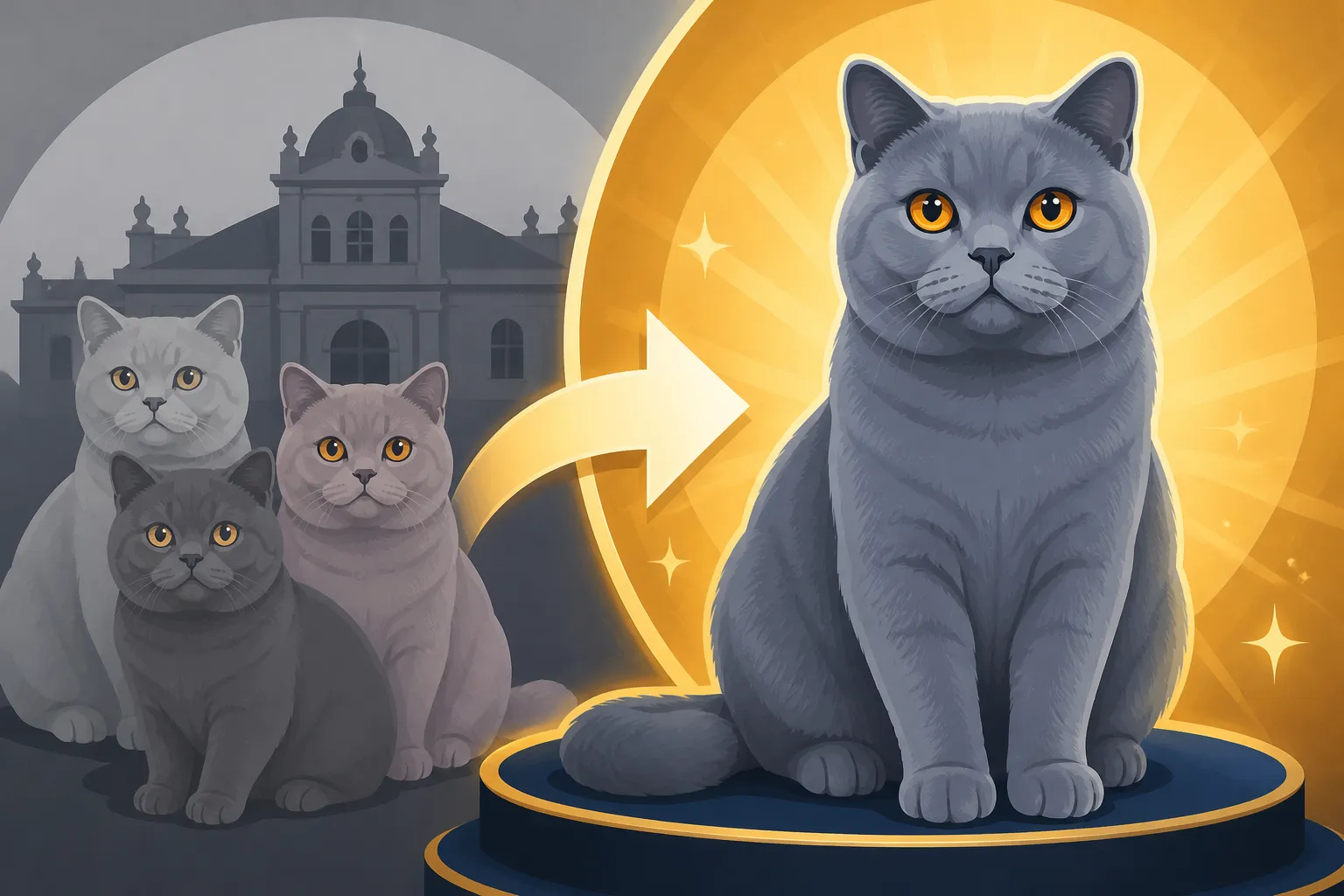
How Crystal Palace Changed British Shorthair Breeding
Before the grand halls of Crystal Palace opened their doors to felines, the ancestors of our beloved British Shorthair were simply common, everyday cats. They were the hardy, resilient mousers of Britain's farms, streets, and homes, admired for their practicality but not for any particular aesthetic standard. The idea of "breeding" them in any formal sense simply didn't exist for these humble creatures. This guide delves into how that groundbreaking event at Crystal Palace irrevocably transformed these ordinary domestic cats into the pedigreed British Shorthair we cherish today.
The Humble Beginnings of British Cats
Imagine the landscape of Britain in the mid-19th century. Cats were certainly present, in abundance, but they weren't the pampered pets or meticulously bred specimens we often see today. These were working animals, earning their keep by keeping vermin populations in check in barns, warehouses, and even on ships. They were valued for their utility, their ability to survive and thrive in varied environments, not for their specific fur color or the precise roundness of their eyes.
These cats, which would later be recognized as the foundation of the British Shorthair breed, were sturdy, robust creatures. They had dense, protective coats, often in tabby patterns or solid colors, which helped them withstand the often-chilly British climate. While they undoubtedly possessed the calm, independent nature that still defines the breed, it was simply seen as part of being a cat, not a distinguishing breed trait. Their history is deeply rooted in the working-class fabric of the nation, and their presence was a given, not a celebrated novelty. You could say The British Shorthair Started as a British Street Cat, and for a very long time, that's all they were.
Life as a British Farm Cat
On farms, these cats were indispensable. They were the frontline defense against rodents that threatened grain stores and livestock feed. Their days were spent patrolling fields and barns, a stark contrast to the cushioned indoor lives of their modern descendants. Survival skills, hunting prowess, and adaptability were prized above all else. A cat that brought home mice was a valuable asset, regardless of its pedigree, which, of course, didn't exist.
Their diet would have been whatever they could catch, supplemented perhaps by scraps from the farm kitchen. Health care was minimal to non-existent; only the fittest survived to pass on their genes. This natural selection process undoubtedly contributed to the hardy constitution and relatively low incidence of genetic issues we associate with the breed's foundation, although some health challenges were later introduced through outcrossing. It was a life of purpose, but far from the world of show halls and judging tables. What a British Shorthair Was Kept For on a Farm was purely functional.
The Absence of Formal Breeding
Before the Crystal Palace show, the concept of "cat breeding" as we understand it simply wasn't a thing in Britain. People didn't seek out specific "types" of cats to mate them for desired traits. Cats reproduced naturally, and kittens were often given away or found homes based on availability, not lineage or appearance. There were no breed standards, no registries, and certainly no official "British Shorthair" as a recognized entity.
The idea that a cat could be an object of aesthetic appreciation, beyond its charming companionship, was quite revolutionary. Dogs had been bred for specific purposes for centuries, but cats were largely left to their own devices. This lack of formal recognition meant that their genetic pool was vast and diverse, representing generations of natural selection rather than human intervention. It wasn't until a passionate individual stepped forward that this all began to change, moving these ordinary felines towards a future of intentional selection and definition.
Harrison Weir and the First Cat Show
The turning point for British cats, and indeed for the entire "cat fancy" as we know it, came with a visionary named Harrison Weir. Weir was an artist, a writer, and, crucially, a passionate cat lover who believed that cats deserved the same recognition and organized appreciation as dogs. He saw the beauty and distinct characteristics in the common domestic cats of Britain and envisioned a world where they could be celebrated and judged according to specific ideals.
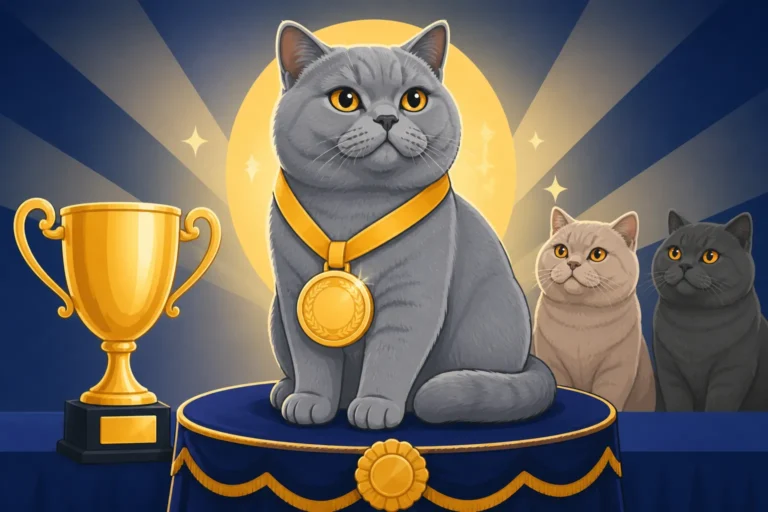
It was Harrison Weir who organized the first modern cat show at the Crystal Palace in London on July 13, 1871. This event was not merely a gathering of pets; it was a deliberate attempt to elevate the status of cats and to begin the process of defining and formalizing different breeds. His pioneering efforts laid the groundwork for cat fanciers worldwide, transforming how people viewed and interacted with their feline companions. Harrison Weir Put a British Shorthair on the Bench in 1871, and in doing so, he forever altered the trajectory of these cats.
The Event at Crystal Palace
The 1871 Crystal Palace Cat Show was an extraordinary spectacle for its time. People paid to come and see these "fancy" cats, many of which were simply beautiful examples of common domestic felines, often presented with pride by their owners. Weir himself acted as a judge, applying rudimentary standards to categorize and award prizes. The show featured a variety of cat types, but it was his focus on the native British cats that truly defined the future of the British Shorthair.
He meticulously described what he considered the ideal "British type" – a cobby body, round head, broad face, and dense, short coat. These descriptions, though not yet formalized into official breed standards as we know them today, were the very first steps towards establishing the British Shorthair as a distinct and recognizable breed. The sheer act of exhibiting cats for aesthetic judgment was revolutionary, marking the transition from utilitarian animal to a cherished companion and show animal. What Happened to the British Shorthair at Crystal Palace was the spark that ignited the entire cat fancy.
Harrison Weir's Vision and Influence
Weir's contribution extended far beyond simply organizing the first show. He was instrumental in writing the first official cat show rules and standards, advocating for the humane treatment of cats, and promoting the idea of distinct cat breeds. His book, "Our Cats and All About Them," published in 1889, is considered a foundational text of the cat fancy, documenting his observations and the early development of various breeds, including what he termed the "British Shorthair."
He didn't just showcase cats; he articulated why certain physical traits were desirable and how they contributed to the overall impression of a healthy, beautiful specimen. This critical step encouraged selective breeding practices, where breeders would deliberately choose cats with specific traits to produce offspring that conformed to Weir's emerging ideal. This was the dawn of conscious breeding for aesthetic rather than purely functional qualities for British cats.
The Birth of a Breed: Immediate Impact on British Shorthair Breeding
The Crystal Palace show didn't just put cats on display; it immediately conferred a new status upon the "British type" cats. Suddenly, these common felines were seen through a new lens—one of beauty, distinction, and potential. This shift in perception was monumental, transforming them from mere street cats into potential aristocrats of the feline world.
This newfound prestige ignited a passionate interest among early cat fanciers, who began to focus on preserving and enhancing the traits that Harrison Weir had so eloquently described. It moved the British Shorthair from being a regional variety of domestic cat to a breed with aspirations for national and international recognition. The show acted as a powerful catalyst, signaling the true beginning of what we now understand as British Shorthair breeding.
Establishing the Breed Standard
One of the most profound changes instigated by the Crystal Palace show was the drive to establish a formal breed standard. Harrison Weir's initial descriptions served as the blueprint. Fanciers began to identify and select cats that embodied these characteristics: the robust, "cobby" body, the full, round face, the dense, plush coat, and often, striking copper eyes. These were the hallmarks that would come to define the British Shorthair. The Round Head and Copper Eye a British Shorthair Is Judged On became central to its identity.
Breeders, no longer content with random matings, started carefully selecting breeding pairs to consistently produce kittens that conformed to these emerging standards. This wasn't just about looks; it was about creating a recognizable, uniform type that could be presented and judged consistently at future shows. The emphasis shifted from natural selection to selective breeding, with human preference guiding the evolutionary path of these cats.
The Rise of Selective Breeding
With the establishment of a nascent breed standard, selective breeding became the cornerstone of British Shorthair development. Breeders aimed to reproduce and refine the desired physical and temperamental traits. This meant choosing cats with the roundest heads, the densest coats, and the calmest dispositions. It also introduced a new layer of complexity and responsibility for breeders.
This methodical approach marked a significant departure from previous generations. No longer was a litter a random genetic lottery; it was an opportunity to further the breed's characteristics. Of course, this early period was also a learning curve, with breeders experimenting and refining their understanding of genetics and inheritance. The focus on specific desirable traits also meant recognizing and, to some extent, setting aside traits that didn't fit the emerging ideal. This formative period was essential in carving out the distinct identity of the British Shorthair.
Long-Term Legacy: Shaping the British Shorthair's Future
The ripples from that first cat show at Crystal Palace extended far beyond the exhibition hall, shaping the British Shorthair breed for generations to come. It established a framework for all future cat shows and the very concept of pedigreed cats. For the British Shorthair, it meant a long journey of refinement, challenges, and ultimately, enduring popularity.
The initial enthusiasm sparked by Weir's efforts ensured the breed's survival and development, even through difficult periods. It set a precedent for breeders to continue striving for excellence, constantly working to maintain and improve the health and conformity of their lines to the established standards. The legacy is clear: without Crystal Palace, the British Shorthair as we know it might never have formally existed.
Evolution of Breed Standards and Health Considerations
Over time, Harrison Weir's initial descriptive standards evolved into the detailed, written breed standards recognized by cat registries today. These standards specify everything from head shape and ear placement to coat texture and eye color. Modern British Shorthair breeders dedicate significant effort to producing cats that exemplify these ideals.
However, the path wasn't always smooth. The desire for specific "type" often led to limited gene pools and, in some cases, the unintentional introduction or magnification of health issues. For example, Polycystic Kidney Disease Came Into the British Shorthair With the Persians when outcrossing was done after the World Wars to rebuild the breed's numbers and enhance its "cobby" features. This highlights the ongoing balance breeders must strike between aesthetic goals and the vital importance of health and genetic diversity. Responsible breeders today prioritize extensive health screening to ensure the well-being of their lines.
| Aspect of British Shorthair | Before Crystal Palace (Pre-1871) | After Crystal Palace (Post-1871) |
|---|---|---|
| Status | Common domestic cat, working animal | Recognized breed, show animal |
| Breeding | Natural selection, random matings | Selective breeding, intentional pairings |
| Purpose | Utility (mouser, farm cat) | Aesthetic appeal, companionship, show |
| Recognition | None, indigenous population | Formal breed, documented standard |
| Value | Functional | Pedigreed, often purchased |
| Care Focus | Survival | Health, grooming, specific nutrition |
The Rise of the Cat Fancy and Global Recognition
The success of the Crystal Palace show encouraged the formation of cat clubs and organizations dedicated to specific breeds. These groups took on the responsibility of maintaining breed standards, registering cats, and organizing further shows. This institutionalization of the "cat fancy" was a direct result of Weir's pioneering event and was crucial for the long-term success of breeds like the British Shorthair.
Today, the British Shorthair is one of the most popular cat breeds worldwide, revered for its docile temperament, distinctive teddy bear appearance, and plush coat. Its journey from a common street cat to a global feline superstar is a testament to the vision of Harrison Weir and the enduring impact of that first cat show. When you see a beautiful British Shorthair lounging comfortably, perhaps on a plush cat bed ordered from Chewy, it's a direct result of that pivotal moment in 1871. The detailed care and specific nutritional needs of a modern British Shorthair, from premium food to specialized grooming tools (all readily available from retailers like Chewy), are a far cry from the self-sufficient existence of their ancestors.
The breed has faced challenges, particularly during the World Wars when breeding efforts dwindled, and outcrossing with other breeds like the Persian became necessary to revive its numbers and re-establish its type. The Persians That Rebuilt the British Shorthair After the War played a significant role in its genetic history, which also had implications for introducing new traits and potential health concerns. Despite these historical twists and turns, the foundation laid at Crystal Palace ensured that the British Shorthair persevered and thrived, becoming the beloved and iconic breed it is today. You might even find specialized foods for British Shorthairs from brands stocked on Chewy, illustrating just how far the care and attention to this breed have come.
Conclusion: A Transformative Legacy
The Crystal Palace Cat Show of 1871 was far more than just an exhibition; it was a revolution for the British Shorthair. It catapulted these previously unacknowledged domestic cats from their humble, utilitarian existence into the spotlight, laying the foundation for their formal recognition as a distinct and cherished breed. Harrison Weir's vision, brought to life in that grand Victorian hall, forever changed the relationship between humans and their feline companions, creating the world of the "cat fancy" where pedigree, beauty, and careful breeding became paramount.
From being judged solely on their mousing abilities, British Shorthairs now hold a place of honor, judged by intricate standards of type and temperament. Every show-winning British Shorthair, every beloved pet with its characteristic round face and plush coat, carries the legacy of that groundbreaking event. The journey from farm cat to feline aristocrat began at Crystal Palace, and the breed continues to thrive as a testament to that transformative moment in history.
Disclaimer
This article is for general informational purposes only and does not constitute professional advice. Laws, prices and regulations vary by location and change over time. Consult a qualified professional for guidance on your specific situation.