Harrison Weir Put a British Shorthair on the Bench in 1871
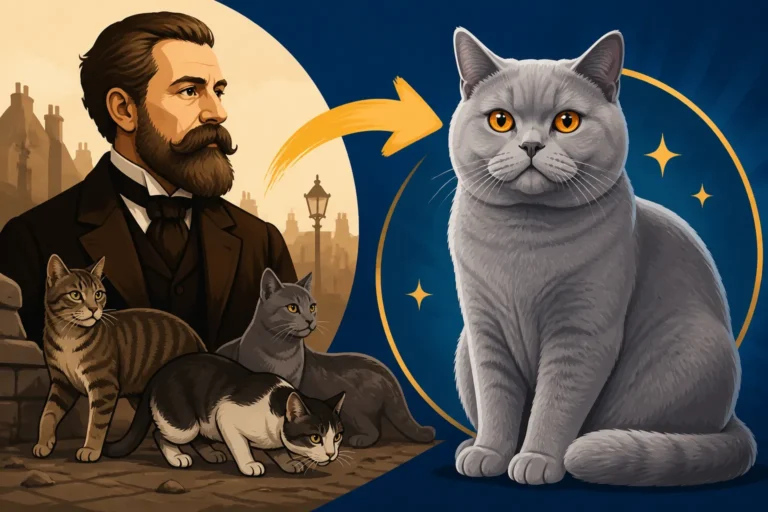
It’s easy to look at a beautiful British Shorthair today – with their plush coats, round faces, and serene disposition – and imagine they’ve always been this regal, perfectly formed breed. But the truth is, every breed has a beginning, and for our beloved British Shorthairs, that beginning was a bit less refined and a lot more… well, wild. Many of us wonder how these distinct breeds came to be, and how certain individuals shaped their destiny. This guide will dive deep into the fascinating story of Harrison Weir, the visionary who took the humble British street cat and placed it firmly on the pedigree show bench in 1871, forever changing the world of cats.
The Feline World Before Harrison Weir: A Wild West of Cats
Before the grand cat shows and the meticulous breed standards we know today, cats were largely appreciated for their practical skills rather than their aesthetic qualities or specific lineage. They were companions, certainly, but their primary roles were far more pragmatic. This era was, in many ways, the wild west of cat appreciation, where form followed function above all else.
Cats as Utility Animals
For centuries, cats earned their keep. They were the unsung heroes of barns, ships, and city streets, natural predators against rodents and other pests that threatened food supplies and spread disease. A good mouser was invaluable, its hunting prowess prized above all else. Whether it lived in a grand manor or a humble cottage, a cat's primary job was pest control. People didn't usually concern themselves with what type of fur it had or the exact shade of its eyes; if it kept the rats at bay, it was a good cat. This practical relationship meant that while cats were certainly beloved members of many households, they weren't typically seen as subjects for selective breeding or aesthetic exhibition in the way that dogs or horses were. Their value was intrinsically tied to their contribution to the household economy, making discussions of "pedigree" or "breed type" seem almost nonsensical to the average person. You can still see echoes of this sturdy, working-cat ancestry in the robust build and solid temperament of today's British Shorthair, a testament to its hardy beginnings as The British Shorthair Started as a British Street Cat.
The Concept of a "Breed" Before Formal Shows
The idea of distinct "breeds" of cats, as we understand them now, was barely a flicker in anyone's imagination. Sure, people noticed differences – a cat from overseas might have a longer coat or a different ear shape, and local cats might share certain common characteristics due to regional interbreeding. But these were more descriptive categories rather than formal, recognized breeds with established standards and documented lineages. Cats were generally lumped into broad groups like "long-haired" or "short-haired," or perhaps by their geographic origin if they seemed particularly exotic. There was no registry, no written standard, and certainly no organized effort to breed for specific traits beyond simply ensuring a healthy, effective mouser. The sheer diversity of appearances among cats was seen as natural variation, not an opportunity for structured development.
Early Cat Fanciers and Their Unstructured Enthusiasm
Despite the lack of formal structure, there were always individuals who harbored a special affection for cats, admiring their beauty, grace, and unique personalities. These early cat fanciers were enthusiasts in the truest sense, often collecting unusual or particularly striking felines. They might have a favorite tabby, a particularly fluffy specimen, or a cat with an interesting color pattern, and they'd share their admiration with friends. However, this appreciation was largely informal and personal. It lacked the collective organization, the shared goals, and the competitive spirit that would eventually define the cat fancy. There was no forum to compare notes on desired traits, no common ground for establishing what made one cat "better" than another in terms of a specific type. Their enthusiasm was a scattered collection of individual passions, waiting for a unifying force to bring it all together into something more substantial and impactful.
Harrison Weir: The Father of the Cat Fancy
In a world where cats were largely overlooked in the burgeoning pet fancy, one man dared to champion them with the same fervor and dedication typically reserved for dogs, horses, or even poultry. That man was Harrison Weir, a figure whose influence on the modern cat world is immeasurable. His vision and tireless efforts laid the foundation for everything we now associate with pedigreed cats, transforming them from mere utilitarian animals into cherished show specimens.
Weir's Artistic Background and Love for Animals
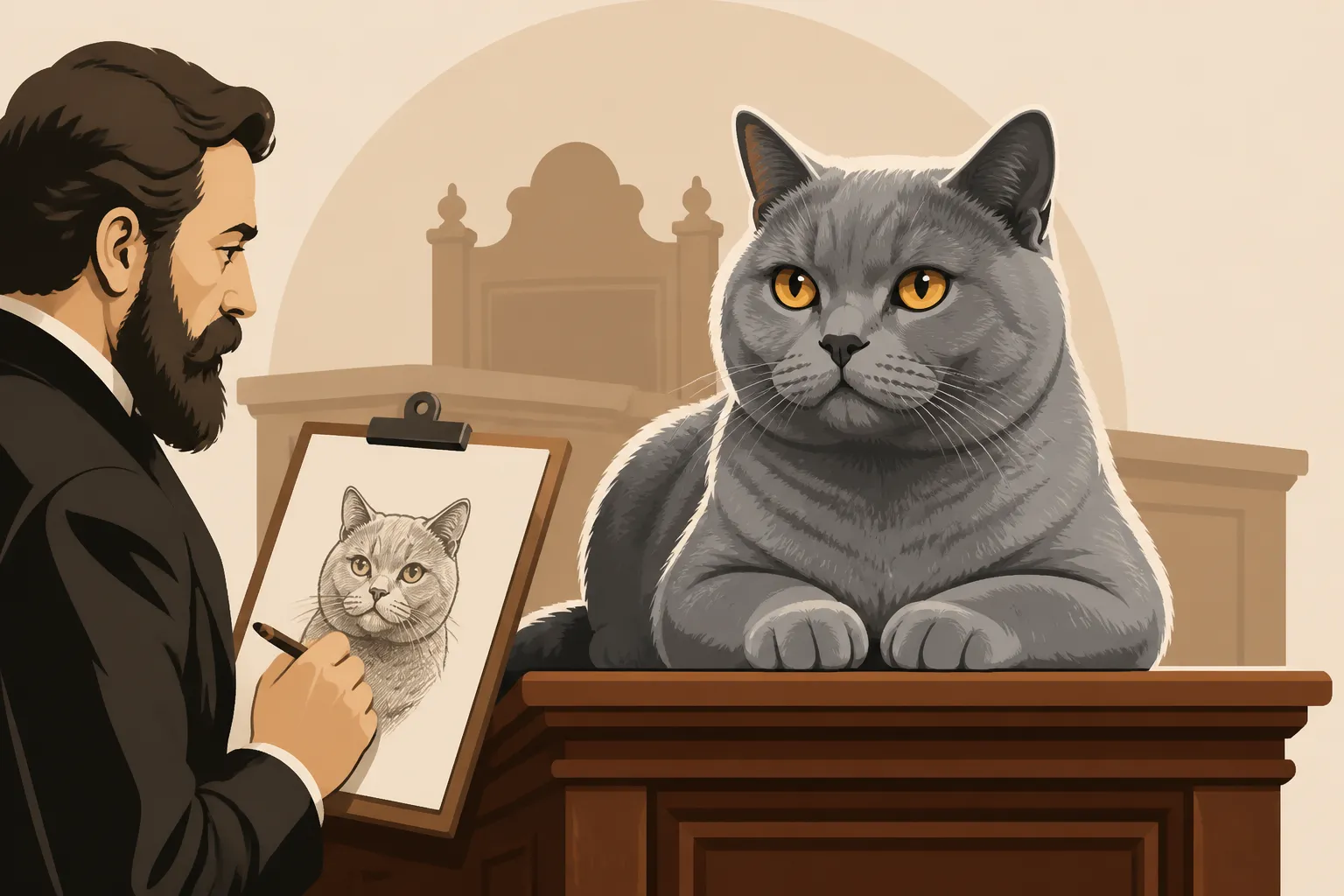
Harrison Weir was a true polymath of his time, an accomplished artist, illustrator, and writer, particularly renowned for his detailed and evocative depictions of animals. His artistic eye was not just for beauty but for the subtle nuances of form, proportion, and characteristic traits. This keen observation, honed through years of illustrating natural history, gave him a unique perspective on cats. He didn't just see a cat; he saw the potential for distinct types, for beauty in specific conformations, and for the need to preserve and celebrate these individual characteristics. Beyond his artistic talent, Weir possessed a profound and lifelong love for animals of all kinds. He was a passionate advocate for animal welfare, and his concern for the well-being and recognition of cats was deeply personal. This combination of artistic sensibility and genuine affection made him the perfect pioneer to elevate the status of cats. To understand his profound impact, you need to know Who Harrison Weir Was to the British Shorthair.
The Vision for Organized Cat Shows
In the mid-19th century, dog shows and poultry shows were already well-established, drawing crowds and fostering competitive breeding. Harrison Weir looked at this flourishing fancy and wondered, "Why not cats?" He saw no logical reason why these captivating creatures, with their diverse appearances and endearing personalities, shouldn't also have their moment in the spotlight. His vision was not merely to put cats on display, but to establish a framework for understanding, appreciating, and ultimately improving different feline types. He wanted to bring order to the chaos of "just cats," to create standards, encourage responsible breeding, and celebrate the beauty he saw in them. This was a revolutionary idea at the time, challenging centuries of perception about cats' roles in society. He envisioned a world where cats were judged on their inherent qualities, not just their mousing abilities, and where breeders could strive for excellence within defined types.
Why Cats, and Not Just Dogs or Poultry?
It's a fair question: why did Harrison Weir choose cats as his passion project when dogs and poultry already had their established fanciers? Part of it undoubtedly stemmed from his inherent love for them, but there was also a strategic element. Cats were largely an untapped frontier. While some might have dismissed them as common or unworthy of such formal attention, Weir saw immense potential. He recognized their unique charm, their varied coats and eye colors, and the distinct personalities that made them such engaging companions. Furthermore, he believed that organizing cat shows would not only elevate the animals themselves but also educate the public on their care and value. He understood that formal recognition could lead to better treatment and a greater appreciation for felines in general. For Weir, it wasn't about replacing dog or poultry shows; it was about giving cats their rightful, respected place alongside other domesticated animals in the world of competitive fancy.
The Genesis of the Crystal Palace Cat Show of 1871
Harrison Weir's vision wasn't just a pipe dream; it was a carefully cultivated plan that culminated in a historic event. He knew that for cats to gain the recognition they deserved, they needed a grand stage, a public showcase that would capture imaginations and demonstrate their intrinsic worth. The result was the monumental Crystal Palace Cat Show of 1871, an event that single-handedly launched the modern cat fancy.
Overcoming Initial Skepticism
Launching the first-ever organized cat show was no small feat. Weir faced considerable skepticism, even outright ridicule, from many quarters. Cats were, after all, often seen as common creatures, far removed from the esteemed status of dogs or the practical value of livestock. People questioned the very idea of judging cats – what would you judge them on? Their ability to catch mice? Their general aloofness? Convincing potential exhibitors, judges, and the general public that this was a serious endeavor required immense dedication and a belief in the inherent dignity of cats. Weir, however, was undeterred. He leveraged his connections within the artistic and scientific communities, tirelessly advocating for his cause, explaining his vision for breed standards and the promotion of feline welfare. His passion was infectious, and slowly but surely, he began to win over key figures who would lend their support and credibility to his groundbreaking venture.
The Venue: Crystal Palace
The choice of venue for this inaugural event was as ambitious as the concept itself: the magnificent Crystal Palace in London. Originally built for the Great Exhibition of 1851, the Crystal Palace was an architectural marvel of glass and iron, symbolizing progress, innovation, and grandeur. Holding the first cat show in such an iconic and prestigious location immediately elevated the event's status. It sent a clear message: these were not merely backyard felines, but creatures worthy of display in one of the most celebrated buildings of the era. The sheer scale and beauty of the venue provided an unparalleled backdrop for the cats, attracting a larger and more diverse audience than a smaller, less prominent location ever could have. This strategic decision by Weir ensured that the show received significant public attention and established a precedent for future cat shows to be taken seriously. It was a bold statement that declared, once and for all, that cats had arrived. This grand event significantly shaped What Happened to the British Shorthair at Crystal Palace.
Defining the Categories and Standards
One of Weir's most crucial contributions was the arduous task of defining categories and establishing the very first written standards for judging cats. Without these, the show would have been a chaotic jumble of animals with no clear basis for comparison. He spent countless hours observing cats, discussing their traits with other enthusiasts, and meticulously documenting what he considered the ideal characteristics for different types. For the emerging British Shorthair, he drew from the robust, short-haired domestic cats that were abundant in Britain, envisioning a sturdy, cobby cat with a dense coat and a round face. He distinguished between long-haired and short-haired varieties, and within the short-haired group, he began to articulate ideals for colors, coat texture, head shape, and eye color. This was foundational work, essentially blueprinting what would become the British Shorthair, giving judges a guide and breeders a goal. His efforts to standardize these categories were revolutionary, providing the structure that would allow the cat fancy to grow and flourish.
The British Shorthair's Debut: On the Bench at Crystal Palace
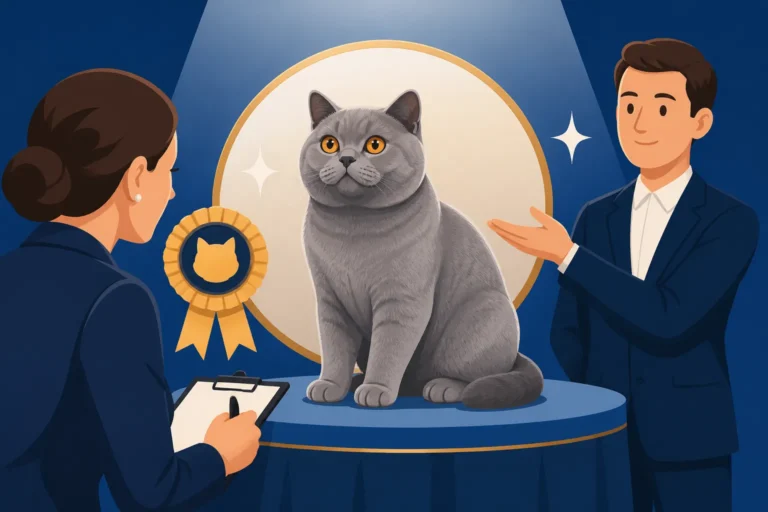
The culmination of Harrison Weir's tireless efforts arrived on July 13th, 1871. At the Crystal Palace Cat Show, a new era dawned for felines, and right at the forefront was the British Shorthair, ready for its public introduction. This was not just a cat show; it was a declaration of identity for a breed that had, until then, been an anonymous part of the British landscape.
Selecting the "British Shorthair Type" from Street Cats
Before the 1871 show, there wasn't a formal "British Shorthair" breed; there were just the sturdy, short-coated cats that roamed the streets, farms, and homes of Britain. Harrison Weir, with his artist's eye and profound understanding of animal anatomy, recognized a distinct and desirable "type" among these domestic cats. He sought out the most impressive examples – cats with strong, cobby bodies, thick, dense coats, and broad, round heads. These were the working cats, the survivors, naturally selected for their hardiness and attractive features. Weir didn't invent the British Shorthair; he identified it. He gave a name and a standard to a feline archetype that already existed in the common street cat population. He meticulously observed and selected those individuals that best embodied his ideal, envisioning a future where these characteristics could be consistently reproduced and celebrated. This process was crucial, as it demonstrated how Why Harrison Weir Built the British Shorthair From Street Cats.
The Winning British Shorthair and Its Characteristics
The first "Best in Show" winner at the 1871 Crystal Palace Cat Show was Harrison Weir's own magnificent tabby British Shorthair, a testament to his vision and keen eye. This particular cat exemplified the robust, substantial build and distinctive features that Weir championed. It possessed the characteristic short, dense, and resilient coat, a broad, round head, and powerful jowls that would later become hallmarks of the breed. While specific details about the winner's exact coloring might have faded over time, its victory solidified the notion that common British domestic cats, when selected for their best features, could stand proudly on a show bench and be admired for their inherent beauty. The recognition of this single cat set a precedent, proving that a truly magnificent specimen could be found among the ordinary and that quality and type were now paramount. To find out more about this historic win, check out Which British Shorthair Won the First Cat Show.
Immediate Impact on the Breed's Recognition
The 1871 show was a resounding success, drawing thousands of visitors and generating significant press coverage. The public was captivated by the sheer variety of cats on display, and particularly by the strong, dignified appearance of the short-haired British domestic cats that Weir had elevated to "breed" status. Overnight, the British Shorthair gained an unprecedented level of recognition. It was no longer just a generic feline but a distinct and admired "type," with enthusiasts eager to learn more about its characteristics and origins. This newfound fame sparked interest in breeding and showing these cats, setting the stage for the formal development of the breed. The show demonstrated that cats, like dogs, could be subjects of serious fancy, leading to the formation of cat clubs and the establishment of formal breeding programs, transforming the haphazard world of cat ownership into an organized and passionate community. Indeed, How Crystal Palace Changed British Shorthair Breeding profoundly.
Establishing the British Shorthair Standard: Weir's Enduring Legacy
The Crystal Palace show was just the beginning. Harrison Weir understood that for the British Shorthair to truly flourish as a breed, it needed more than just a single successful event; it required a clear, universally accepted definition. His dedication to crafting the first comprehensive breed standard is arguably his most significant and lasting legacy.
The Importance of a Written Standard
Before Weir's intervention, judging a cat was entirely subjective, based on individual preference rather than objective criteria. This made consistent breeding and fair competition impossible. Weir recognized that a written breed standard was absolutely essential. It served as a blueprint, a detailed description of the ideal specimen, outlining everything from head shape and eye color to body type and coat texture. This document provided a common language for breeders and judges, ensuring that everyone was striving for the same ideal. It guided breeding choices, helped evaluate individual cats, and provided the framework for the breed's development. Without a written standard, the British Shorthair would likely have remained a diverse collection of domestic cats, its unique characteristics diluted and lost over time. Weir's standard gave the breed its identity and its future trajectory, a testament to the fact that Which British Shorthair Standard Harrison Weir Wrote was so important.
Key Characteristics Defined by Weir
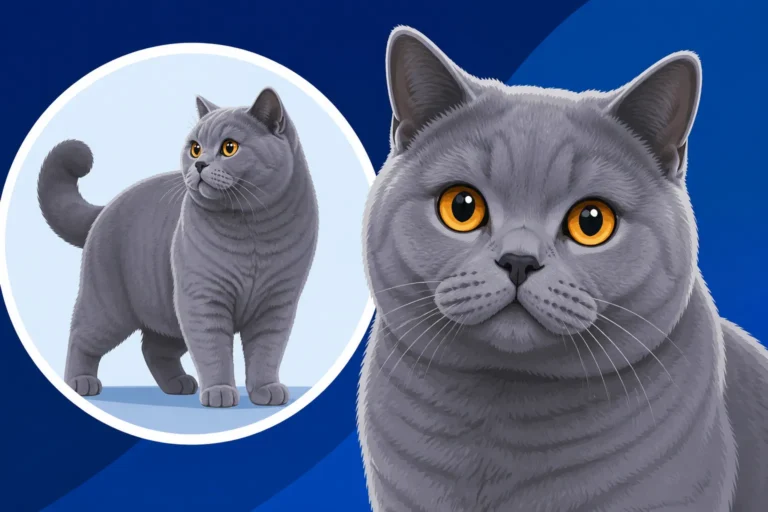
Weir's initial standard for the British Shorthair emphasized several key characteristics that remain central to the breed's identity today. He championed the "cobby" body – a solid, well-built physique that conveyed strength and substance. The head was to be broad and round, with full cheeks, giving the cat its distinctive teddy bear-like appearance. The eyes were large and round, typically copper or gold, complementing the various coat colors. The coat itself was described as short, dense, and "crisp" to the touch, standing away from the body due to its thick undercoat. He also noted the short, thick tail that tapered to a rounded tip, and powerful, sturdy legs. These were not arbitrary choices; they were based on his observations of the healthiest and most aesthetically pleasing domestic short-haired cats in Britain. Weir's comprehensive description provided the foundational blueprint, helping to solidify the ideal features of The Round Head and Copper Eye a British Shorthair Is Judged On that we still see today.
The Legacy in Modern British Shorthair Judging
Even today, well over a century after its inception, Harrison Weir's fundamental standard continues to influence how British Shorthairs are judged and appreciated. While modern standards have undoubtedly evolved with greater detail and nuance, the core principles established by Weir remain intact. Judges still look for that distinctive cobby body, the round head with its full cheeks, the large, round eyes, and the dense, plush coat. His early work set the template for what breeders aim for and what enthusiasts admire. His meticulous approach to defining the breed helped ensure its unique characteristics were preserved through generations of selective breeding. His legacy is evident in every champion British Shorthair on the show bench, every beloved pet with its iconic teddy bear look, and the ongoing efforts of breeders to maintain the integrity of this wonderful breed. His vision transformed common cats into a celebrated pedigree, a profound shift in the feline world.
| Feature | Cats Before Weir (Pre-1871) | Cats After Weir (Post-1871) |
|---|---|---|
| Status | Utility animals, pest control | Pets, companions, show animals |
| "Breed" Concept | Informal regional types, descriptive | Formal, standardized breeds with defined traits |
| Appreciation | Informal, personal, functional | Organized, competitive, aesthetic |
| Shows | None | Formal, structured competitions (e.g., Crystal Palace 1871) |
| Standards | None, subjective personal preference | Written, objective criteria for judging |
| Value Basis | Hunting prowess, resilience | Pedigree, adherence to breed standard, appearance |
Beyond 1871: The British Shorthair's Journey Through History
While Harrison Weir’s Crystal Palace show put the British Shorthair firmly on the map, its journey wasn't a smooth, unbroken ascent to popularity. Like many pedigreed animals, the breed faced numerous challenges throughout history, adapting and evolving while striving to retain the core characteristics Weir so lovingly defined. It's a story of resilience, dedication, and occasional reinvention.
The British Shorthair's Popularity and Decline
Following the triumph of the 1871 show, the British Shorthair enjoyed a wave of popularity. People were enchanted by its sturdy build and amiable nature, and breeders began to work in earnest to refine its type according to Weir’s standards. However, this initial boom was eventually overshadowed by the rising fascination with more exotic, long-haired breeds, particularly the Persian. The Victorian era had a penchant for the elaborate and the unusual, and the flowing coats and delicate features of breeds like the Persian began to captivate the public imagination. The British Shorthair, seen by some as too "common" or not exotic enough, experienced a decline in numbers and interest. Dedicated fanciers continued their work, but the breed was no longer the undisputed star it had been immediately after its debut. This period was crucial, as it showcased the fluctuating nature of breed popularity and the commitment required to sustain a breed through less fashionable times.
Wars and Outcrossing: Rebuilding the Breed
The 20th century brought even greater challenges. Both World War I and World War II devastated cat breeding programs across Europe, and the British Shorthair was particularly hard hit. The scarcity of food, resources, and breeding stock meant that many lines dwindled or disappeared entirely. By the end of WWII, the breed was in a precarious state, facing extinction. To save it, a controversial but necessary measure was taken: outcrossing. Breeders carefully introduced other breeds, most notably the Persian and the Russian Blue, to broaden the gene pool and re-establish the desired type. The Persian, while almost leading to the British Shorthair's initial decline in popularity, became a critical part of its survival, contributing to the breed's cobby body, round head, and dense coat. These careful outcrosses were vital, injecting new vigor while breeders worked tirelessly to select for the classic British Shorthair look. This period of intense dedication and strategic breeding ultimately ensured the breed's survival and laid the groundwork for its modern resurgence. The story of The Persians That Rebuilt the British Shorthair After the War is a fascinating tale of survival.
The Breed's Resurgence and Global Recognition
From the brink of extinction, the British Shorthair slowly but steadily regained its footing. Dedicated breeders in the post-war era worked meticulously to solidify the breed's characteristics, bringing back the robust health and distinctive appearance that Harrison Weir first championed. By the latter half of the 20th century, the breed began to experience a significant resurgence in popularity, not only in its native Britain but also across Europe and North America. Its calm temperament, low maintenance coat, and adorable "teddy bear" looks made it an ideal family companion. Today, the British Shorthair is one of the most recognized and beloved cat breeds globally, with strong representation in cat registries worldwide. Its enduring appeal is a testament to the vision of its founder and the relentless dedication of generations of breeders who ensured its survival and ultimate triumph.
The British Shorthair Today: A Nod to Its Founder
Looking at a British Shorthair today, it’s clear that Harrison Weir’s foundational vision still resonates. The hallmarks he identified over a century and a half ago continue to define this beloved breed, albeit with the benefits of modern breeding practices and a deeper understanding of feline health. The breed has come full circle, from a common street cat to a globally recognized icon, always carrying the essence of Weir's original ideal.
Maintaining the Classic British Shorthair Look
One of the most remarkable aspects of the modern British Shorthair is how faithfully it adheres to the classic "type" first articulated by Harrison Weir. Contemporary breed standards, upheld by organizations like the Governing Council of the Cat Fancy (GCCF) in the UK and The Cat Fanciers' Association (CFA) and The International Cat Association (TICA) globally, still emphasize the cobby body, broad chest, short, strong legs, and the distinctive thick, rounded tail. The head remains round and massive, with full cheeks, and those large, round, expressive eyes are still predominantly copper or gold in most color varieties. Even the coat retains its signature short, dense, plush feel, which famously stands away from the body. Breeders dedicate themselves to preserving these traits, understanding that the unique aesthetic is a huge part of the breed's enduring appeal. This commitment ensures that the British Shorthair remains instantly recognizable, a living testament to Weir’s original observations and definitions. It's truly fascinating to see What a British Shorthair Weighs and How Big It Gets and how these attributes have been maintained.
Health Considerations and Modern Breeding Practices
While appearance is paramount in breed standards, modern British Shorthair breeding places an equally strong emphasis on health and welfare, areas that Harrison Weir, as an animal welfare advocate, would undoubtedly applaud. Responsible breeders conduct comprehensive health screenings for common genetic conditions, such as Hypertrophic Cardiomyopathy (HCM) and Polycystic Kidney Disease (PKD), even though HCM in a British Shorthair Has No DNA Test at the moment. This proactive approach helps to ensure the longevity and vitality of the breed, a far cry from the largely unmonitored breeding of the 19th century. Advances in veterinary medicine, nutrition, and understanding of feline genetics allow breeders to make more informed decisions, aiming for robust health alongside excellent type. Owners, too, are more educated than ever, understanding the importance of regular vet check-ups, appropriate diet, and environmental enrichment to keep their British Shorthairs thriving. For example, keeping their weight in check is crucial, as Obesity Is the British Shorthair's Real Disease. Many owners rely on reputable pet supply retailers like Chewy for high-quality food, puzzle feeders, and engaging toys to support their cat's overall well-being.
The Beloved Family Companion
Beyond the show ring and breeding programs, the British Shorthair has truly cemented its place as a cherished family companion. Their calm, affectionate, and adaptable temperament makes them ideal pets for a wide range of households, from busy families with children to quiet retirees. They are known for their quiet demeanor, often preferring to sit near their humans rather than on them, though they'll happily accept a gentle stroke. Their intelligence and generally docile nature make them relatively easy to care for, fitting well into various lifestyles. This blend of stunning looks, robust health, and an endearing personality ensures that the British Shorthair's popularity continues to soar. Every time a British Shorthair purrs contentedly on a sofa, it’s a quiet tribute to Harrison Weir’s vision – a testament to how a common street cat, seen through the eyes of a passionate artist, could become one of the world's most beloved and enduring breeds. Many find that items from Chewy, from cozy beds to interactive toys, help create the perfect environment for these placid pets.
Disclaimer
This article is for general informational purposes only and does not constitute professional advice. Laws, prices and regulations vary by location and change over time. Consult a qualified professional for guidance on your specific situation.