Why a Heavy British Shorthair Needs a Low Sided Box
It's heartbreaking to see your beloved British Shorthair struggle with something as basic as their litter box, isn't it? Many of us have been there, watching our chunky companions try to gracefully navigate what seems like a towering obstacle course, only to witness an awkward hop, a missed step, or even worse, an accident right outside the box. This guide is all about understanding why your heavy British Shorthair's unique physique absolutely necessitates a low-sided litter box for their comfort, dignity, and overall well-being.
The Unique Physique of a British Shorthair and Its Impact
The British Shorthair is a magnificent breed, known for its robust, cobby build, round face, and dense, plush coat. They are often described as "teddy bears" of the cat world, and it's easy to see why. However, this charming physique, especially when combined with a natural tendency towards a more sedentary lifestyle, can present some challenges when it comes to their mobility and daily routines. Understanding these physical traits is the first step in appreciating why a standard litter box might not be suitable for your weighty wonder.
Cobby Build and Shorter Legs
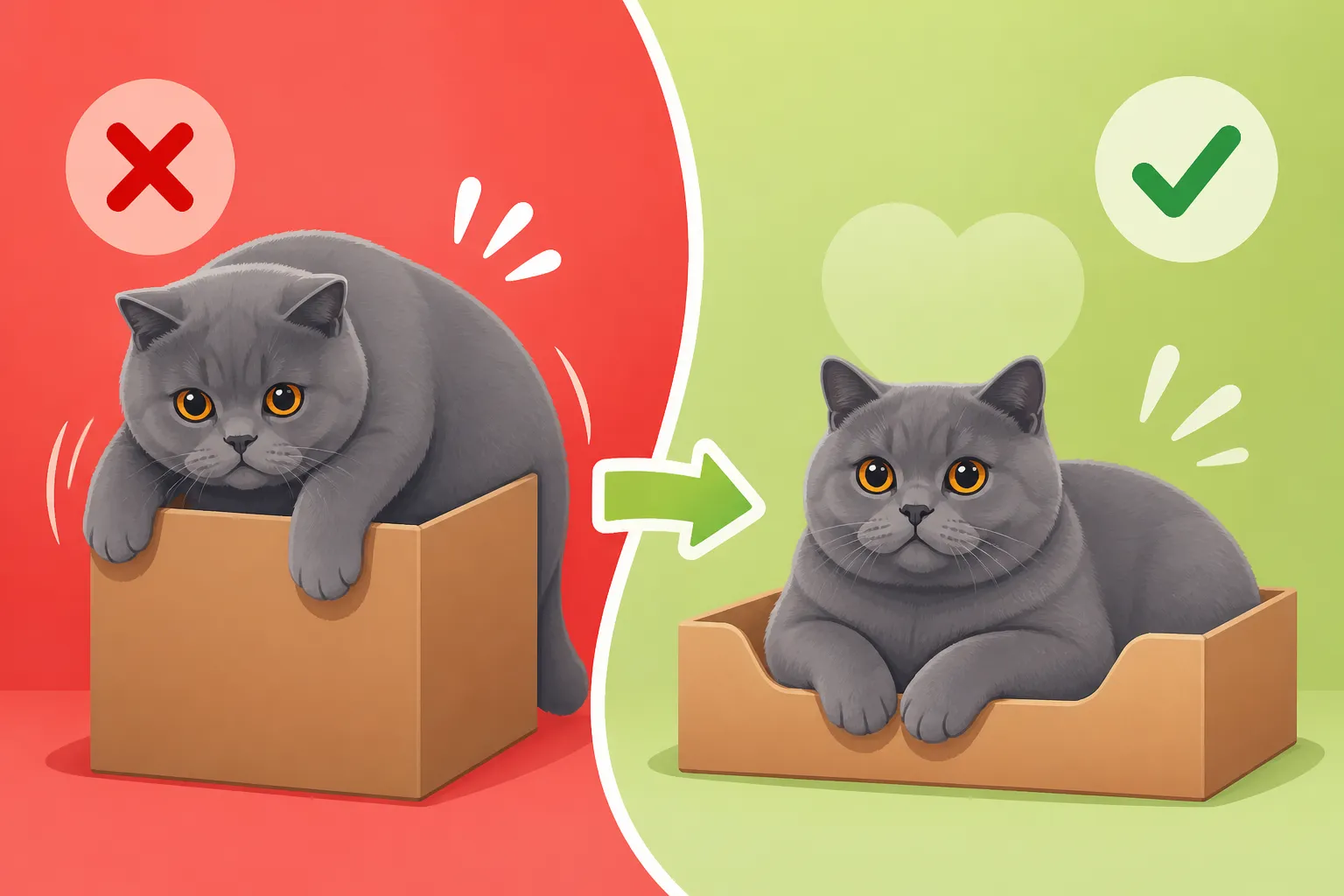
Unlike some of their more lithe and acrobatic feline cousins, British Shorthairs possess a compact, powerful body with relatively short, strong legs. This "cobby" structure means they aren't designed for high jumps or graceful leaps in the same way a Siamese or an Abyssinian might be. Imagine trying to step over a high fence when you have short legs and a stocky build – it's just not as easy. For a British Shorthair, a standard litter box with a high lip can feel exactly like that fence.
This isn't just about appearance; it's about biomechanics. Each time your British Shorthair has to hoist themselves over a tall edge, they are putting strain on their joints, particularly their hips, knees, and spine. Over years, this repetitive stress can contribute to discomfort and even exacerbate underlying conditions. It's a subtle but constant challenge that can make a huge difference in their daily comfort. They're built for a leisurely stroll, not an Olympic hurdle event every time nature calls.
The British Shorthair's Predisposition to Weight Gain
Let's be honest, our British Shorthairs are champions at gaining weight. Their calm demeanor and lower activity levels, combined with their love for food (because, really, who can blame them?), often lead to them carrying a bit more weight than is ideal. Why a British Shorthair Gains Weight So Easily is a struggle many owners face. This extra weight, while adding to their adorable heft, significantly compounds the issue of navigating a high-sided litter box.
An overweight British Shorthair has even more mass to lift and propel over that barrier. Their abdominal fat can make it awkward to bend and twist, and the increased load on their joints makes any existing stiffness or early signs of arthritis much more painful. If your British Shorthair is heavier, that high lip isn't just an inconvenience; it can be a genuine barrier that causes pain and frustration, sometimes leading to them avoiding the box altogether. It's not laziness; it's physics and comfort. What a British Shorthair Should Weigh at One Year is a good benchmark, but many exceed it.
The Mechanics of Entry and Exit: Why High Sides are a Problem
For us, a litter box is just a box. For a British Shorthair, particularly one with a substantial build, it's an engineering challenge. The height of the sides plays a crucial role in how easily and comfortably they can access and exit their private facilities. When the sides are too high, it creates a cascade of problems ranging from physical discomfort to behavioral issues.
Joint Strain and Arthritis Concerns
As mentioned, repeated high stepping puts immense strain on a British Shorthair's joints. Picture a human with knee pain trying to step into a bathtub that's too high every single day. Eventually, they're going to either give up or suffer. Cats are masters at hiding pain, but that doesn't mean they aren't feeling it. Each time they have to lift their entire body weight over a tall lip, it stresses their hips, stifles (knees), and even their back. This is particularly problematic for senior British Shorthairs, who are more prone to conditions like Arthritis in an Older British Shorthair.
Even if your British Shorthair isn't showing obvious signs of limping or stiffness, the constant micro-trauma from struggling with a high-sided box can contribute to the premature onset or worsening of degenerative joint disease. We want our furry friends to be as comfortable as possible for their The Twelve to Seventeen Years a British Shorthair Gets, and making their bathroom experience effortless is a huge part of that. A low-sided box significantly reduces this strain, making it a much gentler experience for their precious joints.
Awkward Posture and Potential for Accidents
When a British Shorthair can't easily step into the box, they might resort to awkward postures. They might perch precariously with their front paws inside and their back end hovering over the edge, or try to squeeze in at an odd angle. This isn't just uncomfortable; it can lead to unfortunate accidents. Imagine trying to go to the bathroom while constantly worried about losing your footing or balancing precariously. It's not conducive to a clean process.
Sometimes, a cat might relieve themselves partially inside and partially outside the box, simply because they couldn't get fully in or positioned themselves correctly due to the high sides. Others might try to "launch" themselves into the box, potentially losing balance and scattering litter everywhere. These aren't signs of a "naughty" cat; they're often desperate attempts to cope with a poorly designed environment. A low-sided box allows them to step in fully, turn around comfortably, and assume a natural, relaxed posture, which is essential for proper elimination.
Reluctance to Use the Litter Box
The most heartbreaking consequence of a difficult-to-access litter box is when your British Shorthair simply stops using it. If every trip to the bathroom is a painful, undignified, or frustrating experience, they will naturally start looking for alternatives. This might manifest as accidents on carpets, in laundry baskets, or even on your bed. This behavior isn't defiance; it's a cry for help. Your cat is telling you, in the only way they know how, that something isn't right with their designated toilet area.
Many owners mistakenly attribute these accidents to behavioral issues or spite, when in reality, it's often a physical barrier. Before you get frustrated, consider the box. If it's too hard to get into, your cat will find an easier spot, even if it's not ideal for you. Providing a low-sided option removes this obstacle and can often resolve inappropriate urination issues, restoring peace and cleanliness to your home. Urinary Problems in a British Shorthair can be exacerbated by reluctance to use the box due to physical discomfort.
Beyond Comfort: Health and Hygiene Implications
The choice of litter box isn't just about your British Shorthair's comfort; it directly impacts their health and the overall hygiene of your home. A box that's difficult to use can lead to a host of problems that extend beyond a simple mess.
Maintaining Cleanliness and Preventing Soiling
When a British Shorthair struggles to enter or exit a high-sided box, the risk of them trailing litter outside the box or having accidents on the rim or floor dramatically increases. They might not be able to dig properly or cover their waste adequately if they're too focused on balancing. This can lead to a less hygienic environment, not just around the box, but potentially tracking waste throughout your home.
Furthermore, if they're hesitant to get fully into the box, their efforts might lead to waste clinging to their fur, especially around their rear. For a dense-coated British Shorthair, this can quickly become a hygiene nightmare. A low-sided box allows for a much smoother entry and exit, enabling them to confidently step in, do their business, and exit without unnecessary contact with the sides or the floor outside. It helps them maintain their fastidious nature without unnecessary obstacles.
Encouraging Proper Elimination Habits
Cats are creatures of habit, and they thrive on consistency and comfort. If their litter box experience is consistently positive, they are much more likely to use it reliably. A low-sided box, by removing physical barriers and discomfort, encourages proper elimination habits. They learn that the box is a safe, easy place to relieve themselves, reinforcing its use.
Conversely, a high-sided box can create negative associations. Your cat might start to view the litter box as a source of pain or frustration, leading to avoidance. This can be a hard habit to break once formed. Investing in an appropriate litter box from the start, or making the switch as soon as you notice any signs of struggle, is key to fostering good litter box etiquette throughout your British Shorthair's life.
Choosing the Right Low-Sided Box
Okay, so you're convinced – a low-sided box is the way to go for your British Shorthair. But what exactly should you look for? It's not just about height; other factors play a significant role in ensuring it's the perfect fit for your beloved feline.
Ideal Dimensions and Materials
When we talk about "low-sided," we're generally looking for an entry height of no more than 3-5 inches (about 7-12 cm). This allows your British Shorthair to comfortably step over without a major lift. But don't forget the other dimensions! British Shorthairs are substantial cats, so they need a box that's generously sized in length and width too. A good rule of thumb is a box that's at least 1.5 times the length of your cat from nose to base of tail. This allows them to turn around fully and dig comfortably. Which Litter Box Size a British Shorthair Needs is often larger than owners anticipate.
As for materials, sturdy plastic is the most common and practical choice. It's easy to clean and relatively inexpensive. Some owners also opt for stainless steel boxes, which are highly durable, non-porous (great for odor control), and generally easier to clean, though they come with a higher price tag. The key is smooth, non-toxic, and robust material that won't absorb odors or crack easily. You can find a wide range of options on sites like Chewy or Amazon, allowing you to compare features and read reviews from other cat owners.
| Feature | Standard High-Sided Box | Low-Sided Box for British Shorthairs |
|---|---|---|
| Entry Height | 6-10 inches (15-25 cm) | 3-5 inches (7-12 cm) |
| Ease of Entry/Exit | Difficult, especially for heavy/arthritic cats | Easy, minimal strain on joints |
| Joint Stress | High, potential for long-term issues | Low, promotes joint health |
| Posture | Awkward, potential for hovering | Natural, comfortable elimination |
| Accident Risk | Higher, especially outside the box | Lower, encourages full entry |
| Hygiene | More prone to tracking/soiling outside | Cleaner usage, less scatter |
| Acceptance by Cat | Lower, potential for avoidance | Higher, promotes consistent use |
Placement and Number of Boxes
Even the perfect box won't do much good if it's placed in a terrible spot. For your British Shorthair, just like any cat, litter box placement is crucial. Choose a quiet, accessible location where they won't be disturbed by loud noises, heavy foot traffic, or other pets. Avoid placing the box directly next to noisy appliances like washing machines or furnaces. Cats appreciate privacy and security when doing their business.
Remember the "N+1 rule" for litter boxes: you should have one more litter box than the number of cats in your household. So, if you have one British Shorthair, you ideally need two boxes. If you have two cats, you need three. This provides options and reduces the chance of territorial disputes or an inaccessible box if one is occupied. Place these boxes in different, accessible areas of your home.
Alternatives and DIY Options
If you're having trouble finding a suitable low-sided litter box that meets your British Shorthair's needs, don't despair! There are some excellent alternatives and DIY solutions.
One popular option is a large, sturdy storage container or tote. Many brands offer containers with lower sides that can be easily repurposed as a litter box. Just make sure the plastic is food-grade or explicitly marked as safe for pet use, and avoid anything with sharp edges. You can often find these in various sizes, giving you more flexibility in finding one that's wide and long enough for your British Shorthair.
Another approach, especially for an elderly or extremely arthritic cat, is to cut down one side of an existing high-sided litter box. Using a utility knife (carefully, please!), you can create a U-shaped entryway that is much lower, while keeping the other sides high to contain litter scatter. This can be a fantastic interim solution, but ensure the cut edges are smooth to prevent injury. For those with severely mobility-challenged cats, even puppy pads or specific incontinence products might be needed temporarily as you transition. The goal is always to make it as easy as possible for them to get in and out, no matter their age or physical condition. Caring for an Old British Shorthair involves many such thoughtful adjustments.
Disclaimer
This article is for general informational purposes only and does not constitute professional advice. Laws, prices and regulations vary by location and change over time. Consult a qualified professional for guidance on your specific situation.