Whether a Scottish Fold Cross Is Sold as a British Shorthair
It’s a heartbreaking reality that in the world of designer pets, some unscrupulous individuals will try to pass off a mix-breed as something it’s not, often to command a higher price or simply because they don't understand or care about breed standards. A common concern among prospective British Shorthair owners is the prevalence of Scottish Fold crosses being deliberately or accidentally sold as purebred British Shorthairs. This guide is here to shed light on this issue, help you identify the differences, and equip you with the knowledge to make an informed, ethical choice when bringing a British Shorthair into your home.
The Allure and the Danger: Why the Scottish Fold Cross Exists
The charming, teddy-bear-like appearance of the British Shorthair has made it incredibly popular, and sadly, this popularity can attract breeders more interested in profit than the health and integrity of the breed. When you introduce the unique folded ear of the Scottish Fold into the mix, you get a combination that, on the surface, seems irresistibly cute. But beneath that appeal lies a significant ethical and health dilemma.
Understanding the "Fold" Trait and Its Origins
The defining characteristic of a Scottish Fold cat is, of course, those adorable, forward-folding ears. This trait isn't just a quirky cosmetic feature; it's the result of a spontaneous genetic mutation. This mutation affects the cartilage throughout the cat's body, not just in its ears. While it gives the ears their distinctive bend, it also means that the cartilage in other parts of the body, particularly the joints and spine, can be malformed, stiff, or prone to painful degeneration.
Initially, when the folded ear trait first appeared in a barn cat in Scotland, it was seen as a novelty. Breeders started selectively breeding for this trait, but it wasn't long before the associated health issues began to surface. Ethical concerns quickly arose, and many reputable cat registries worldwide, acknowledging the inherent health risks, have taken stances against the breeding of Scottish Folds, especially Fold-to-Fold pairings, which severely exacerbate the health problems.
The "Teddy Bear" Look: Blending Breeds for Aesthetics
The British Shorthair is renowned for its stocky, cobby body, round head, chubby cheeks, and plush coat – a combination that gives it an undeniable "teddy bear" appeal. Imagine taking that already adorable foundation and adding the distinctive folded ears of a Scottish Fold. For many, this creates what they perceive as the ultimate cute cat, a living plush toy. This demand for the "folded-ear teddy bear" look drives the market for Scottish Fold crosses.
Less scrupulous breeders, or sometimes even backyard breeders who are simply uneducated about genetics and breed standards, might intentionally cross a British Shorthair with a Scottish Fold to produce kittens with this sought-after appearance. They might even market these kittens as "rare British Shorthairs" or "British Fold" cats, playing on the desirability of both breeds. The motivation is almost always commercial gain, as these unique-looking kittens can fetch a high price. What they often fail to disclose, or simply don't understand, are the significant health implications that come with these folded ears. It's a prime example of aesthetics being prioritized over animal welfare, and it leaves unsuspecting buyers with potential heartbreak and huge vet bills down the line. It's truly vital to remember that You are paying for a British Shorthair that fills out over five years, so rushing into a purchase based on kitten cuteness can lead to long-term issues.
Recognizing a True British Shorthair vs. a Scottish Fold Cross
When you're looking for a purebred British Shorthair, you’re looking for specific characteristics that define the breed. A Scottish Fold cross, whether intentional or accidental, will inevitably deviate from these standards, most notably with its ears. Knowing what to look for can save you from inadvertently supporting unethical breeding practices and bringing home a cat with inherent health issues.
The Definitive Ear: Straight vs. Folded
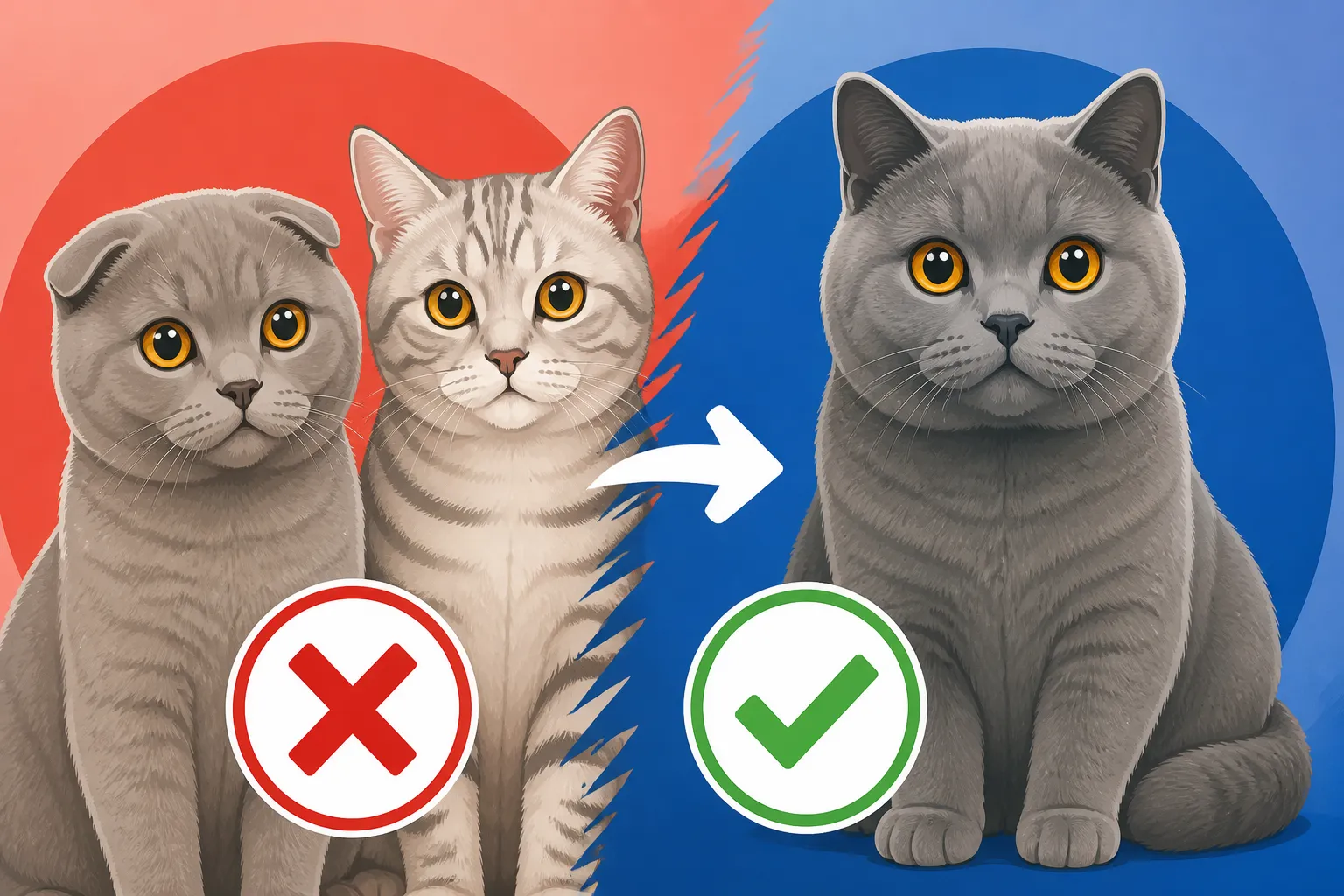
This is, without a doubt, the most immediate and telling difference. A purebred British Shorthair will never have folded ears. Their ears should be:
- Medium in size: Not overly large or small.
- Broad at the base: Giving them a sturdy appearance.
- Rounded at the tips: Contributing to their soft, teddy-bear-like expression.
- Set well apart: Following the rounded contour of their head.
These ears stand proudly upright, complementing the overall roundness of their face and head. If you see a kitten advertised as a British Shorthair with even slightly folded or creased ears, it is unequivocally not a purebred British Shorthair. It is either a Scottish Fold, a Scottish Straight (a Scottish Fold with straight ears), or a crossbreed.
It's important to note that the degree of fold in a Scottish Fold can vary. Some might have a loose single fold, while others exhibit a tight triple fold that makes their head appear almost cap-like. This variability can sometimes be used by unscrupulous sellers to downplay the folded ear trait, but any fold at all means it’s not a British Shorthair. Conversely, some Scottish Folds are born with straight ears and are known as Scottish Straights. These cats carry the folded ear gene but do not express it physically in their ears, yet they can still pass it on, and they still belong to the Scottish Fold breed group, not British Shorthair. This makes identifying pure British Shorthairs even more critical through pedigree and health testing.
Body Type and Head Shape: Subtle but Significant Cues
Beyond the ears, there are other tell-tale signs in the overall physical structure that differentiate a British Shorthair from a cross. The British Shorthair is a truly distinctive breed, built for strength and charm.
- Body Type (Cobby and Massive): A true British Shorthair is described as "cobby" – meaning compact, stocky, and well-muscled. They have a broad chest, a level back, and short, thick, strong legs with rounded paws. Their tail is thick at the base, tapering to a rounded tip. They feel substantial when you pick them up. This robust build is part of their iconic appeal.
- Head Shape (Roundness and Full Cheeks): The head of a British Shorthair is broad and round, supported by a short, thick neck. Their cheeks are notably full, contributing to that endearing "Grumpy Cat" or "Cheshire Cat" smile. Their nose is short, broad, and straight, with a gentle dip rather than a pronounced break. Their eyes are large, round, and widely set, typically copper or gold, though other colors are seen in specific coat patterns.
In a Scottish Fold cross, while some of these traits might be present due to the British Shorthair parentage, they will likely be diluted or inconsistent. The body might not be quite as massive or cobby, the legs might be slightly longer, or the head might not possess the full, perfectly round quality with those signature jowls. The overall impression might be slightly more refined or less powerfully built than a pure BSH. For example, if the cross introduces other breeds, the muscle tone or bone structure might not be as dense. When considering a kitten, pay close attention to the entire package, not just the cute face. It can be hard to judge a kitten's full potential, as they really only When a British Shorthair reaches its adult head and body proportions later in life.
Behavioral and Temperament Differences
While physical traits are the most obvious indicators, temperament can also offer some clues, though it's less reliable due to individual variations. British Shorthairs are generally known for their calm, dignified, and somewhat independent nature. They are often described as quiet, easygoing companions who enjoy being near their humans but aren't typically demanding lap cats. They possess a quiet confidence and a relaxed demeanor, making them excellent companions for many households. What a British Shorthair's temperament is really like often involves a lot of calm observation. They are known to be quite adaptable and generally A British Shorthair is genuinely fine on its own for reasonable periods.
Scottish Folds, when healthy, can also be quite sweet-natured and affectionate, but there's a significant caveat: the pain and discomfort caused by osteochondrodysplasia. Cats are masters at hiding pain, but a cat suffering from joint pain or stiffness might exhibit subtle behavioral changes. They might be less inclined to jump, play actively, or even tolerate being handled in certain ways. They might become withdrawn or irritable if their pain is managed poorly. If a kitten advertised as a British Shorthair seems unusually lethargic, reluctant to move, or sensitive to touch, it could be a red flag, potentially indicating underlying health issues common to Scottish Fold crosses. Of course, lethargy can also just be a normal part of How much an aging British Shorthair sleeps, but in a kitten, it's a concern.
| Feature | Pure British Shorthair | Scottish Fold Cross (or pure Scottish Fold) |
|---|---|---|
| Ears | Medium, broad at base, rounded tips, stand upright, set wide. | Folded forward (single, double, or triple fold), or straight (Scottish Straight). |
| Head Shape | Broad, very round, full cheeks, short broad nose. | Can be round, but often less broad/massive, may lack full cheek definition. |
| Body Type | Cobby, massive, muscular, broad chest, short thick legs. | May be similar to BSH, but potentially less dense, less cobby depending on parentage. |
| Coat | Dense, plush, crisp, stands away from body. | Similar to BSH if BSH is one parent, or can vary. |
| Temperament | Calm, quiet, dignified, independent, affectionate but not overly needy. | Can be sweet, but may show signs of discomfort or reduced activity due to pain. |
| Health Concerns | Prone to HCM, PKD (rare due to DNA testing), obesity. | Inherently prone to osteochondrodysplasia (joint/cartilage disease), also HCM, PKD possible. |
| Ethical Breeding | Bred to strict standards for health and type. | Breeding Folds is controversial; crossing with BSH is unethical if health is compromised. |
The Health and Ethical Concerns of Scottish Fold Crosses
This is where the rubber meets the road, folks. The "cute factor" of a folded ear simply doesn't outweigh the very real and often devastating health issues that come with it. Understanding these concerns is crucial for any responsible cat owner.
Osteochondrodysplasia: The Hidden Price of Folded Ears
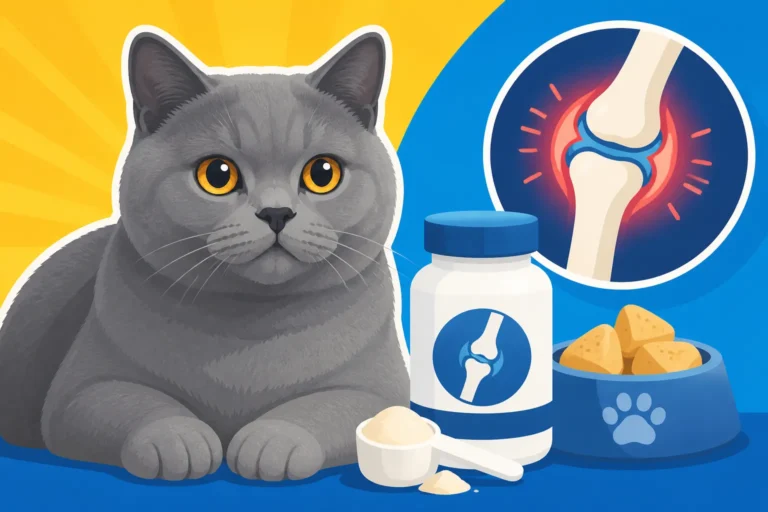
The most significant health issue linked to Scottish Folds, and therefore to Scottish Fold crosses, is a hereditary condition called osteochondrodysplasia (OCD). This isn't just a fancy word; it's a painful and progressive degenerative joint disease that affects cartilage and bone development throughout the entire body.
Think about it: the gene that causes the ears to fold does so by affecting cartilage. But cartilage isn't just in the ears; it's in all the joints, the spine, and other parts of the skeletal system. In cats with OCD, this cartilage can develop abnormally, leading to:
- Painful Arthritis: This is perhaps the most common and debilitating symptom. Cats can develop severe, early-onset arthritis in their ankles, hocks, knees, and even spine. This can cause lameness, stiffness, reluctance to move or jump, and chronic pain.
- Fused Vertebrae: The bones of the spine can fuse together, leading to rigidity and further pain.
- Bone Lesions and Deformities: Abnormal bone growth can occur, especially in the paws and tail, leading to thickening, shortening, and stiffness. A short, thick, inflexible tail is a classic sign of severe OCD.
The severity of OCD can vary, but every Scottish Fold, whether their ears are folded or straight, carries this gene and is at risk. When you cross a British Shorthair with a Scottish Fold, you are introducing this significant genetic flaw into the lineage. While a mixed-breed cat might theoretically have a less severe expression of the disease than a Fold-to-Fold purebred Scottish Fold, there are no guarantees. The potential for a lifetime of pain and expensive veterinary care is immense. It really makes you rethink how important pure aesthetics are, doesn't it? It can have severe impacts, similar to What obesity does to a British Shorthair's joints but far more inherent.
Why Reputable Breeders Don't Cross British Shorthairs with Scottish Folds
Ethical breeders, whether of British Shorthairs or Scottish Folds (who, if ethical, will always outcross with straight-eared cats like British Shorthairs or American Shorthairs to reduce the severity of OCD, but never Fold-to-Fold), operate with the health and welfare of their cats as their top priority.
For a British Shorthair breeder, the presence of folded ears is a disqualifying fault according to breed standards set by organizations like the CFA or TICA. Their entire breeding program is focused on producing cats that embody the BSH standard – roundness, cobby body, plush coat, and, crucially, straight ears. Introducing the folded ear gene would be antithetical to their goals and compromise the health of their lines. What a British Shorthair breeder should have tested includes a strong focus on hereditary diseases, and intentionally introducing a known disease gene would be abhorrent to them.
Similarly, ethical Scottish Fold breeders, while working within the confines of a breed that carries the OCD gene, strive to minimize its impact. They carefully select breeding partners (always straight-eared cats) and monitor their kittens closely for signs of the disease. They would never knowingly breed in a way that increases the likelihood of severe suffering.
Therefore, if you encounter someone selling a "British Fold" or a "British Shorthair with folded ears," it’s a massive red flag. It indicates either ignorance of responsible breeding practices or a deliberate disregard for the welfare of the animals. They are likely operating outside of reputable breed registries, which enforce strict codes of ethics and health testing requirements. Be extremely wary of any breeder whose prices seem unusually low, as Why a British Shorthair under a thousand is a warning often points to a lack of proper health screening or questionable breeding practices.
What to Ask and Look For When Buying a British Shorthair
So, you're committed to finding a healthy, happy, true British Shorthair. Fantastic! Here’s how you can protect yourself and ensure you're supporting ethical breeding:
- Ask for Pedigree Papers: A reputable breeder will provide registration papers from a recognized cat association (like CFA, TICA, GCCF, etc.) that clearly shows the kitten's lineage. This pedigree should trace back multiple generations of only British Shorthairs. This is your first line of defense against misrepresentation.
- Request Health Screening Results: British Shorthairs, like many purebred cats, can be prone to certain hereditary conditions, such as Hypertrophic Cardiomyopathy (HCM) and Polycystic Kidney Disease (PKD). A good breeder will proactively screen their breeding cats for these issues. Ask to see current echo results for HCM and DNA test results for PKD (though PKD is now rare in the breed due to extensive testing). Knowing What a British Shorthair's first echo costs means they understand the commitment to health. They should also be transparent about the results for the parents. In fact, you should insist on knowing Which health results a British Shorthair breeder must show.
- Visit the Cattery (If Possible): Observing the environment where the kittens are raised and meeting the parent cats (especially the queen) is invaluable. Are the cats healthy, clean, and well-socialized? Do the parents exhibit the correct British Shorthair characteristics, particularly straight ears?
- Ask Detailed Questions: Don't be shy! Inquire about the kitten's temperament, health history, socialization, and diet. Ask about the breeder's philosophy and experience. A good breeder will welcome your questions and be eager to educate you.
- Look for a Comprehensive Contract: A reputable breeder will have a contract that outlines health guarantees, spay/neuter agreements, and what happens if a health issue arises. This protects both you and the cat.
- Consider Pet Insurance: Even with the most careful breeding and screening, unexpected health issues can arise. Having pet insurance can provide peace of mind and help manage potential veterinary costs. Providers like Healthy Paws offer various plans that can cover accidents, illnesses, and even hereditary conditions, though usually not pre-existing ones. It's a wise investment for any cat owner.
- Discuss Nutrition: A responsible breeder will guide you on the best diet for your new kitten. Many reputable cat food brands, available from retailers like Chewy or specialty pet stores, offer formulations tailored to different life stages and breed-specific needs. Proper nutrition is key to maintaining a British Shorthair's health and managing their tendency toward obesity.
Remember, a true British Shorthair is a magnificent companion, known for its stoic charm and placid nature. Taking the time to find an ethical, responsible breeder who prioritizes health and breed integrity is paramount. If you're ever in doubt, it's always better to walk away. You can also explore How a British Shorthair differs from a Scottish Fold in more detail to solidify your understanding. A legitimate breeder will provide proof, often including Whether a DNA test confirms a British Shorthair for lineage or specific health markers.
Conclusion
The thought of a Scottish Fold cross being sold as a British Shorthair is a legitimate concern for anyone passionate about this wonderful breed. While the allure of "designer" cats with unique features can be strong, it’s vital to prioritize the health and well-being of the animal above all else. The genetic mutation that gives the Scottish Fold its distinctive ears also carries the heavy burden of osteochondrodysplasia, a painful and debilitating condition that can significantly impact a cat's quality of life.
By understanding the distinct physical characteristics of a purebred British Shorthair – particularly their upright ears, cobby body, and round head – and by diligently researching and vetting breeders, you can ensure you’re bringing home a healthy, happy cat from an ethical source. Don't be swayed by deceptive marketing or cute pictures; always demand proof of pedigree and health screening. Your informed choice not only ensures a better life for your feline companion but also helps to combat unethical breeding practices that cause suffering.
Disclaimer
This article is for general informational purposes only and does not constitute professional advice. Laws, prices and regulations vary by location and change over time. Consult a qualified professional for guidance on your specific situation.