How Much a British Shorthair Likes Being Stroked
British Shorthair stroking preferences explained through subtle physical cues, showing why calm cats prefer sitting near you instead of laps.
Change the room, not the cat.
Litter box avoidance, scratching and furniture, multi-cat tension and night activity — and the vertical space, play routines and feeding puzzles that solve more than correction does.
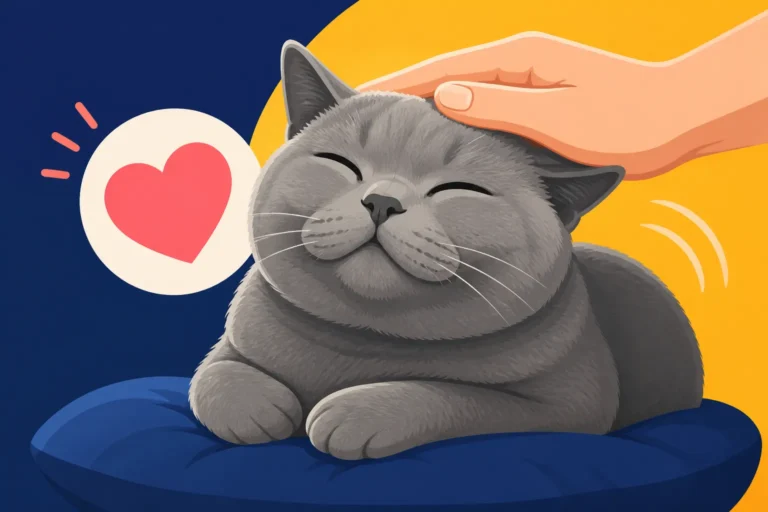
British Shorthair stroking preferences explained through subtle physical cues, showing why calm cats prefer sitting near you instead of laps.
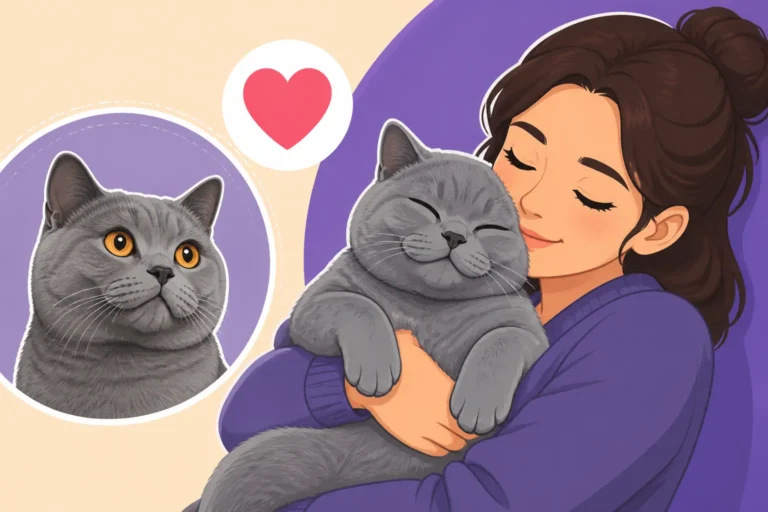
British Shorthair affection focuses on proximity over direct physical contact, with cats preferring nearby cushions to extended lap cuddles.
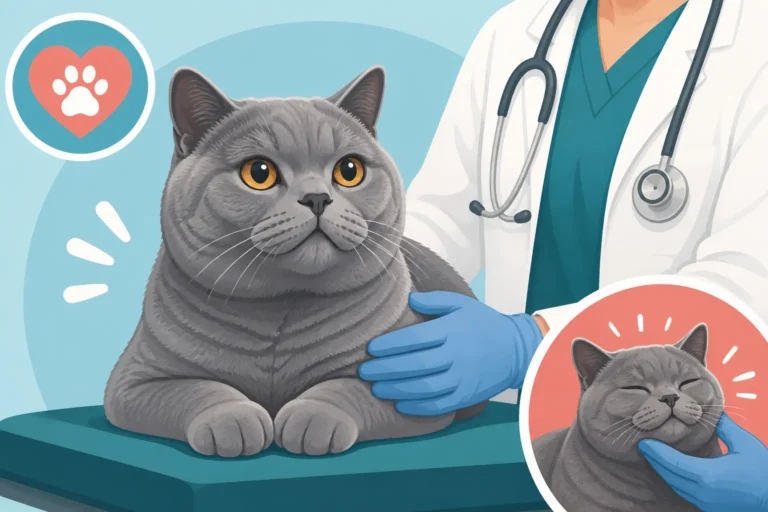
British Shorthair vet visits cause quiet anxiety, freezing, and stress purring that owners must learn to recognize and manage properly.
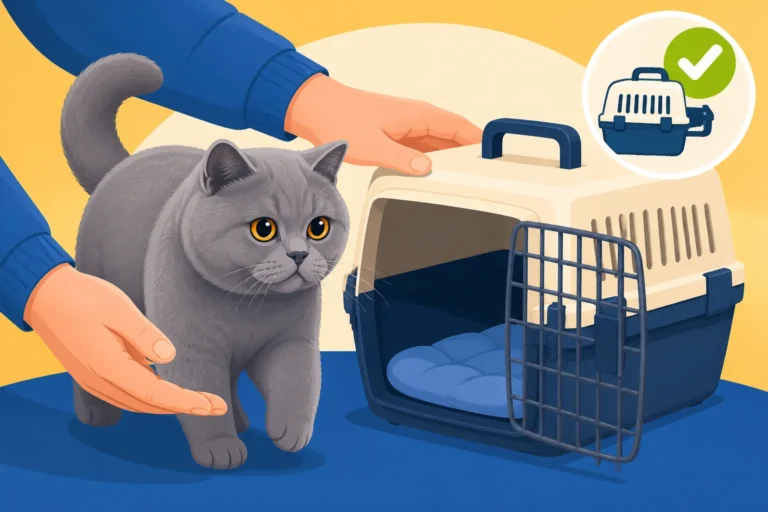
British Shorthair carrier training strategies explain feline stubbornness and past negative associations with veterinary visits.
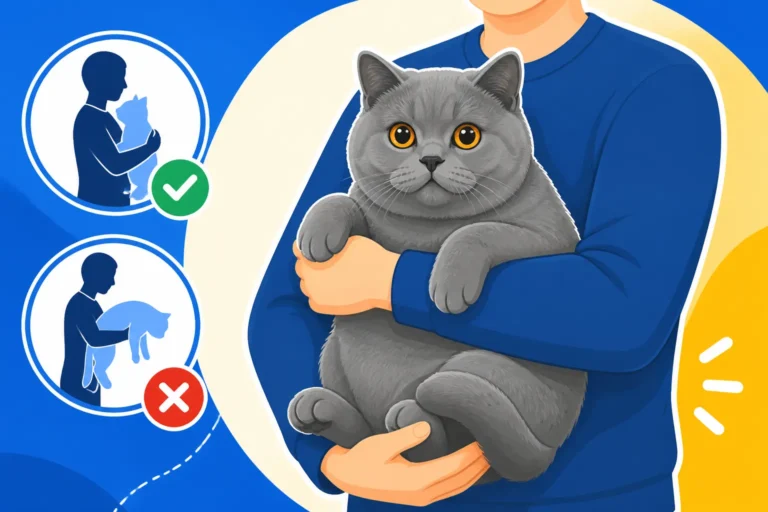
Safe handling techniques for British Shorthair cats explain how to support their heavy, muscular bodies and pick them up securely.
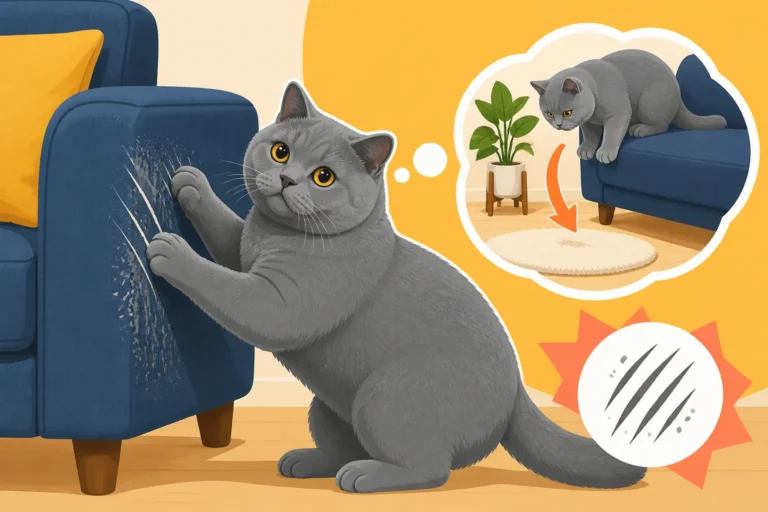
British Shorthair scratching behavior is an instinctive communication method demanding release from being held by owners.
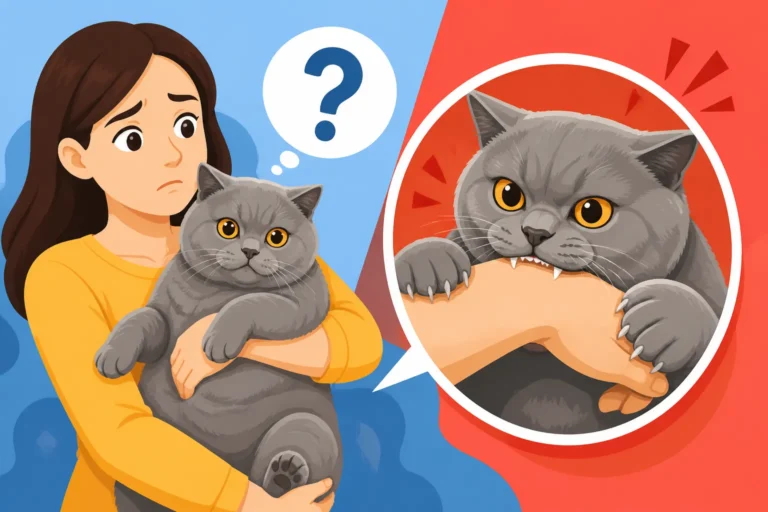
British Shorthair biting behavior during lifting stems from independence, physical discomfort, or past negative experiences.
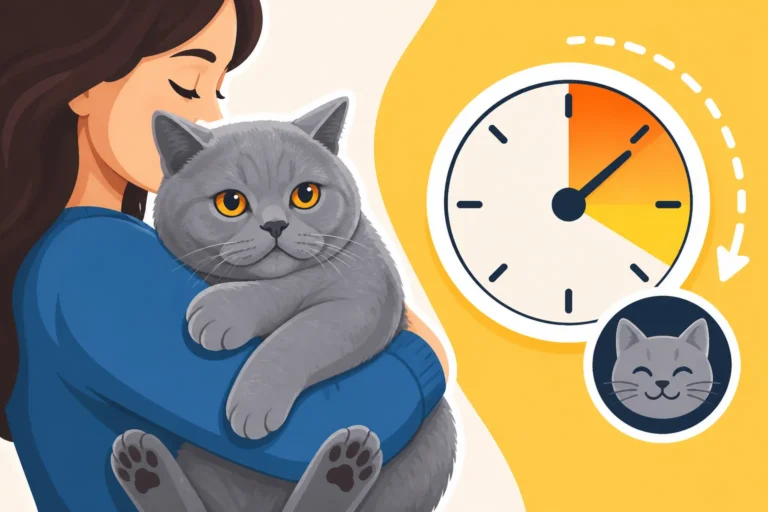
British Shorthair cats tolerate being held for a minute or two before leaving because of their independent nature and preference for personal space.
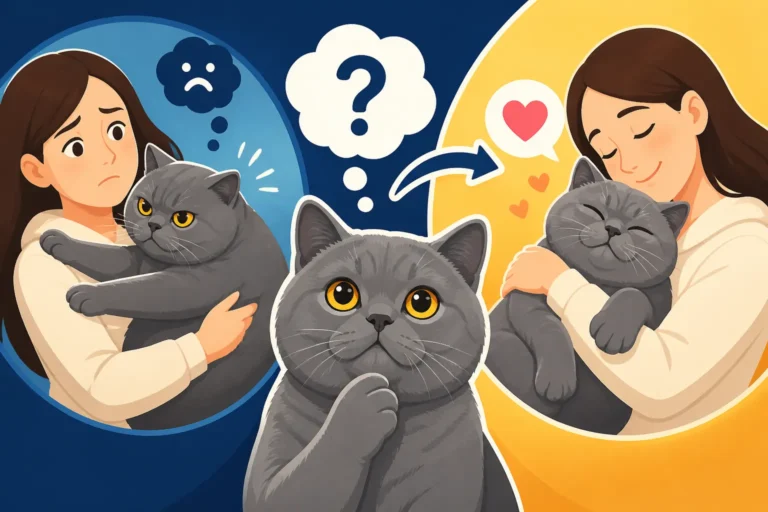
British Shorthair temperament and cobby physical build explain why this independent cat breed dislikes being held by owners.
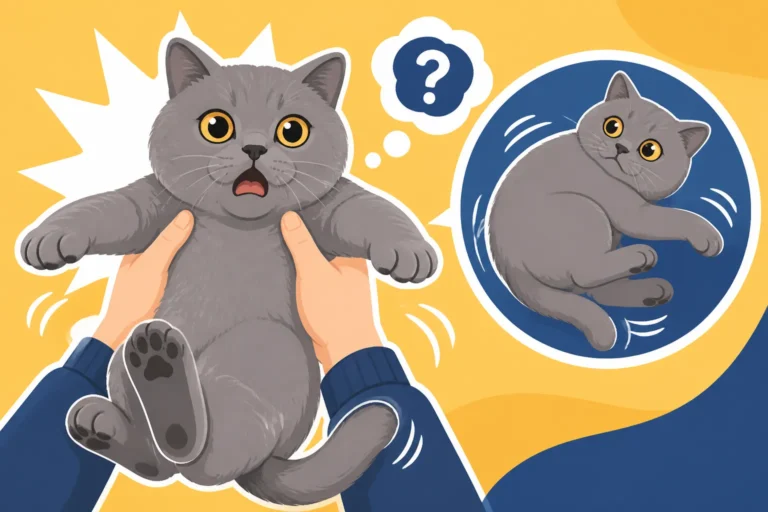
British Shorthairs squirm when lifted because heavy bodies and short legs lose grounded stability and control over balance.