Whether a British Shorthair Kitten’s Eye Color Lasts
A British Shorthair kitten’s blue eyes may not stay blue, and the change can be slow enough to make it hard to tell what is normal. Eye color usually develops over the first months of life, but the timing and final shade vary. This guide explains when color tends to settle, what adult shades are possible, and which changes deserve a vet’s attention.
How a British Shorthair kitten’s eye color develops
Why young kittens often have blue eyes
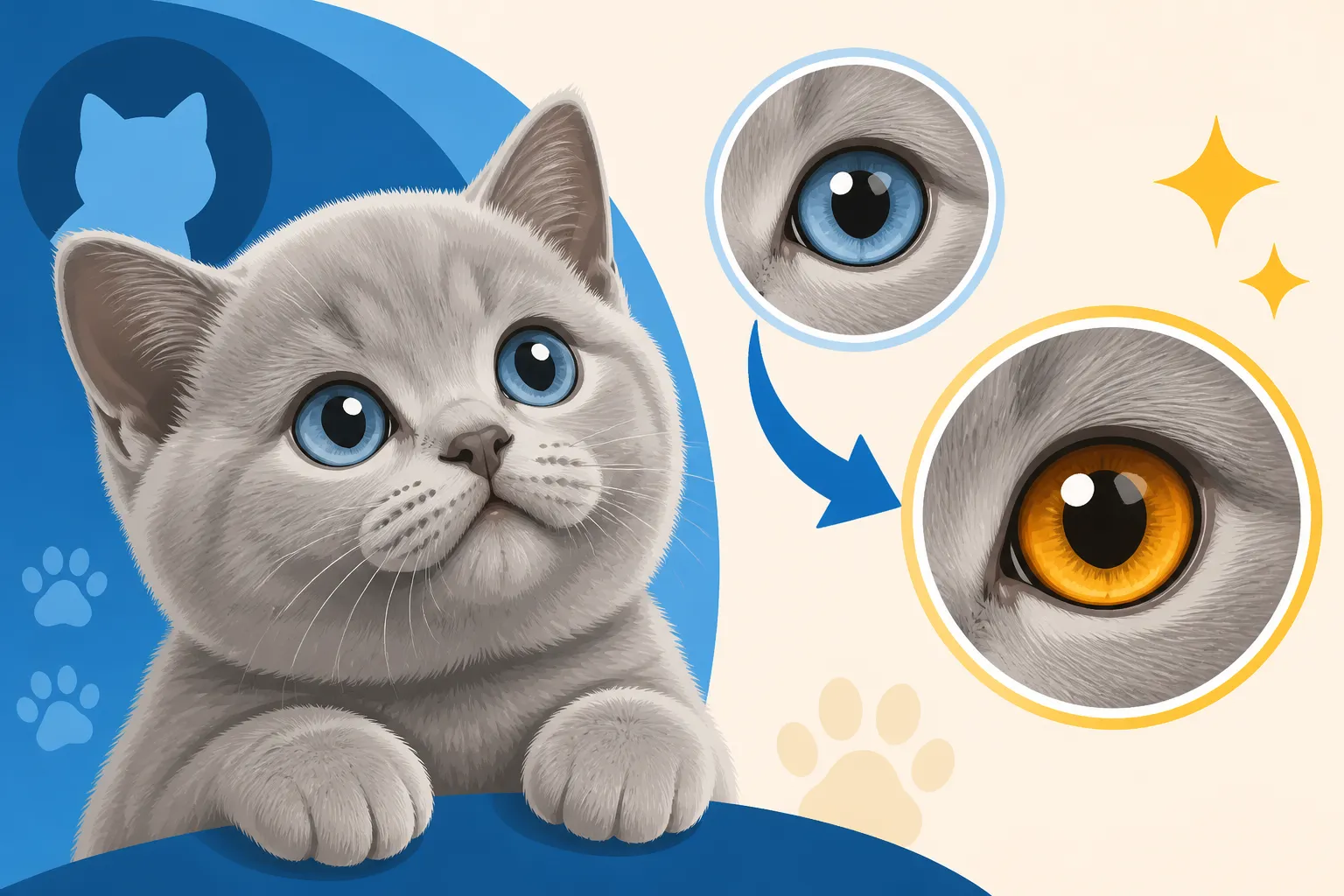
Most kittens open their eyes at around one to two weeks old, and their eyes commonly appear blue at first. That early blue is not necessarily the color they will have as adults. In young kittens, the pigment-producing cells in the iris have not yet developed their full adult activity, so the eyes may look blue or blue-gray even when the adult color will be quite different.
As pigment builds, the iris gradually takes on its lasting shade. You might notice the eyes shift from pale blue to gray, greenish, yellow, gold, or copper. The change can be subtle at first: one day the eyes look a little less blue, and a few weeks later the difference is easier to see. Lighting, window reflections, and a kitten’s pupil size can also make the same eyes appear to vary from one moment to the next.
This process happens in British Shorthairs just as it does in other cats. Breed and coat color can be clues to the adult eye color, but a kitten’s early blue eyes alone are not a reliable prediction. For broader background on the breed’s appearance, see Which Eye Colors a British Shorthair Has and A British Shorthair Comes in More Colors Than You Think.
When the color change usually happens
Eye color often begins changing during the first several weeks after a kitten’s eyes open. For many kittens, the adult color becomes clearer by around three to four months of age. Some take longer to settle, and a shade may continue becoming richer or more defined over the following months. There is no exact birthday when every British Shorthair’s eye color is guaranteed to be final.
A breeder may be able to describe the colors seen in a kitten’s parents or relatives, but that is still a prediction rather than a promise. A kitten’s eyes at eight weeks, for example, may not show the full adult copper or green shade. If you are choosing a kitten partly for its eye color, ask the breeder what changes they have observed in previous litters and whether adult photographs are available. Even then, treat the answer as an informed estimate.
A useful rule is to watch for gradual development rather than expecting a sudden, precise transition. If the eyes are simply becoming less blue over time and the kitten seems comfortable, that is commonly part of normal maturation. If one eye looks cloudy, painful, or suddenly different from the other, that is a different issue from ordinary pigment development.
What adult eye color to expect
How coat color and pattern can offer clues
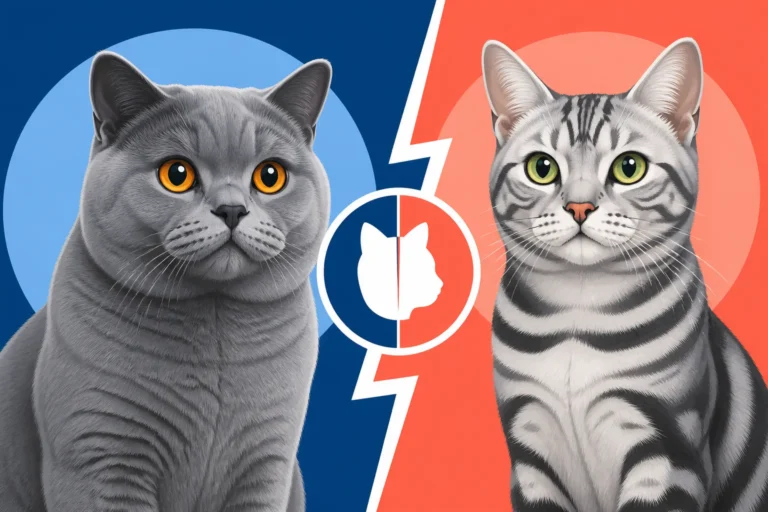
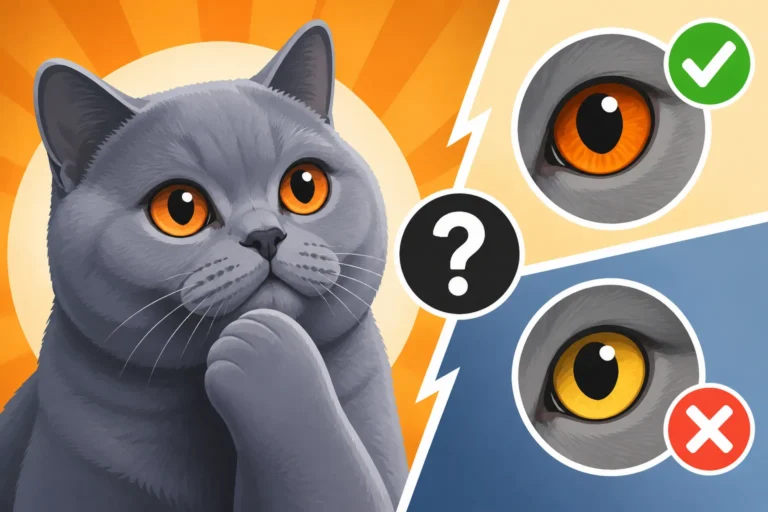
British Shorthairs do not all have one standard eye color. The likely shade is influenced by the cat’s coat color and pattern, as well as its inherited traits. Many solid-colored British Shorthairs are known for gold, copper, or orange-toned eyes, while other coat varieties may be associated with green or blue eyes. Colorpoint cats can have blue eyes, and white cats may have blue eyes, odd-colored eyes, or other shades.
Those are broad patterns, not a way to diagnose or guarantee an individual kitten’s adult eye color. A kitten’s coat may also change as it matures, and terms such as “golden,” “silver,” or “colorpoint” describe different coat characteristics that can come with different eye-color expectations. If you are comparing a kitten with a breed standard, remember that standards can distinguish between coat varieties rather than naming one eye color for every British Shorthair.
The breed’s round face and plush coat can make eye color look especially striking, but photographs can be misleading. A flash, warm indoor bulb, or bright patch of sunlight may make copper eyes appear more orange or green eyes appear more yellow. For related coat and appearance details, see Which Colors a British Shorthair Comes In and Whether a Blue Eyed British Shorthair Exists.
Can a kitten’s eyes stay blue?
Yes. A British Shorthair kitten may keep blue eyes if its adult coat pattern and inherited traits are associated with them, including some colorpoint cats. Blue eyes can also occur in white cats. In these cases, the blue is not simply “baby blue” that failed to change; it is the cat’s mature eye color.
If a kitten has a coat pattern that commonly goes with another adult eye shade, its eyes may still look blue early on and then gradually change. That is why a very young kitten’s appearance should not be used as the only basis for deciding what its adult eyes will look like. A breeder familiar with the family line may have useful observations, but even experienced breeders cannot promise a precise final shade from a photograph of a young kitten.
Two different-looking eyes can also be a normal feature in some cats. This is called heterochromia, or odd-colored eyes. It may be present as the eyes develop, particularly in cats with certain coat colors. However, a difference that appears suddenly, or a new change in an adult cat’s eye, should not be assumed to be inherited. Whether an Odd Eyed British Shorthair Is Standard explains more about the appearance, while a vet can assess any new or unexplained change.
| What you notice | What it may mean | What to do |
|---|---|---|
| Both eyes gradually shift from blue toward another shade during kittenhood | Normal pigment development | Keep an eye on the gradual change |
| Blue eyes remain as the kitten matures | May be the cat’s adult eye color, depending on coat and inherited traits | Ask the breeder about the kitten’s line; mention it at routine veterinary visits |
| One eye becomes cloudy, red, swollen, or painful | Possible eye problem rather than normal color development | Contact a veterinarian promptly |
| One eye’s color changes suddenly in an older kitten or adult cat | Could reflect an eye or health issue | Arrange veterinary advice rather than waiting for it to settle |
| One eye looks different from the other from early life, with no discomfort | May be inherited heterochromia | Have it checked during a routine exam if it has not been assessed |
Telling normal color development from a problem
Changes that are usually part of growing up
Normal color development tends to happen gradually in both eyes. The eyes may look blue when the kitten first opens them, then slowly gain pigment. A kitten may also have different-looking eyes in different rooms simply because lighting changes how the iris appears. If the kitten is eating, playing, and behaving normally, and the eyes look clear and comfortable, a slow shift in shade is generally less concerning than a sudden change.
It can help to compare the eyes in indirect daylight rather than relying on a phone flash or a brightly lit room. Take occasional photographs from a similar distance and in similar lighting. This is not a substitute for an examination, but it can help you see whether the change is gradual and symmetrical instead of relying on memory. Avoid shining a bright light directly into the kitten’s eyes to check the color.
A little dried tear residue can occur, but ongoing discharge, frequent squinting, or pawing at the face is not something to explain away as eye-color change. If you are unsure whether a change is normal, a clear photo and a description of when it began can help your veterinarian understand what you have noticed. You can also read Why a British Shorthair's Eyes Water for common reasons that eyes may look wet.
Eye changes that need veterinary attention
Contact a veterinarian if an eye becomes cloudy or develops a blue-white film, or if you notice redness, swelling, discharge, repeated squinting, apparent pain, or sensitivity to light. A kitten that keeps one eye closed or rubs at it may be uncomfortable, even if the color looks much the same. Eye problems can worsen quickly, so it is safer to ask for professional advice than to wait for a color change to resolve on its own.
A sudden difference between the eyes is also worth discussing with a vet, especially if it comes with a change in pupil size, trouble seeing, unusual behavior, or a change in the eye’s surface. The iris can appear different as a cat grows, but a sudden change in an adult cat is not the same as the ordinary gradual development seen in a young kitten. Signs a British Shorthair Is Unwell may help you think through other changes to mention at the appointment.
Do not use human eye drops or leftover medication unless a veterinarian specifically directs you to. Products intended for people may not be safe or suitable for cats, and treating the wrong cause can delay the care a kitten needs. If there is discharge, avoid rubbing the eye. Ask the clinic how to keep the area comfortable while you arrange an examination.
Caring for your kitten’s eyes while they mature
Simple ways to monitor eye color safely
During ordinary handling, take a moment to look at both eyes without forcing the kitten to hold still. Note whether they appear clear, whether the pupils look similar in comparable light, and whether the kitten can open both eyes comfortably. The goal is not to inspect the eyes obsessively; it is to notice a meaningful change early.
A brief note in your kitten’s health record can be useful: approximate age, what the eyes looked like, and whether the change was gradual. If you take photos, keep the lighting consistent and avoid using flash. This makes it easier to compare how the eyes develop over a few weeks without mistaking reflections or shadows for a real color shift.
Routine veterinary visits are a sensible place to raise questions about eye color, especially if the change seems uneven or you do not know whether the kitten’s eyes have been examined. A vet can check the eye itself rather than judging color from a picture. For a new kitten, you can also ask what should be included in ongoing preventive care; How Often a British Shorthair Needs a Wellness Exam covers the broader checkup schedule.
Gentle cleaning and sensible supplies
If there is a small amount of dried residue at the corner of the eye, ask your veterinary clinic what they recommend for your kitten. Often, gentle wiping around the area with a clean, soft, damp cloth is enough. Use a separate clean area of the cloth for each eye, and do not wipe across the eyeball or try to lift anything that appears stuck to the surface.
Some owners keep plain gauze or soft cloths in a pet-care drawer, and retailers such as Chewy carry general cat-care supplies. The important part is not the shop: avoid medicated eye products, scented wipes, and anything that could irritate the eye unless your vet has approved it. Chewy can be one place to look for basic supplies, but a product listing is not a substitute for veterinary instructions.
If you are choosing eye-cleaning items, prioritize simple, unscented materials and follow the clinic’s guidance. Chewy’s general pet-care selection may be convenient for routine supplies, but do not use a product on the eye just because it is marketed for pets. Persistent tearing, colored discharge, redness, or discomfort calls for a veterinary assessment, not a stronger cleaning product.
Disclaimer
This article is for general informational purposes only and does not constitute professional advice. Laws, prices and regulations vary by location and change over time. Consult a qualified professional for guidance on your specific situation.