Which British Shorthair Standard Harrison Weir Wrote
It's quite fascinating to dive into the very roots of our beloved British Shorthair, especially when we talk about the visionary who essentially formalized the breed, Harrison Weir. Many people wonder exactly what his contribution was, beyond just organizing the first cat show. They often ask, what specific blueprint did he lay down for these magnificent felines? This guide aims to clear up that historical mystery, detailing the foundational standard Harrison Weir meticulously crafted and how it shaped the British Shorthair we know and adore today.
The Genesis of a Breed: Harrison Weir's Vision for the British Shorthair
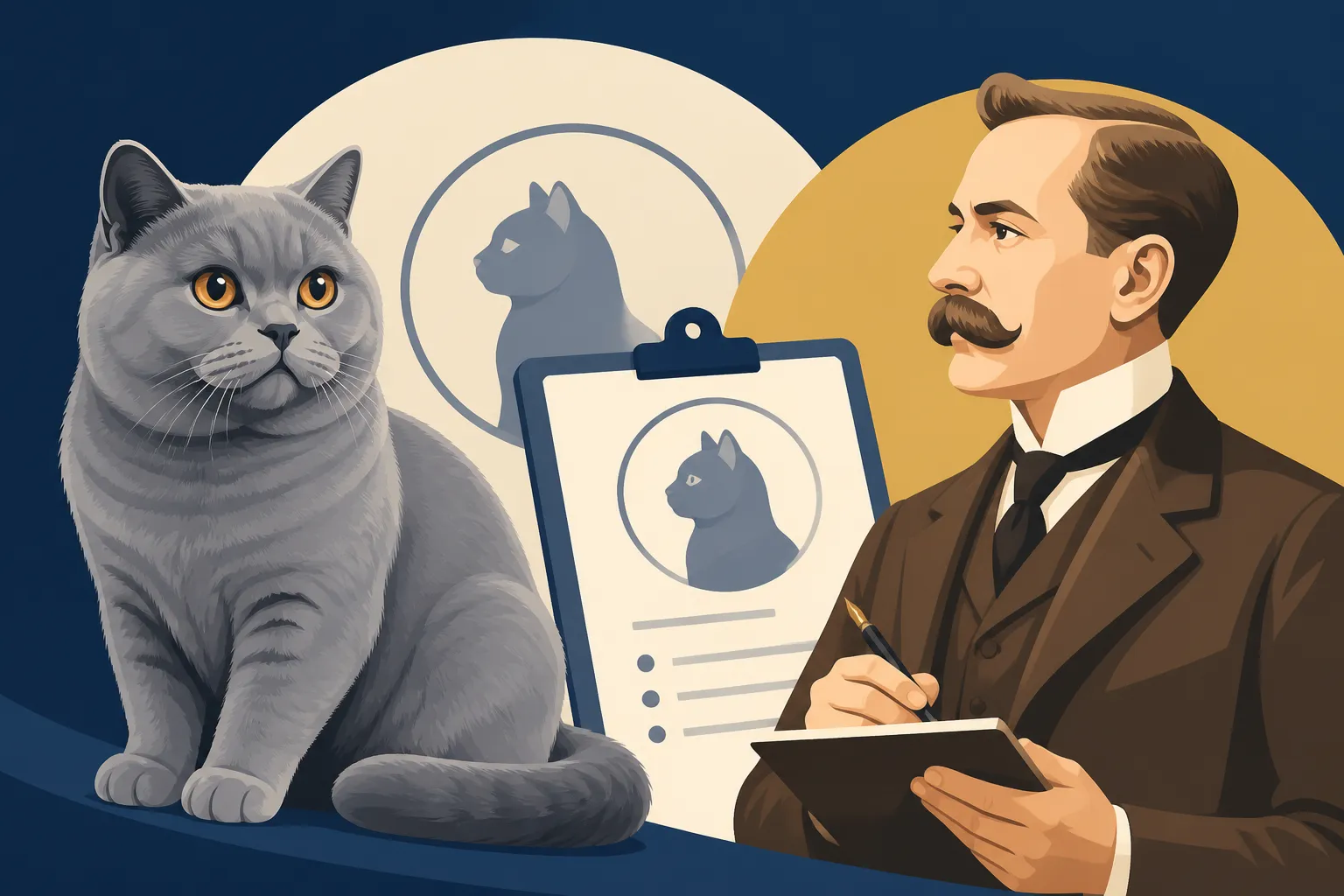
Before Harrison Weir, cats in Britain were largely just… cats. There were no formal breeds, no written standards, and certainly no organized shows where their beauty and specific traits could be celebrated. It was a wild west of feline genetics, albeit a charming one. Weir, a passionate cat lover and artist, saw the potential in the robust, short-haired cats that had long roamed the streets and farms of Britain. He recognized their unique qualities – their sturdy build, their calm demeanor, and their distinctly rounded features – and felt they deserved recognition as a distinct type.
He wasn't just observing; he was actively championing. Weir believed these "common" cats, with their inherent British hardiness, were the perfect candidates to become a national breed. He envisioned a future where these cats were not just valued for their pest control abilities, but for their aesthetic appeal and gentle companionship. This was a revolutionary idea at the time, elevating the status of the humble household cat. You can learn more about Who Harrison Weir Was to the British Shorthair and his monumental impact.
His ambition led to the organization of the first modern cat show at Crystal Palace in 1871, an event that truly kickstarted the concept of cat fancy as we know it. But for a show to mean anything, there had to be rules, a benchmark against which cats could be judged. This is where Weir’s standard came into play, providing the necessary framework for evaluation. It was a pivotal moment, taking cats from mere animals to esteemed members of defined breeds.
Defining the Ideal: Key Elements of Weir's Early Standard
Harrison Weir's standard for the British Shorthair was, for its time, remarkably detailed and comprehensive. He wasn't just throwing out vague descriptors; he was establishing a clear, aspirational image for what these cats should embody. His goal was to codify the best features of the domestic British cat, emphasizing qualities that would ensure a distinct and appealing breed.
One of the most striking aspects of his standard was the emphasis on the "cobby" body type – a stout, well-muscled physique that conveyed strength and substance. This wasn't about being overweight; it was about a solid, compact build that was clearly distinguishable from leaner, more lithe breeds. Think of it as the sturdy, reliable friend of the cat world. This body shape is still a hallmark today, though breeders work hard to ensure it's healthy and muscular, not just heavy. What Cobby Means in a British Shorthair dives deeper into this characteristic.
The Iconic Round Head and Striking Eyes
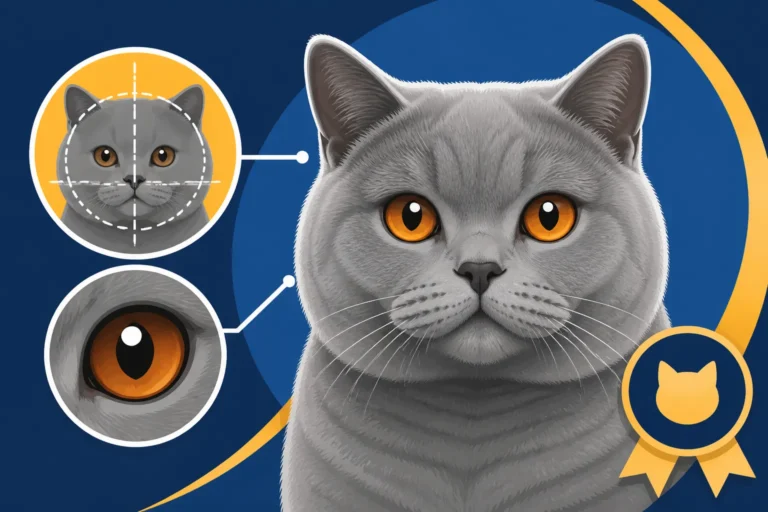
Perhaps the most enduring characteristic defined by Weir, and one that remains central to the British Shorthair's appeal, is the round head. He specified a broad, round head, with full cheeks that contribute to that endearing "teddy bear" look. This wasn't a subtle point; it was a defining feature that set the British Shorthair apart. The roundness extended to the muzzle, giving the face a sweet, open expression rather than a sharp or pointed one.
Coupled with the round head were the eyes, which Weir often favored as large, round, and copper or deep gold in color for the classic blues. He wanted eyes that were expressive and contributed to the overall gentle appearance of the cat. These eyes were to be set well apart, further enhancing the roundness of the face. For specific examples, look into The Round Head and Copper Eye a British Shorthair Is Judged On. These elements combined to create a truly distinctive facial profile that was instantly recognizable as a British Shorthair, even to those unfamiliar with cat breeds.
The Dense, Crisp Coat
The coat was another critical area of Weir's standard, and it's something that still distinguishes the British Shorthair today. He described a short, dense coat, often referred to as "crisp" or "plush," that stood away from the body rather than lying flat. This unique texture was not just for aesthetics; it was a nod to the cat's historical roots, providing excellent insulation against the British climate. It meant the coat had a certain springiness when touched, a luxurious density that invited petting.
He didn't just care about the texture; he was also interested in color and pattern. While the blue color would later become the most iconic, Weir's initial standards covered a range of colors and patterns, reflecting the diversity found in the street cats he championed. He sought clear, rich colors, free from undesirable markings or muddiness, which was a high bar for cats that were essentially foundation stock from a diverse genetic pool. Understanding What a British Shorthair's Coat Is Like really helps appreciate Weir's vision.
Here's a simplified look at some key aspects of Harrison Weir's original British Shorthair standard:
| Trait | Harrison Weir's Description | Modern British Shorthair Standard (General) |
|---|---|---|
| Body Type | "Cobby" and well-knit, broad chest, short strong legs, thick tail. | Cobby, powerfully built, broad chest, short, strong legs, round paws, thick tail tapering slightly to a rounded tip. Emphasis on muscularity over fat. |
| Head | Large, round, broad, full cheeks, good distance between ears. | Large and round, full-cheeked, broad skull, firm chin, short broad nose. No flat planes. |
| Eyes | Large, round, open, set well apart. Color typically copper or deep gold for blues. | Large, round, open, set well apart. Color varies with coat, but typically copper/gold for solid colors, green for silver tabbies/shades, blue for colorpoints. |
| Ears | Small, rounded at tip, set wide apart, blending into the head. | Small, rounded at the tips, set wide apart, fitting well into the contour of the head. |
| Coat | Short, dense, fine, plush, standing out from the body like a double pile carpet. | Short, dense, resilient, firm to the touch, standing away from the body. Often described as "crisp" or "plush." |
| Temperament | Quiet, gentle, good-natured, not highly active. | Good-natured, calm, easy-going. Not usually a lap cat but enjoys proximity. Adapts well to various environments. |
Beyond Appearance: Temperament and the Early Standard
It wasn't all about looks for Harrison Weir. He understood that a cat's personality was just as important as its physical characteristics, especially if it was to be embraced as a cherished household companion. His standard, therefore, also implicitly and explicitly addressed the desired temperament of the British Shorthair.
He envisioned a cat that was docile, good-natured, and quiet. These were qualities that made a cat a pleasant presence in the home, suitable for families and individuals alike. This calm disposition was a counterpoint to the more high-strung or overly vocal breeds that might have existed in less formalized capacities. The British Shorthair was meant to be a steady, reassuring presence, a cat that was content to observe rather than constantly demand attention. This peaceful nature is still a key reason why many families fall in love with them, as they make wonderful, low-key companions. You might be interested in The Quietest Cat in the House for more on this.
Weir’s focus on a calm and even-tempered cat reflected the Victorian ideal of a serene domestic pet. While he didn't elaborate on specific behavioral traits as much as physical ones, the emphasis on a gentle and unobtrusive nature was clear. This was a cat that could live comfortably indoors, providing quiet companionship without being overly destructive or demanding. This early blueprint for temperament undoubtedly influenced the selection process for breeding, subtly steering the British Shorthair towards the amiable personality we cherish today. When choosing a pet, finding food and accessories for a calm cat is easy on sites like Chewy, ensuring they stay content and well-fed without needing high-energy toys.
The Enduring Legacy and Modern Interpretation
Harrison Weir's foundational work for the British Shorthair standard was nothing short of revolutionary, and its influence resonates profoundly even today. While modern breed standards, maintained by organizations like The International Cat Association (TICA) and the Cat Fanciers' Association (CFA), have evolved with more precise genetic understanding and show ring requirements, the core essence of what Weir envisioned remains. The "cobby" body, the distinctively round head, the plush coat, and the calm temperament are all direct descendants of his initial descriptions.
Breeders, judges, and enthusiasts still look to these fundamental characteristics as the ideal. For example, when judging a British Shorthair in the show ring, the "roundness" of the head is still paramount, and deviations from that can impact a cat's placement. The dense, stand-off coat is also a major point of evaluation, differentiating it from other short-haired breeds. Even the quiet, stoic demeanor is something admired, rather than a cat that is overly vocal or agitated in a busy show environment. It's a testament to Weir's keen eye and understanding of what made these cats special that his vision has such longevity.
However, the modern standards have naturally expanded, offering more detailed descriptions for every part of the cat, from the shape of the nose to the thickness of the tail tip, and including a wider array of accepted colors and patterns. For instance, while Weir might have primarily seen blues and tabbies, today you find British Shorthairs in virtually every color imaginable, from cinnamon to silver shaded, and even colorpoints. Yet, even with these expansions, the underlying "British type" defined by Weir is the benchmark. Breeders work meticulously to ensure health and adherence to these standards, often providing detailed information about their cats' lineage and health screenings. This dedication ensures that the British Shorthair continues to be a magnificent and healthy breed for generations to come. Many owners find their quality cat food and enrichment items on platforms like Chewy, which helps them maintain their cat's health and appearance in line with these high standards.
Harrison Weir's standard didn't just kick off a breed; it defined an icon. He captured the heart of the British domestic cat and elevated it to a status of recognized beauty and charm. It's a legacy that continues to make the British Shorthair one of the most beloved and instantly recognizable cat breeds in the world.
Disclaimer
This article is for general informational purposes only and does not constitute professional advice. Laws, prices and regulations vary by location and change over time. Consult a qualified professional for guidance on your specific situation.