How Long the British Shorthair’s Ancestors Have Lived in Britain
It’s easy to look at the robust, placid British Shorthair of today and feel like they’ve always been around, a steadfast part of the British landscape. Many of us wonder just how deep their roots truly go into the history of the Isles, and the answer is surprisingly ancient, intertwined with human settlement and exploration. This guide delves into the fascinating lineage of these beloved cats, exploring their journey from ancient times to the modern, cuddly companions we cherish.
The Ancient Origins of Cats in Britain
When we talk about the ancestors of the British Shorthair, we’re really talking about the journey of domestic cats to the British Isles. It’s not a story that begins with Harrison Weir in the 19th century; it stretches back millennia, much further than many people realize. These aren't just any cats, but the foundation stock that, through centuries of natural selection and, eventually, human intervention, would lead to the distinct breed we adore.
The Roman Arrival: Myth or History?
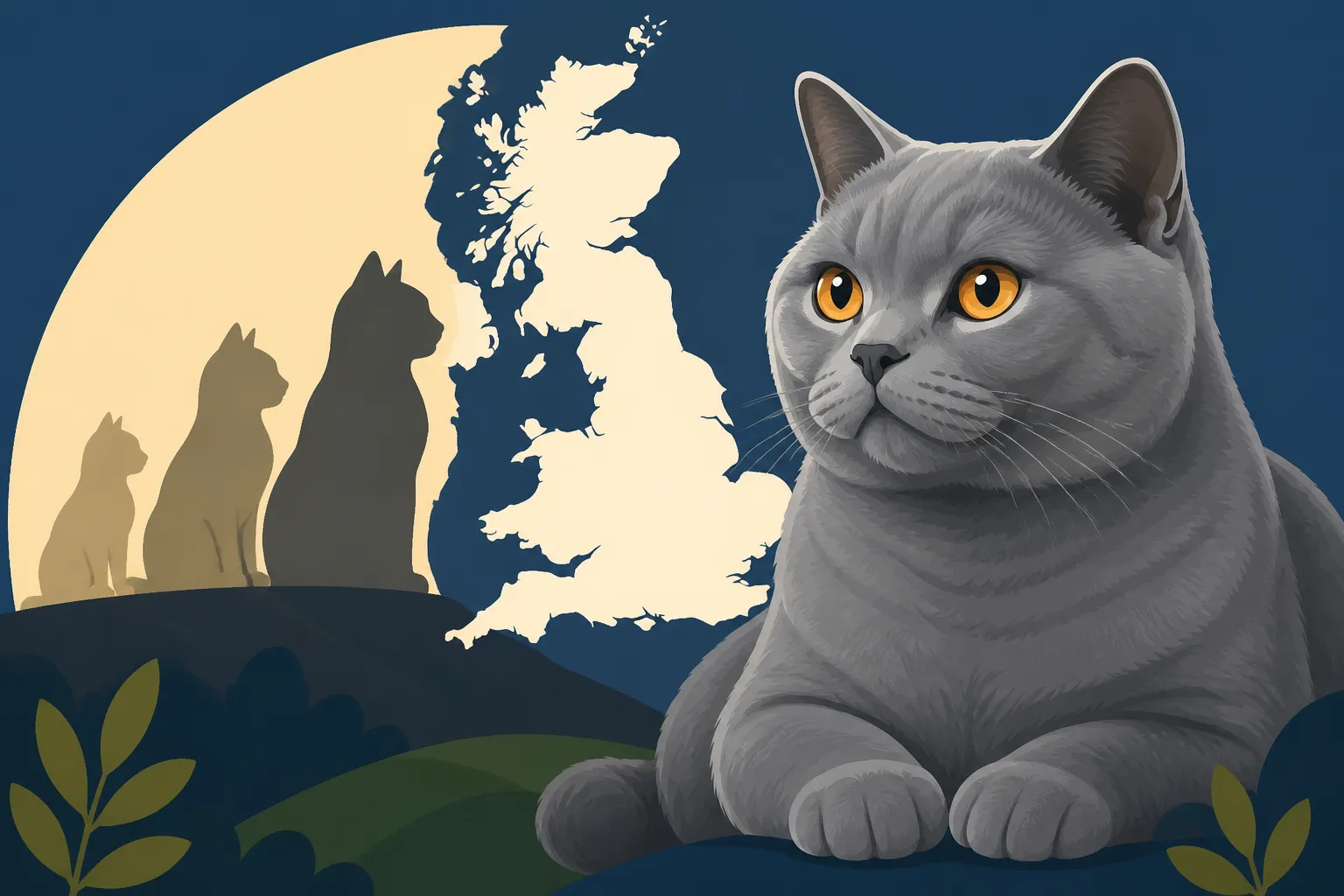
One of the most enduring theories, and one that holds a lot of weight, is that the earliest ancestors of the British Shorthair arrived with the Romans. The Roman Empire was vast, and its legions and settlers brought with them not just their culture and architecture, but also practical companions. Cats, being excellent rodent controllers, were invaluable on ships and in granaries, protecting vital food supplies from pests. It makes perfect sense that as Roman influence spread across Europe, so too did their feline companions.
Imagine a Roman galley making its way across the Channel, perhaps from Gaul, laden with supplies for a new settlement in Britannia. Tucked away amongst the provisions would be a few unassuming cats, diligently doing their job. These cats, originating from the Near East and North Africa, were hardy and adaptable. They weren't just pets; they were essential working animals. While it's unlikely any specific Roman cat directly fathered a British Shorthair we know today, their presence introduced the genetic pool that would eventually adapt and thrive in the British climate. They laid the groundwork, both literally and figuratively, for the future of cats in Britain. This historical theory explores Whether Roman Cats Founded the British Shorthair, offering a glimpse into this ancient connection.
Viking Voyages and Medieval Merchants
While the Roman connection is strong, it's important to remember that trade and travel didn't stop with the fall of Rome. Throughout the Anglo-Saxon period, the Viking Age, and the subsequent medieval era, Britain remained connected to mainland Europe through various seafaring peoples. Each wave of migration and trade likely brought more cats, further diversifying the feline gene pool on the islands.
The Vikings, for instance, were master seafarers and often traveled with cats for pest control on their long voyages. Imagine their longboats, not just filled with warriors and treasure, but also a few feline sailors, keeping the rats at bay. These cats would have intermingled with the existing feline population, adding new genetic material and contributing to the development of a resilient, self-sufficient cat population. For centuries, these cats lived alongside humans, mostly unnoticed in historical records, but deeply integrated into daily life. They weren't a recognized "breed" in the modern sense, but a collection of hardy, adaptable felines perfectly suited to the conditions of the time. These were the working cats that protected farms and homes, a far cry from the pampered pets of today. If you're wondering what these early British Shorthair ancestors were actually doing, you might find more insight in What a British Shorthair Was Kept For on a Farm.
Evolution from Wild Hunter to Domestic Companion
The journey from a wild feline to the ancestors of the British Shorthair wasn't just about arriving on British shores; it was about adapting to the local environment and integrating into human society. For centuries, these cats were largely self-sufficient, relying on their hunting prowess.
Adapting to the British Climate
The indigenous cats that established themselves in Britain over millennia developed traits suitable for the cooler, often damp, climate. We're talking about developing a dense, weather-resistant coat, which would have been a significant advantage against the British chill. This natural selection for hardiness and a good insulating coat is a direct lineage to the famous dense plush of the modern British Shorthair. Their short, thick fur, almost like a double coat, was perfectly designed to keep them warm and dry, allowing them to thrive in varied weather conditions.
Their physical build, too, would have been robust and muscular, ideal for stalking prey and navigating the varied terrain of the British countryside, from bustling port towns to quiet rural farms. These were not delicate creatures; they were survivors. Understanding Why a British Shorthair's Dense Coat Suited the Climate gives you a deeper appreciation for this evolutionary journey. This natural development, over countless generations, forged the physical characteristics that would later be refined into a distinct breed.
The Role of Natural Selection and Village Life
Before the advent of formal breeding programs, cats in Britain were shaped primarily by natural selection and their interaction with human settlements. The cats that survived and reproduced were those best suited to hunting mice and rats, enduring the elements, and tolerating human presence. They were feral, semi-feral, or fully domestic, depending on their individual circumstances and the availability of food and shelter.
These cats gravitated towards human habitations because that's where the food was – in the form of rodents attracted to stored grains and waste. Living in close proximity to humans, they developed a certain level of trust and familiarity, albeit often still maintaining a degree of independence. They learned to navigate busy villages and quiet farmsteads, becoming an indispensable, if often unacknowledged, part of the ecosystem. The cats that were most successful at these tasks, and in turn, produced healthy offspring, are the ones whose genetics carried forward, shaping the general "type" of British cat that would eventually catch the eye of early cat fanciers.
The Path to the Pedigree British Shorthair
The "ancestors" lived in Britain for a very long time, but the specific path to the British Shorthair as a recognized breed is a much more recent phenomenon, beginning in the 19th century. This is where the story shifts from natural evolution to human selection and meticulous breeding.
Harrison Weir and the First Cat Show
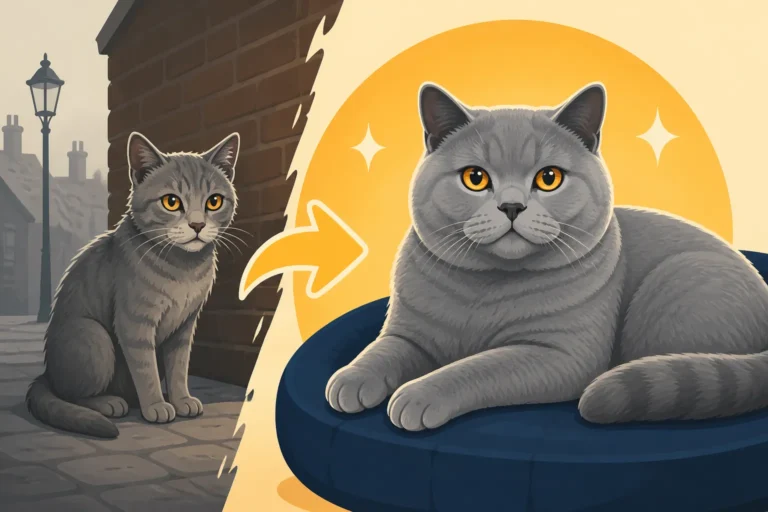
The catalyst for the British Shorthair as we know it today was a man named Harrison Weir, often considered the "father of the cat fancy." In the mid-19th century, Weir, an artist and cat enthusiast, sought to elevate the status of what he saw as the common, yet beautiful, street cats of Britain. He admired their sturdy build, round faces, and calm dispositions. He saw potential in these ordinary cats to become a distinct, admired breed.
Weir organized the first modern cat show at the Crystal Palace in London in 1871. This groundbreaking event brought together various types of cats, including many of these quintessential British domestic cats. He created a "standard" for the British Shorthair, describing the ideal characteristics he believed these cats possessed. This moment was pivotal because it formally recognized these cats as a desirable type, worthy of preservation and selective breeding. It marked the transition from "just a cat" to a distinct breed with specific traits. It's truly fascinating to delve into Who Harrison Weir Was to the British Shorthair and understand his immense influence.
| Era | Estimated Arrival of Ancestors | Key Influences | Primary Role | Genetic Legacy |
|---|---|---|---|---|
| Roman Era | Circa 1st-5th Century CE | Roman Legions & Settlements | Pest Control (ships, granaries) | Introduction of domestic cat gene pool |
| Viking/Medieval | Circa 8th-15th Century CE | Viking Explorers, European Merchants | Pest Control (ships, homes, farms) | Diversification of gene pool, hardiness |
| Early Modern | Circa 16th-18th Century | Continued Natural Selection, Village Living | Independent Hunters, Farm Cats | Adaptation to British climate, robust build |
| 19th Century (Post-1871) | Formal Recognition | Harrison Weir, Crystal Palace Cat Show | Valued Companion, Show Cat | Foundation of the British Shorthair breed |
The Impact of Selective Breeding and Outcrossing
After Harrison Weir's efforts, breeders began to selectively breed these British domestic cats to enhance and standardize the desired traits: the dense coat, the cobby body, the round head, and the calm temperament. However, the World Wars severely impacted cat breeding in Britain, with many lines lost. To rebuild the breed, ethical breeders had to make difficult choices, and some outcrossed with other breeds, most notably Persians.
This outcrossing, particularly with Persians, further solidified the British Shorthair's cobby build and enhanced the density and plushness of their coat. It also contributed to their famously rounded features. While these infusions were crucial for the breed's survival and development, they also introduced new genetic considerations, such as Polycystic Kidney Disease Came Into the British Shorthair With the Persians. Over time, through careful breeding and dedicated effort, the breed recovered and flourished, becoming the beloved British Shorthair we recognize today. This period of rebuilding and refining is a testament to the dedication of early breeders, giving the British Shorthair its current distinct characteristics.
Why This History Matters to Your British Shorthair Today
Understanding the long, rich history of the British Shorthair's ancestors isn't just a fun fact; it helps us appreciate the breed's inherent traits and provides insight into how best to care for our furry companions. Their ancient lineage has profoundly shaped their temperament, health, and physical characteristics.
The Enduring Legacy of Hardiness and Calm
The centuries of natural selection, where only the strongest and most adaptable cats survived, have left an indelible mark on the British Shorthair. They are, at their core, a remarkably hardy and resilient breed. They aren't prone to histrionics and generally possess a calm, unflappable demeanor. This steady nature is a direct echo of their ancestors, who had to be self-sufficient and capable of handling various environments without undue stress.
This inherent hardiness also means they tend to be generally healthy cats, though like all breeds, they have specific health concerns that dedicated owners need to be aware of, such as Whether the British Shorthair Is a Healthy Breed. Knowing their background helps us understand why they might be less prone to anxiety than some other breeds or why they possess such a dignified, independent streak. They thrive on routine and a peaceful environment, much like their ancestors who preferred predictable surroundings.
Understanding Their Needs in a Modern Home
Even though your British Shorthair is a pampered house cat, a direct descendant of those ancient Roman and Viking travelers, some ancestral traits still influence their needs. Their dense coat, for example, which was so crucial for survival in the British climate, still requires regular grooming to prevent mats and minimize shedding. While they don't need to hunt for their food, their history as skilled predators means they still benefit immensely from interactive playtime that mimics hunting. Providing toys that engage their minds and bodies, perhaps from a selection like those available at Chewy, can help keep them happy and healthy.
Their calm disposition also means they might not be the most enthusiastic players, which can sometimes lead to weight gain if not managed properly. This is where understanding their lower energy levels, a trait passed down from their efficient, resourceful ancestors, becomes crucial. Finding ways to encourage gentle exercise and managing their diet carefully is key to preventing conditions like Obesity Is the British Shorthair's Real Disease. Even ensuring they have a comfortable, oversized Which Litter Box Size a British Shorthair Needs from a reputable online store like Chewy acknowledges their naturally robust size and need for personal space, harking back to a time when they had the whole outdoors.
Connecting to a Deeper History
For many British Shorthair owners, knowing this long history adds another layer of appreciation for their cat. It's not just a pet; it's a living link to centuries of British history, a descendant of cats who watched empires rise and fall, ships sail, and villages grow. When you look into those big, round eyes, you're seeing a reflection of resilience, adaptability, and an enduring bond with humanity.
So, the British Shorthair's ancestors have lived in Britain for a very, very long time—thousands of years, in fact. From the cats that likely arrived with the Romans, adapting to the local climate and thriving as working animals, to the village cats that caught Harrison Weir's eye, their lineage is as rich and deep as the history of Britain itself. It's a testament to their enduring appeal and remarkable adaptability that they have evolved into the cherished companions we welcome into our homes today.
Disclaimer
This article is for general informational purposes only and does not constitute professional advice. Laws, prices and regulations vary by location and change over time. Consult a qualified professional for guidance on your specific situation.