How a British Shorthair’s Coat Differs From a Plush Coat
Many people, when they first encounter a British Shorthair, are immediately struck by their incredibly dense and soft fur. It's often described simply as "plush," and while that's not entirely inaccurate, it doesn't quite capture the unique essence of a true British Shorthair coat. This guide will delve into what truly makes a British Shorthair's coat distinct and how it differs from what we generally refer to as a "plush" coat in the wider feline world, helping you understand the nuances of this magnificent breed's most iconic feature.
The Distinctive British Shorthair Coat: More Than Just Soft
When you first touch a British Shorthair, you're not just feeling softness; you're feeling a specifically engineered coat that has evolved over generations. It's a marvel of nature, designed for the British climate and refined by breeders to achieve a very particular standard. To truly appreciate it, we need to look beyond the general description and into its unique structural qualities.
The Double-Coated Marvel
The British Shorthair possesses a double coat, which is a fundamental characteristic. This means it has two distinct layers of fur: a soft, dense undercoat that provides insulation, and slightly coarser, resilient guard hairs that form the outer layer. These guard hairs are what give the coat its "crisp" feel and cause it to stand away from the body, rather than lying flat. Imagine a densely packed, resilient carpet – that's closer to the tactile experience than a silky smooth fabric. This double layer was historically crucial for their ancestors, who were sturdy working cats, keeping them warm and dry in often damp and chilly conditions. It acts as a natural buffer against the elements, providing both warmth and a degree of water resistance, much like a well-insulated, weatherproof jacket.
The density of this coat is truly remarkable. When you run your hand against the grain, you'll feel a definite resistance, and the fur will spring back into place almost immediately. This isn't just aesthetic; it contributes to the cat's overall robust and rounded appearance, enhancing their famous "teddy bear" look. This resilient texture is also why the Why a British Shorthair's Coat Protects It so effectively. It's a practical, functional coat first and foremost, though undeniably beautiful.
The "Crisp" Texture Paradox
Here's where the British Shorthair coat truly sets itself apart from a generic "plush" description: its unique "crisp" texture. While undeniably soft, it doesn't have the limp, silky softness you might associate with other breeds. Instead, it has a firm, resilient quality. Think of it like this: a high-quality velvet might be plush and soft, but it conforms immediately to your touch. A British Shorthair's coat, however, has a springiness, a density that gives it structure. When you pet it, you feel a slight resistance, almost like a firm cushion, before your fingers sink into its depth. It's a textural paradox – soft yet firm, dense yet airy.
This crispness is a defining characteristic of the breed standard, often described as "firm and dense to the touch, like a thick pile carpet." It’s not just a casual observation; it’s a specific trait that breeders strive for. This unique feel is directly related to the density and the way the individual hairs grow. Each hair is relatively short, but there are so many of them packed together, and they stand perpendicular to the skin, creating that distinct, almost springy feel. This texture is precisely why the Why a British Shorthair's Coat Feels Crisp is so important to understanding the breed.
How it Visually Differs
The British Shorthair's coat plays a huge role in its signature appearance. Because the fur stands away from the body, it contributes significantly to the breed's renowned cobby, rounded physique. It makes the head appear even rounder, the cheeks fuller, and the overall silhouette softer and more substantial. This isn't just about the sheer volume of fur; it's about how that fur is structured. A cat with a flatter-lying coat, even if dense, would look sleeker and less "cuddly" in its outline.
Consider the famous "teddy bear" look often attributed to British Shorthairs. This visual appeal is almost entirely due to the way their coat behaves. It creates a soft, plush exterior that makes them look incredibly huggable, even though many British Shorthairs prefer to sit near you rather than on you. The depth and resilience of the coat make them appear solid and well-padded, enhancing the breed's naturally robust build. It's an optical illusion of sorts, making an already sturdy cat look even more substantial and appealing.
Decoding the "Plush Coat" Label in Cats
The term "plush coat" is widely used, but it's important to understand that it's often a general descriptor rather than a specific, breed-defined characteristic like the British Shorthair's. Many cat lovers use it to refer to any short, dense, and soft coat, but the underlying structure and feel can vary significantly from breed to breed.
A General Description, Not a Specific Type
When someone says a cat has a "plush coat," they usually mean it feels wonderfully soft and dense to the touch. However, this isn't a single, universally recognized genetic or structural coat type in the same way "double coat" or "rex coat" is. Instead, "plush" serves as a convenient adjective to describe a pleasant tactile sensation. It doesn't tell you how that softness or density is achieved, nor does it imply a specific hair structure or growth pattern. This is why you might hear the term applied to several different breeds, each with their own unique coat characteristics that merely result in a plush feel. It’s important to remember that a description like this is subjective and broad.
Common Characteristics of a General Plush Coat
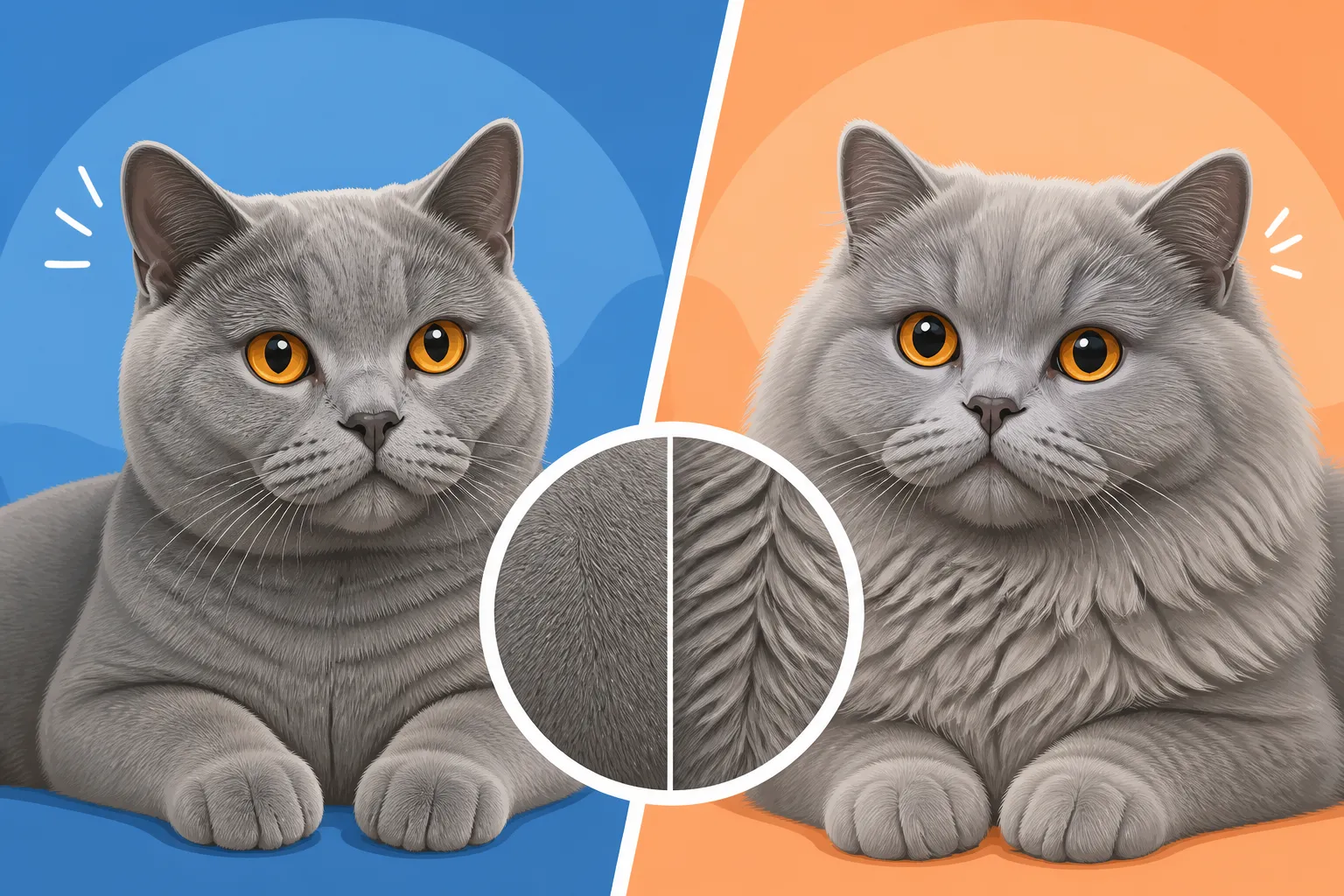
Generally speaking, when we talk about a cat with a "plush coat," we're often thinking of fur that is incredibly soft, dense, and feels smooth or velvet-like. These coats often lack a harsh outer guard hair layer, or if they have one, it's very fine and blends seamlessly with the undercoat, contributing to the overall soft feel. The hairs themselves tend to be fine and tightly packed, creating a uniform, velvety surface that invites stroking. Unlike the British Shorthair's coat, which distinctly stands away from the body, many generically plush coats tend to lie closer to the cat's silhouette, giving them a sleeker, more streamlined appearance. The emphasis here is usually on softness and smoothness, without the distinct "crispness" of the British Shorthair.
Breeds Often Described as Having Plush Coats
To really highlight that "plush" is a broad term, let's look at some other breeds often described as having plush coats, and how they differ from the British Shorthair:
- Russian Blue: These cats are famous for their incredibly soft, dense, shimmering blue coats. Their fur is often described as feeling like velvet or seal fur. While dense and soft, their coat typically lies closer to the body than a British Shorthair's and has a unique "tipping" that gives it a silvery sheen. It feels much silkier and less "crisp" than a BSH.
- Chartreux: Often mistaken for British Shorthairs, Chartreux cats also have dense, soft coats. However, their texture is often described as slightly woollier or more cottony than a BSH, though still quite dense. Their coat stands away from the body to some extent, but lacks the distinctive resilience and firm texture of the British Shorthair.
- Exotic Shorthair: Essentially a short-haired Persian, the Exotic Shorthair boasts an incredibly dense, soft coat. Their fur is very fine and stands away from the body to create a fluffy, teddy-bear like appearance, similar to the BSH in silhouette. However, the texture itself is usually much softer, finer, and less "crisp" than a British Shorthair's, almost like powdered velvet.
As you can see, while all these coats are "plush" in the sense of being dense and soft, the specific texture, how they lie on the body, and the underlying hair structure can be quite different.
British Shorthair Coat Versus the Generic Plush: A Direct Comparison
Let's get down to the nitty-gritty of what truly separates a British Shorthair's coat from a more general "plush" description. It's all about specific characteristics that create a unique tactile and visual experience.
Texture: Crisp vs. Silky Soft
This is perhaps the most significant differentiator. A British Shorthair's coat isn't just soft; it's crisp. When you run your hand over it, you'll notice a distinct resilience, almost a springiness, that pushes back gently. It feels substantial, like a well-made, dense wool rug. This "crisp" quality comes from the unique angle and density of the guard hairs working in tandem with the thick undercoat. It’s what gives the coat its structure and allows it to stand out from the body.
In contrast, many cats described as having a "plush" coat might feel silky, velvety, or extremely fine and soft, but they often lack that inherent "crisp" resilience. Their fur might feel more yielding, flowing over the contours of the body with less resistance. Think of the difference between a high-pile but firm carpet and a deep, soft velvet throw blanket. Both are "plush," but their specific textures are very distinct. The British Shorthair's coat is designed for durability and protection, giving it that firm, almost "crunchy" feel that is truly one-of-a-kind among short-haired breeds.
Density and Loft: Standing Away vs. Lying Flat
Another key difference lies in the way the fur sits on the cat's body. The British Shorthair's coat has an exceptional "loft" – meaning it stands away from the body at roughly a 90-degree angle. This characteristic contributes enormously to their signature rounded, cobby appearance. You can gently push the fur and it will spring back to its upright position. This isn't just a casual observation; it's a critical aspect of their breed standard and a hallmark of their unique look. It's the reason they look so much like a fluffy, dense cloud or a lovable teddy bear.
Many other cats with "plush" coats, while dense, typically have fur that lies flatter against their body. While it might still be incredibly soft and abundant, it follows the natural contours of the cat's musculature more closely, giving them a sleeker, perhaps more elegant silhouette. They don't have that distinctive "stand-off" quality that visually enlarges and softens the British Shorthair's outline. This is a crucial element in What a British Shorthair's Coat Is Like and why it's so beloved.
Undercoat and Guard Hairs
The specific structure of the British Shorthair's double coat is what creates its unique texture and loft. Both the undercoat and the guard hairs are short, very dense, and of similar length. This uniform shortness and incredible packing density contribute to the overall resilience and crispness. The guard hairs, though present, are not long or coarse enough to feel bristly; rather, they blend with the undercoat to create that distinctive springy texture. It’s a finely tuned balance of softness and structure.
For other cats with "plush" coats, the composition of their undercoat and guard hairs might differ. Some might have a very minimal or absent guard hair layer, leading to an exceptionally soft and fine texture (like the Exotic Shorthair). Others might have a dense undercoat with guard hairs that are softer and less rigid than those of a British Shorthair, resulting in a silkier feel that lies closer to the body (like the Russian Blue). The British Shorthair's particular combination of dense, short undercoat and equally short, resilient guard hairs is the secret to its distinctive "crisp plushness." This density is also linked to How Dense a British Shorthair's Coat Is.
| Feature | British Shorthair Coat | General "Plush" Coat (e.g., Russian Blue, Exotic) |
|---|---|---|
| Texture | Crisp, firm, resilient, springy | Silky, velvety, fine, soft, yielding |
| Density | Extremely dense, thick pile | Very dense, often fine hairs |
| Loft | Stands away from the body (90-degree angle) | Tends to lie closer to the body, smooth |
| Feel | Soft yet structural, "cushiony" | Soft, smooth, fluid |
| Guard Hairs | Short, dense, resilient, contribute to crispness | Variable; often fine, soft, or nearly absent |
| Undercoat | Very dense, short | Dense, can be very fine or cottony |
| Visual Effect | Rounded, robust, "teddy bear" appearance | Sleeker, streamlined, or fluffy (Exotic) |
Why Understanding Your British Shorthair's Coat Matters for Care
Knowing the unique characteristics of your British Shorthair's coat isn't just for appreciating its beauty; it's absolutely vital for providing the right kind of care. A misunderstanding of their coat type can lead to improper grooming, health issues, and unnecessary stress for both you and your cat.
Grooming Needs and Tools
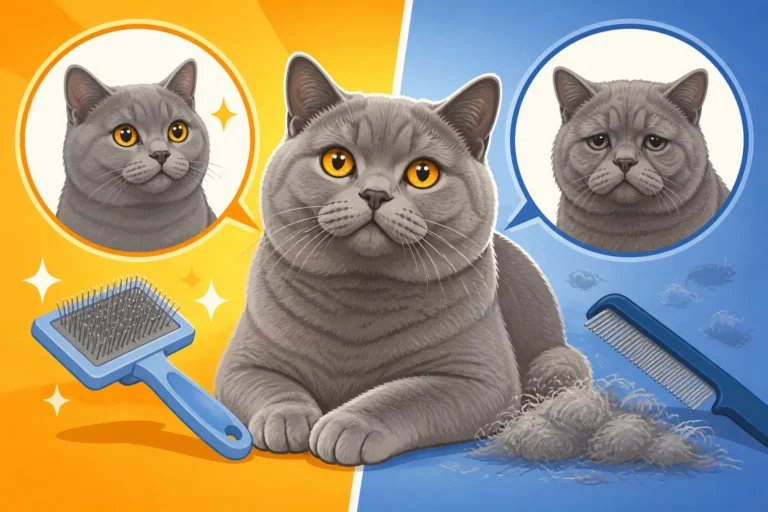
Because of its extraordinary density and how it stands away from the body, a British Shorthair's coat has specific grooming requirements. You can't just grab any brush and expect good results. The primary tool you'll need is a good quality metal comb, preferably one with both fine and wide teeth. This type of comb is essential for penetrating through that incredibly dense outer layer to reach and detangle the undercoat. If you only use a soft brush that skims the surface, you'll miss the crucial undercoat, which can lead to matting and skin issues underneath. Investing in a sturdy metal comb, perhaps from a reputable pet supplier like Chewy or Amazon, is key.
During shedding seasons, which British Shorthairs definitely have, the grooming needs intensify. They "blow their coat," meaning they shed a significant amount of undercoat to prepare for the change in temperature. During these times, daily combing might be necessary to prevent tangles and reduce the amount of loose fur they ingest, which can lead to hairballs. It's a different approach than what you might use for a cat with a less dense or single coat. Using tools that are too harsh or not penetrating enough can damage the unique texture or simply be ineffective. How Often a British Shorthair Needs Combing really comes down to these seasonal shifts.
Shedding Patterns
Despite their short hair, British Shorthairs do shed, and they can shed quite a bit, especially during seasonal changes. They have distinct periods, often in spring and autumn, when they "blow" their undercoat. This is when you'll find a noticeable increase in fur around the house, and your grooming efforts will need to be stepped up. It's not usually a continuous, year-round heavy shed, but rather concentrated bursts of shedding. Understanding this pattern helps you prepare for it and manage the loose fur more effectively. You don't want to be caught off guard by a sudden influx of fluffy undercoat.
Failing to comb out this shedding undercoat can lead to several problems. It can contribute to matting, especially in areas like the armpits, behind the ears, and around the tail. It can also lead to more hairballs, which can be uncomfortable for your cat and, in severe cases, cause blockages. Proper combing during these periods helps keep their coat healthy, reduces household fur, and minimizes hairball issues. This seasonal phenomenon is further explained in The Two Weeks a British Shorthair Drops Its Undercoat.
Health and Condition Indicators
Your British Shorthair's coat is a fantastic indicator of their overall health and well-being. A healthy British Shorthair should have a dense, crisp, and clean coat that springs back when touched. It should look vibrant and have a soft sheen, depending on the color. Any deviation from this can be a red flag. For instance, a dull, greasy, sparse, or matted coat can signal underlying health issues, nutritional deficiencies, or a lack of proper grooming.
If you notice changes in your cat's coat quality – perhaps it's suddenly less dense, feels rough, or appears unkempt – it's worth a visit to the vet. Sometimes, a poor coat can be a sign of anything from parasites and allergies to more serious systemic diseases or even pain that prevents them from grooming properly. Ensuring your British Shorthair has a balanced diet with high-quality protein is crucial for maintaining that magnificent coat. An aging British Shorthair might also experience changes, as highlighted in What an Aging British Shorthair's Coat Looks Like, so knowing the baseline is important for senior care. Regular inspection of their coat should be a routine part of your care regimen.
Disclaimer
This article is for general informational purposes only and does not constitute professional advice. Laws, prices and regulations vary by location and change over time. Consult a qualified professional for guidance on your specific situation.