How Vocal a British Shorthair Is
British Shorthair vocal habits include soft, brief meows and deep, resonant purrs that signal contentment and affection.
Change the room, not the cat.
Litter box avoidance, scratching and furniture, multi-cat tension and night activity — and the vertical space, play routines and feeding puzzles that solve more than correction does.

British Shorthair vocal habits include soft, brief meows and deep, resonant purrs that signal contentment and affection.
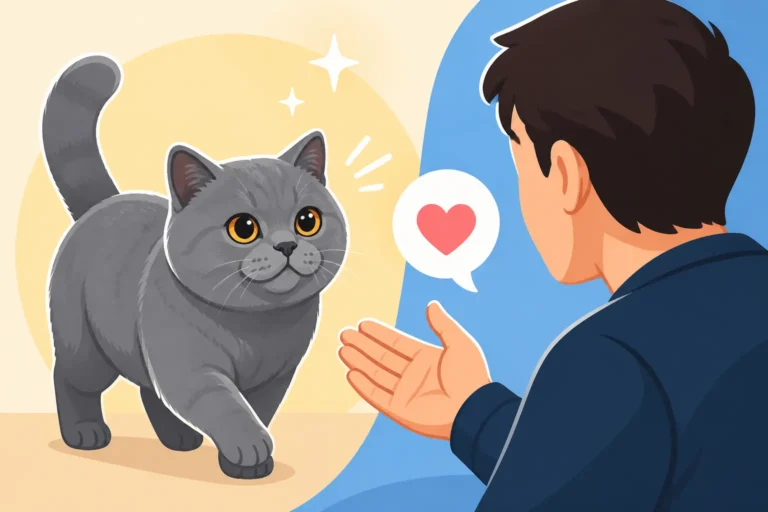
British Shorthair cats react to strangers with caution and observation, preferring safe distances over instant friendliness.
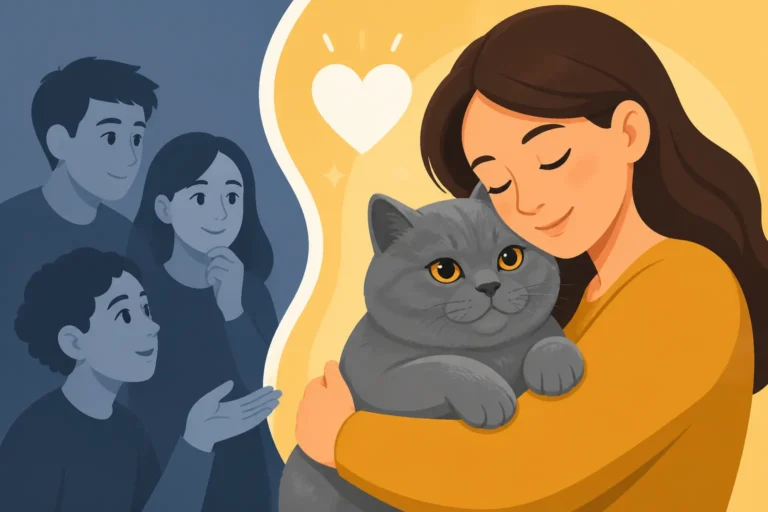
British Shorthair bonding behavior and subtle affection cues explain whether these calm cats choose just one favorite human.
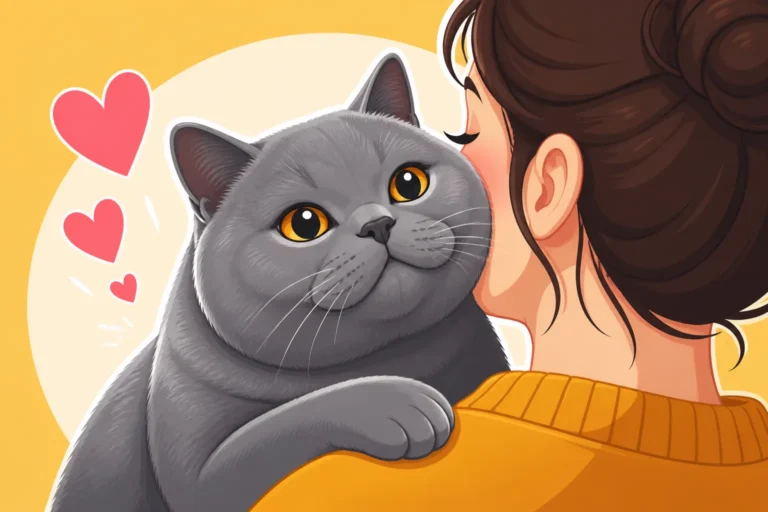
British Shorthair cats show affection through quiet proximity, slow blinks, and head bumps instead of demanding lap cuddles.
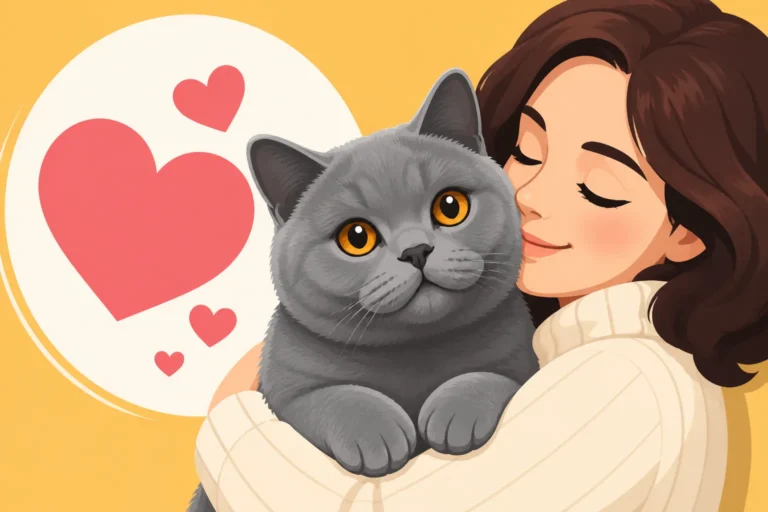
British Shorthair affection patterns explain why cats sit nearby, show quiet loyalty, and prefer personal space over lap cuddles.
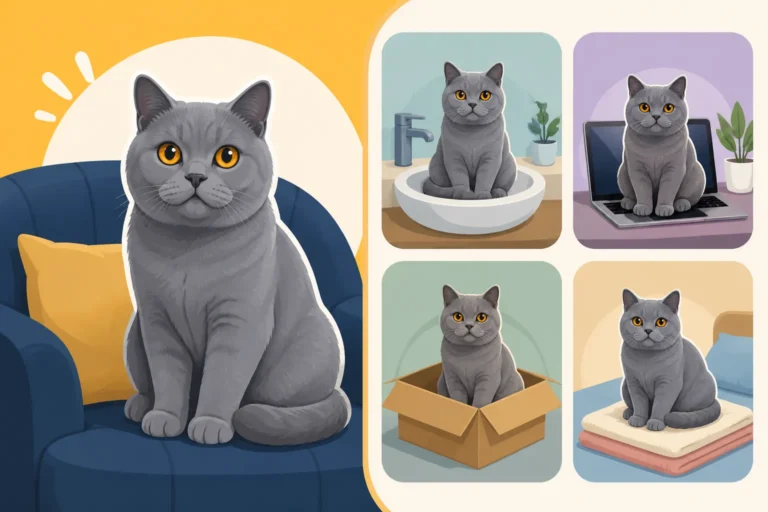
British Shorthair sitting preferences explain why independent cats choose adjacent cushions over laps for quiet companionship.
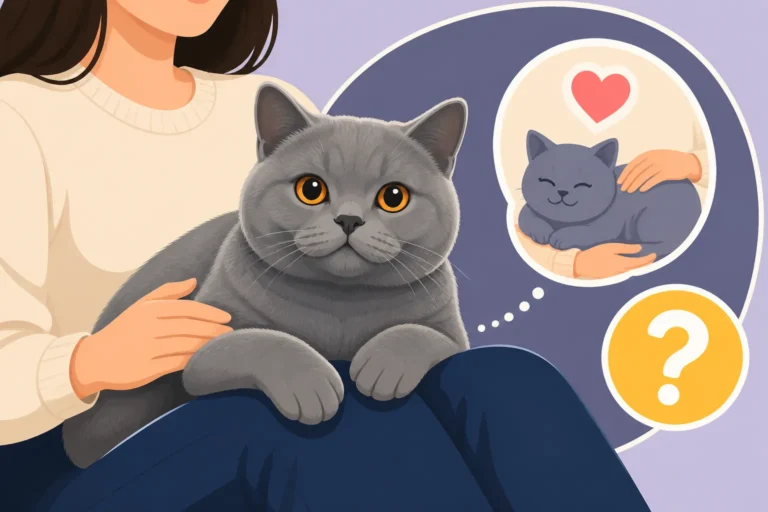
British Shorthair affection habits and independent temperaments explain why these calm cats rarely sit on laps.
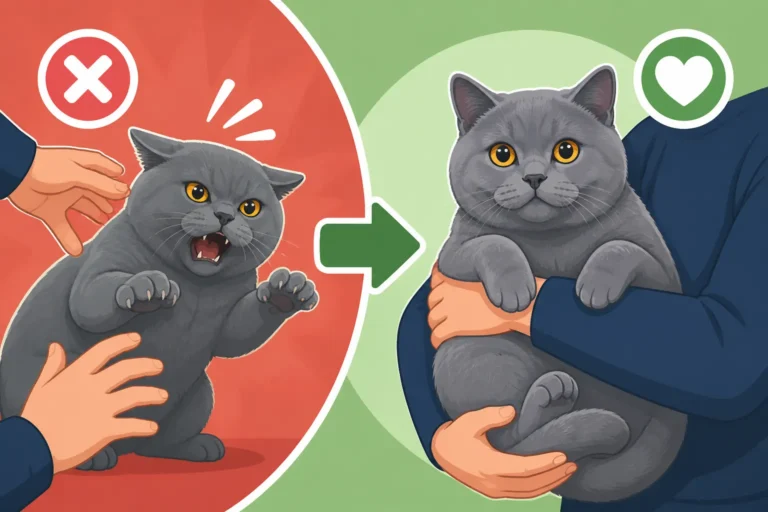
British Shorthair lifting techniques and breed traits explain why cats resist being picked up and show gentle handling strategies.
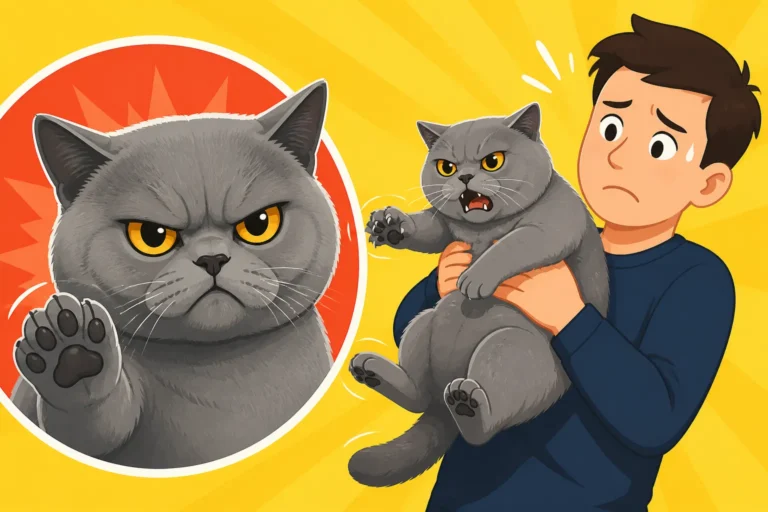
British Shorthair cats hate being picked up because their independent temperament and grounded preference require four paws on the floor.
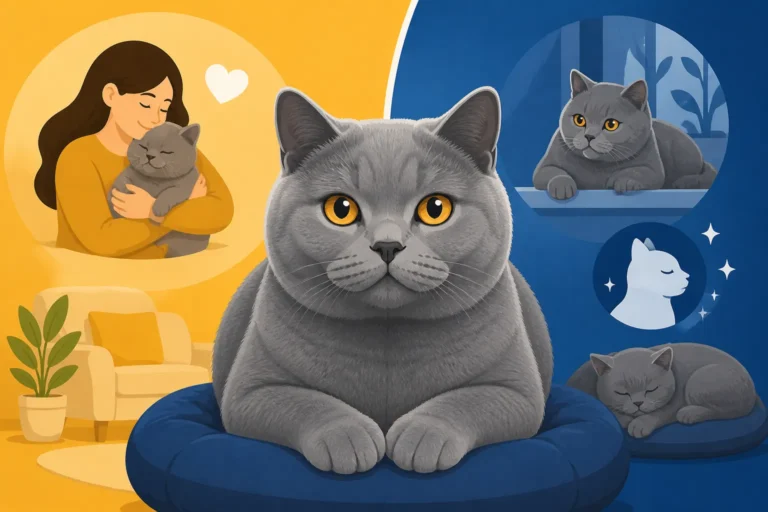
British Shorthair temperament includes self-sufficiency, quiet companionship, and subtle affection without constant lap sitting.