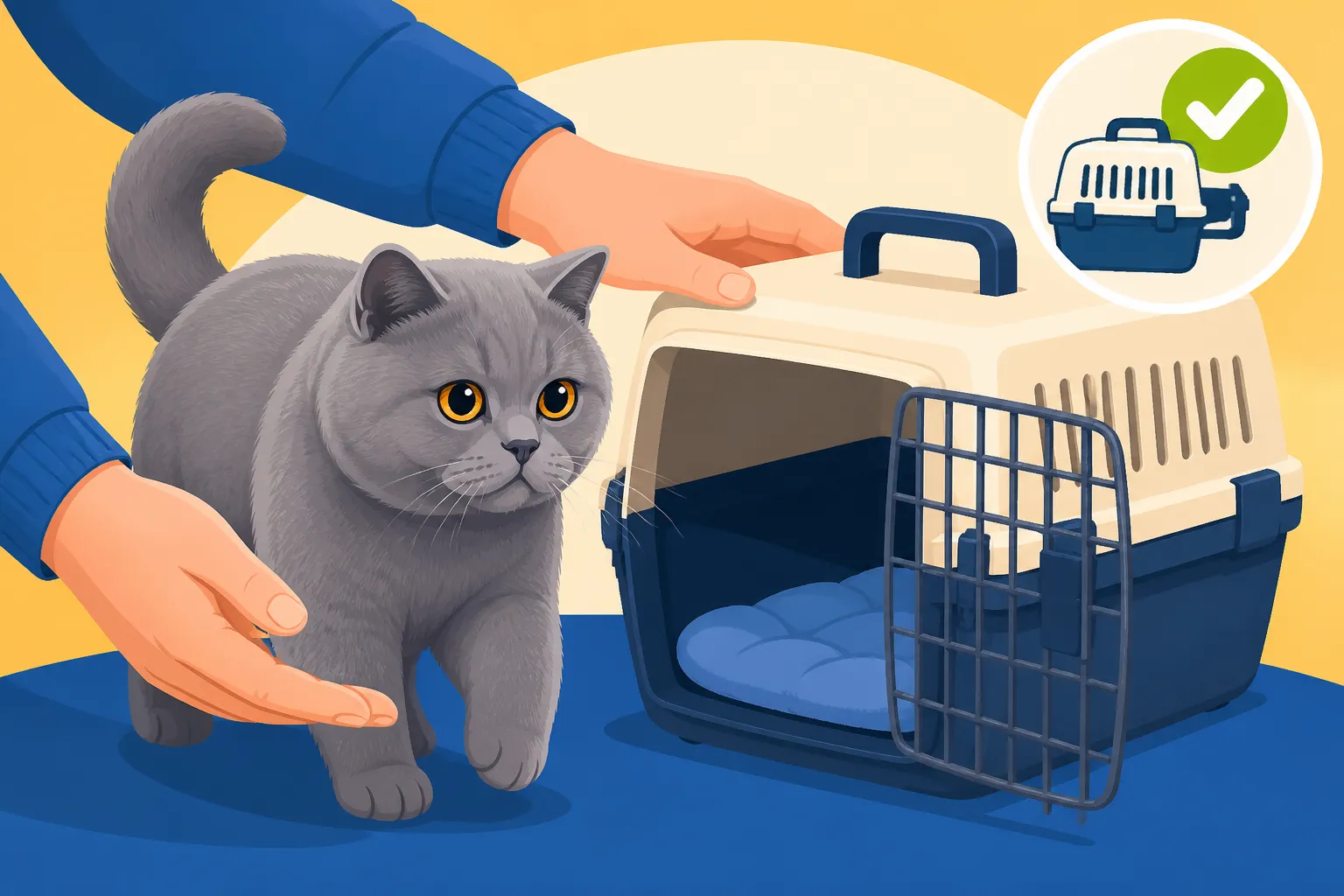
How to Get a British Shorthair Into a Carrier
Ah, the dreaded carrier! If you're a British Shorthair owner, you know the struggle is real. The mere sight of that plastic or fabric box can turn your usually placid, teddy-bear-like companion into a solid, unmovable (or surprisingly fast) brick of fur. Getting a British Shorthair into a carrier often feels less like coaxing a cat and more like trying to stuff a fluffy, indignant octopus into a suitcase. But fear not, this guide is here to walk you through proven strategies to make carrier time less of a wrestling match and more of a calm, controlled process for both you and your beloved BSH.
Understanding Why Your British Shorthair Hates the Carrier
Let's be honest, few cats enjoy going into a carrier, but for a British Shorthair, it can be a particularly vexing experience. Understanding the root causes of their aversion is the first step to overcoming it. It’s not just a whim; there are deep-seated reasons tied to their unique personality and past experiences.
The British Shorthair's Calm, But Stubborn Nature
British Shorthairs are renowned for their calm, laid-back demeanor. They are creatures of habit and routine, valuing predictability and quietude above all else. Sudden disruptions or forced interactions often go against their very nature. They appreciate having their paws firmly on solid ground, both literally and figuratively, and being picked up, much less inserted into a confined space, can feel like a profound violation of their personal autonomy. Many British Shorthairs, despite their affectionate nature, aren't overly fond of being held for extended periods, and being placed in a carrier takes this a step further. You might find yourself wondering why your typically mellow cat suddenly transforms into a creature of immense strength when faced with the carrier, but it’s their deep-seated resistance to being controlled in a way they don't understand or consent to. They are not naturally flighty, but they are incredibly resolute when they don't want to do something.
Their calm disposition often translates into a quiet confidence, which, when challenged, can manifest as impressive stubbornness. They are not prone to panic like some more excitable breeds, but they will absolutely dig their heels in and resist with surprising force if they feel threatened or unfairly coerced. This isn't aggression; it's just their way of saying, "No, thank you, I prefer things exactly as they are." This strong will makes it crucial to approach carrier training with patience and respect for their boundaries, rather than trying to overpower them, which will only lead to further distrust. Their natural inclination is to observe and assess, and if the carrier has historically led to undesirable outcomes, they've already made their judgment.
Negative Associations with the Carrier
For many British Shorthairs, the carrier isn't just a box; it's a harbinger of things they dislike. Most commonly, it's associated with a trip to the veterinarian, a place that, despite our best intentions, can be stressful for a cat. The car ride itself can be unsettling, with unfamiliar motions, sounds, and smells. Then comes the vet's office, with strange animals, new smells, and uncomfortable examinations or procedures. All these negative experiences become intrinsically linked to the carrier.
It's not just vet visits, though. The carrier might also be associated with loud, scary noises during travel, or perhaps even an unpleasant boarding experience. Cats have excellent memories, especially for things that cause them discomfort or fear. Every time the carrier appears, their feline brain quickly connects it to those past unpleasant moments, triggering anxiety and resistance. This creates a vicious cycle: the cat resists, the owner becomes stressed, the process becomes more difficult, and the negative association strengthens. Breaking this cycle requires diligent effort to change the carrier's narrative from one of fear to one of neutrality, or even positive anticipation. Consider that the carrier could smell of disinfectant from a vet visit, or the lingering scent of another animal, which is deeply unsettling to a cat whose world is governed by scent. For more about their general reactions to external stressors, you might want to read How a British Shorthair Copes With Boarding.
Choosing the Right Carrier for Your British Shorthair
Before you even think about getting your British Shorthair into a carrier, let's talk about the carrier itself. The right carrier can make a world of difference, reducing stress for both of you. Many owners make the mistake of buying carriers that are simply too small, especially for a cobby, substantial breed like the British Shorthair.
Size and Comfort are Key
British Shorthairs are not dainty cats. They are known for their sturdy, cobby build, broad chest, and substantial weight, even when perfectly healthy. This means they need a carrier that is generously sized. Your British Shorthair should be able to stand up, turn around completely, and lie down comfortably without feeling cramped. A carrier that's too small will exacerbate their feeling of confinement and lead to increased stress and even panic. Imagine being stuck in a tiny car for a long journey; it's no fun. For their comfort and safety, ensure there's ample room.
Look for carriers with good ventilation on multiple sides. This isn't just about fresh air; it also allows your cat to see out, which can reduce anxiety for some, and allows you to check on them easily. Materials matter too. Hard plastic carriers are often easier to clean in case of accidents, while soft-sided carriers can be lighter and more flexible, but may not offer as much protection. Whichever you choose, prioritize one that offers enough space for your BSH to feel as unconfined as possible within its necessary limits. Remember, your British Shorthair might weigh quite a bit, so choose a carrier that can safely support their weight without bowing or collapsing. You can find many suitable options, often with customer reviews detailing their effectiveness for larger cats, on platforms like Amazon. For a better understanding of their typical size, refer to What a British Shorthair Weighs and How Big It Gets.
Top-Loading vs. Front-Loading Carriers
When it comes to carrier design, the method of entry can be a game-changer for a stubborn British Shorthair.
- Front-loading carriers: These are the most common, where your cat enters through a door at one end. The problem is that many British Shorthairs will brace themselves against the opening with all four paws, making it nearly impossible to gently persuade them inside. Trying to push them in from the front often results in a full-blown battle, ending with scratches for you and terror for your cat. This method relies heavily on the cat's cooperation, which, let's face it, is often in short supply when the carrier comes out.
- Top-loading carriers: These have an opening on the top, allowing you to lower your cat in from above. This is often a less confrontational method, as cats are generally easier to place downwards than to push forwards. You can gently cradle your BSH and lower them in, often before they even realize what's happening. Many pet supply stores and online retailers like Amazon offer robust top-loading carriers that are perfect for larger cats.
- Disassembling carriers: Some carriers, particularly hard-sided ones, can be taken apart entirely, with the top half detaching from the bottom. This is a fantastic feature for vet visits, as the vet can often examine your cat in the bottom half of the carrier, minimizing the need to pull them out, which reduces stress for everyone. This design also allows you to place your British Shorthair into the bottom half and then gently reattach the top, again avoiding the dreaded "stuffing" maneuver. When exploring options, consider these convertible designs for maximum flexibility and stress reduction.
| Carrier Type | Pros | Cons | Ideal For |
|---|---|---|---|
| Front-Loading | Widely available, often more affordable | Can be difficult to load a reluctant cat, requires cat cooperation | British Shorthairs that are already carrier-trained or less resistant |
| Top-Loading | Easier to place a cat inside from above, less confrontational | Can be slightly heavier or bulkier, fewer style options | Highly resistant or large British Shorthairs, minimizes struggle |
| Disassembling | Allows vet exams without removing cat, easy cleaning, versatile | Often higher cost, might require more storage space | British Shorthairs with frequent vet visits, makes handling much easier |
| Soft-Sided | Lightweight, comfortable for some cats, collapsible for storage | Less protective than hard-sided, harder to clean accidents, can be torn | Short, calm trips; cats that don't try to escape; good for car travel with seatbelt |
| Hard-Sided | Durable, easy to clean, offers more protection, good ventilation | Heavier, can be noisy, less flexible | All British Shorthairs, especially for vet visits and air travel (check airline rules) |
Making the Carrier a Safe and Familiar Space
The key to a less stressful carrier experience lies in changing your British Shorthair's perception of the carrier itself. It needs to stop being a scary monster that only appears when bad things are about to happen and start becoming a normal, even pleasant, part of their environment. This is where desensitization and positive reinforcement come into play.
Desensitization and Positive Reinforcement
The number one rule: leave the carrier out all the time. Don't just pull it out from the garage five minutes before a vet appointment. The carrier should be a permanent fixture in your home, placed in a quiet, accessible corner where your British Shorthair feels safe. By leaving it out, it becomes part of the furniture, losing its "scary event" association.
Next, make it inviting. Place a soft, familiar blanket or a favorite bed inside. Toss in some cherished toys or irresistible treats. Every time your British Shorthair goes near it, sniffs it, or even steps a paw inside, offer praise and a high-value treat. You want them to associate the carrier with positive things like food, comfort, and good attention. This process can take weeks or even months, especially for a cat who already has strong negative associations. Patience is absolutely crucial here. Don't rush it; let them explore it on their own terms. Even if they just lie on the carrier, that's progress! The goal is for them to voluntarily enter and nap inside, making it just another cozy spot in the house. This gradual exposure can significantly reduce stress when it's time for an actual trip. You want them to think of it as a den, a safe retreat, rather than a trap. This slow and steady approach works wonders for the deliberate nature of a British Shorthair.
Scent and Comfort
Cats are incredibly scent-driven creatures, and a carrier that smells unfamiliar, or worse, like a vet's office or another animal, is instantly off-putting. To combat this, you can actively introduce comforting scents. Try placing a worn t-shirt or a blanket that smells like you inside the carrier. Your scent is reassuring and can help your British Shorthair feel more secure.
Consider using feline pheromone sprays, like Feliway. These sprays mimic natural feline facial pheromones that signal safety and security. Spray the carrier about 15-20 minutes before you plan to put your cat inside, giving the alcohol carrier time to evaporate. Never spray directly onto your cat. This can create an atmosphere of calm within the carrier, making it a more appealing space. Ensure any bedding inside is regularly cleaned but then re-infused with familiar scents or pheromones. You want to create an olfactory haven, a place that smells of home and safety, not fear or strangers. This can be especially important for a breed that appreciates stability and consistency in their environment. It’s about creating a safe little bubble for them. For tips on general care that emphasizes their coat and comfort, see A British Shorthair's Coat Stands Away From Its Body.
Techniques for Getting Your British Shorthair Inside
Despite all your best efforts to make the carrier a welcoming den, there might still be times when your British Shorthair is less than thrilled about entering it. These situations often require a bit more strategy and finesse. Remember, the goal is always to minimize stress and prevent negative reinforcement.
The Gentle Approach: Lure and Wait
This method is always the preferred starting point, especially if you've been consistent with carrier desensitization. If your British Shorthair already views the carrier as a semi-acceptable space, you might have success by simply luring them in.
Start by placing high-value treats (think cooked chicken pieces, tuna flakes, or their absolute favorite kitty treats) just inside the carrier. Don't push them; let curiosity be their guide. If they sniff and hesitate, place a few more treats a bit deeper. Some cats will walk right in for the prize. You can also use a favorite wand toy to entice them, dangling it just inside the carrier and encouraging them to chase it in. Once they are inside, quickly and calmly close the door. If they are particularly resistant, don't force it. Retreat and try again later, or move on to a different method. The key is to be patient and make it their idea, or at least appear to be. If they associate entering with a reward, they'll be much more cooperative. Remember, a British Shorthair often prefers to move at their own deliberate pace, and rushing them will be counterproductive. They might sit near you, not on you, but they will come around if you are patient and enticing. A British Shorthair Sits Near You, Not On You is a great resource on their typical affection style.
The "Towel Wrap" or "Backwards Dive" Method
When gentle luring fails, or you're facing an urgent situation, more direct (but still humane and stress-reducing) methods might be necessary.
The "Towel Wrap" Method:
- Prepare: Lay a large, thick towel flat on the floor. Have your open top-loading or disassembling carrier ready and close by.
- Encourage: Gently pick up your British Shorthair, if they tolerate it. If not, try to coax them onto the towel. This might be challenging since A British Shorthair Will Not Be Picked Up is a common trait.
- Wrap: Once they are on the towel (or you've gently placed them), quickly but calmly wrap the towel around their body, securing their legs and claws. Think of it like swaddling a baby, but with a bit more firmness to prevent escape. This creates a comforting, secure feeling and prevents them from using their paws to brace or scratch.
- Transfer: With your cat securely wrapped, lower them into the top-loading carrier. The towel helps to contain them and makes the descent smoother. Once they are inside, you can unwrap the towel or simply leave it as extra bedding.
The "Backwards Dive" Method (for front-loading carriers):
- Prepare: Place the carrier on its end, with the open door facing upwards. This turns the front-loading carrier into a de facto top-loader.
- Hold: Gently pick up your British Shorthair, cradling them securely.
- Lower: Slowly lower your cat backwards into the carrier, tail first. Why backwards? Cats instinctually push forward with their front paws when they resist. By lowering them tail-first, they can't brace themselves against the opening.
- Close: Once their back end is in, the rest of their body usually follows easily. Quickly and calmly close the door. This method is often less stressful than trying to push them in head-first, as it overrides their natural resistance mechanism.
It’s crucial to remain calm throughout these processes. Cats pick up on our stress, which only amplifies their own. Speak in a soothing voice, even if you’re feeling frazzled. These techniques, while more direct, aim to be quick and efficient, minimizing the duration of their perceived ordeal. For more advice on handling your British Shorthair, you might find How to Carry a British Shorthair Safely helpful.
Minimizing Stress During the Process
Beyond the physical act of getting your British Shorthair into the carrier, there are several environmental and behavioral strategies you can employ to reduce overall stress for everyone involved.
Firstly, always be prepared. This means having the carrier ready, clean, and pre-sprayed with pheromones (if using) well before you need to leave. Fumbling with a dusty carrier at the last minute adds to the chaos and your cat's apprehension. If you know you have an appointment, get everything set up the night before. This also includes placing familiar bedding inside, so the carrier already smells comforting.
Secondly, avoid the chase. If your British Shorthair has gone into hiding the moment the carrier appears, trying to hunt them down will only make them more fearful and harder to catch. Instead, try to entice them out with food or a favorite toy to a neutral area before attempting carrier placement. If they are truly skilled at evasion, consider closing them into a smaller, safe room (like a bathroom) where they have fewer hiding spots, before bringing the carrier in. This isn't about trapping them; it's about managing the environment to reduce a stressful chase.
Finally, keep your own emotions in check. Cats are incredibly sensitive to human emotions. If you are anxious, frustrated, or angry, your British Shorthair will sense it and become even more stressed. Take a few deep breaths, speak in a calm, soothing voice, and try to project an air of confidence, even if you don't feel it. A calm owner can go a long way in reassuring a nervous cat. If it's a routine vet visit, you might know How Often a British Shorthair Needs a Wellness Exam, so plan your strategy well in advance for these regular events. Even when you have to deal with the unavoidable reality of carrier time, your British Shorthair can sense your demeanor.
Disclaimer
This article is for general informational purposes only and does not constitute professional advice. Laws, prices and regulations vary by location and change over time. Consult a qualified professional for guidance on your specific situation.