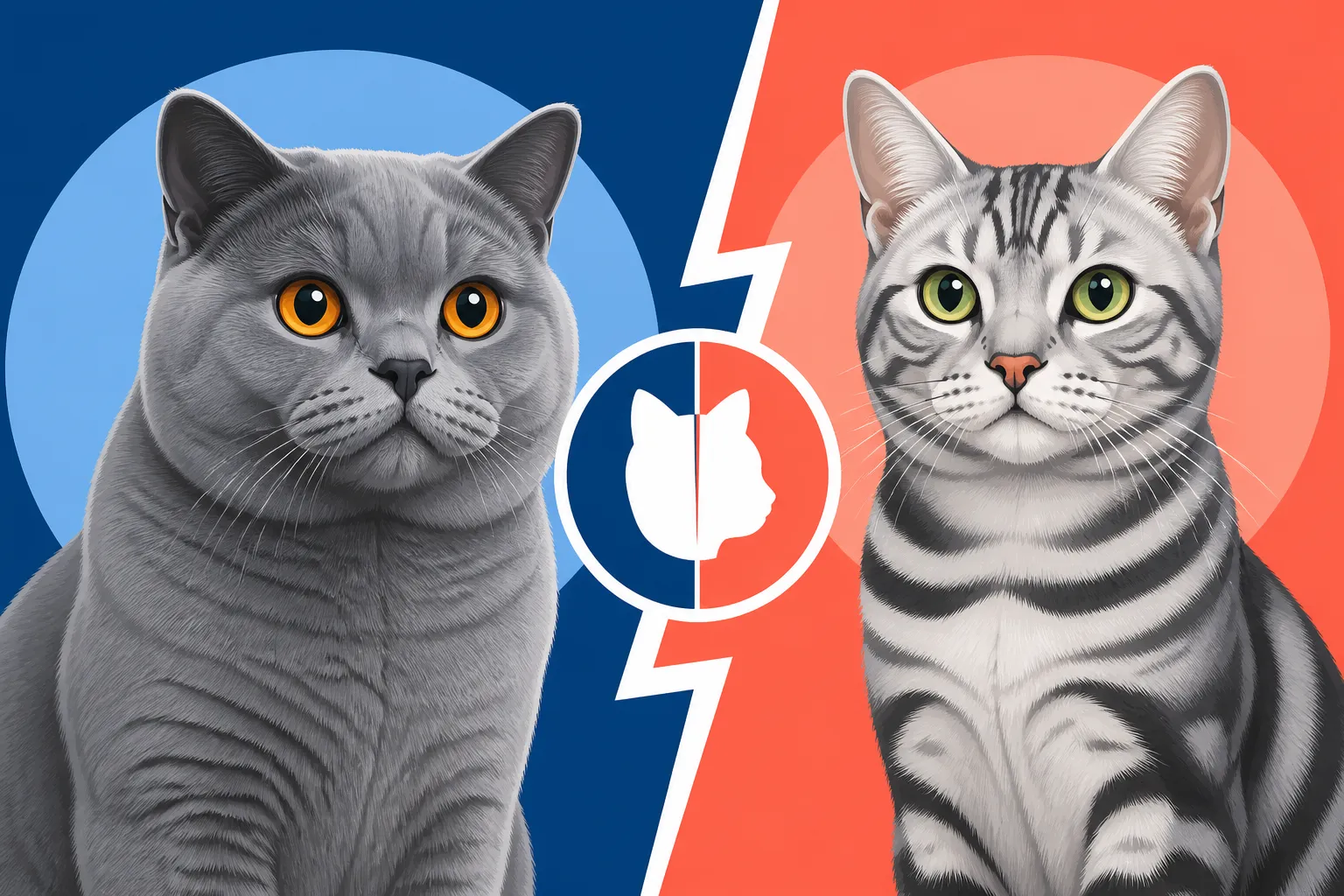
How a British Shorthair Differs From an American Shorthair
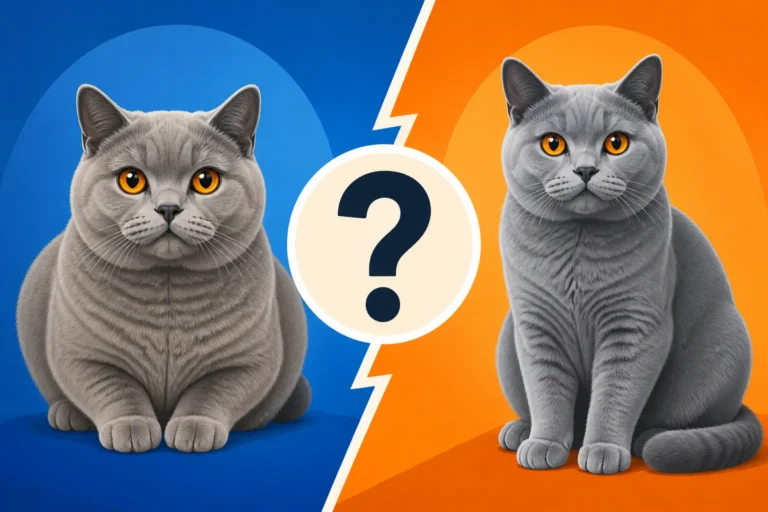
A British Shorthair and an American Shorthair can look like sturdy, round-faced cats at first glance, but they differ in body shape, coat texture, typical temperament, and breed history. That resemblance can make choosing between them confusing. This guide explains the practical differences, what the breed labels do and don’t tell you, and how to decide which cat may suit your home.
British Shorthair vs American Shorthair at a glance
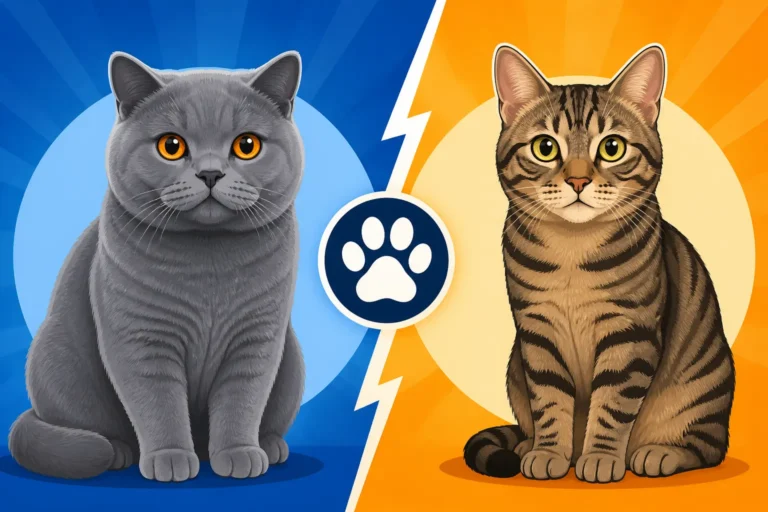
The names sound like a simple geographical distinction, but these are separate pedigreed breeds with their own histories and standards. Both are shorthaired, solidly built cats, and both can make calm, affectionate companions. The clearest differences tend to show up in their overall outline and coat.
| Feature | British Shorthair | American Shorthair |
|---|---|---|
| Overall build | Broad, compact, and cobby, with substantial bone | Muscular and balanced, often with a more athletic outline |
| Coat | Very dense, plush coat that tends to stand away from the body | Dense short coat, generally closer and less plush in appearance |
| Face | Round head, full cheeks, and a short, broad muzzle | Rounded face, but usually less exaggerated in cheek fullness |
| Common image | Often pictured as a blue cat with copper eyes | Comes in many colors and patterns, including classic tabby |
| Development | Can take several years to mature fully | Typically matures sooner than a British Shorthair |
| Breed background | Developed in Britain from local cats and later organized breeding | Developed in North America from working domestic cats |
These are breed tendencies, not promises about every individual cat. A British Shorthair may be more playful than expected, and an American Shorthair may prefer a slow afternoon nap to an energetic game. Individual personality, socialization, age, health, and home life matter just as much as breed.
Their body shapes are different
The British Shorthair is known for a compact, broad outline. Its chest, shoulders, and legs give it a substantial look, while its rounded head and full cheeks create the familiar teddy-bear impression. Its body is not simply a lean cat hidden under a thick coat; the breed standard calls for a sturdy, balanced build.
An American Shorthair is also muscular, but the overall impression is often more athletic and less compact. The body is medium to large, with a strong chest and well-developed legs, but it may look longer or more active in proportion than a British Shorthair. Neither breed should look weak or under-muscled.
Because the British Shorthair’s coat is so dense, it can look even wider than it is. That makes it easy to mistake a healthy, solid cat for an overweight one—or, in the other direction, to overlook excess weight beneath all that plush fur. For a better sense of the British breed’s proportions, see What a British Shorthair Weighs and How Big It Gets and How Big a British Shorthair Gets.
Coat texture and appearance matter more than color
A British Shorthair coat is notably thick and springy. When you stroke it, it can feel crisp or plush rather than sleek, and the hairs tend to stand away from the body. That distinctive texture is one reason a British Shorthair can look like a plush toy even when its coat is short. The Round Head and Copper Eye a British Shorthair Is Judged On explains other features that contribute to the classic appearance.
American Shorthairs have dense coats too, but their fur usually lies closer to the body and looks less dramatically plush. Their coat is practical and weather-resistant, reflecting the working-cat background associated with the breed. Both cats shed; the British Shorthair’s dense undercoat can make shedding especially noticeable during seasonal changes.
Color can confuse comparisons. British Shorthairs are often shown as solid blue, but the breed comes in many colors and patterns. American Shorthairs are also available in a wide range, with silver classic tabby among the best-known looks. A blue cat is not automatically a British Shorthair, and coat color alone cannot confirm a cat’s breed. For more on the British Shorthair’s range, see Which Colors a British Shorthair Comes In.
Breed history and how it shaped the look
The two breeds did not develop as one breed split across the Atlantic. They have distinct histories, even though both trace back to everyday cats valued for strength, adaptability, and useful working traits. Understanding that background helps explain why the breeds share some features but differ in their modern appearance.
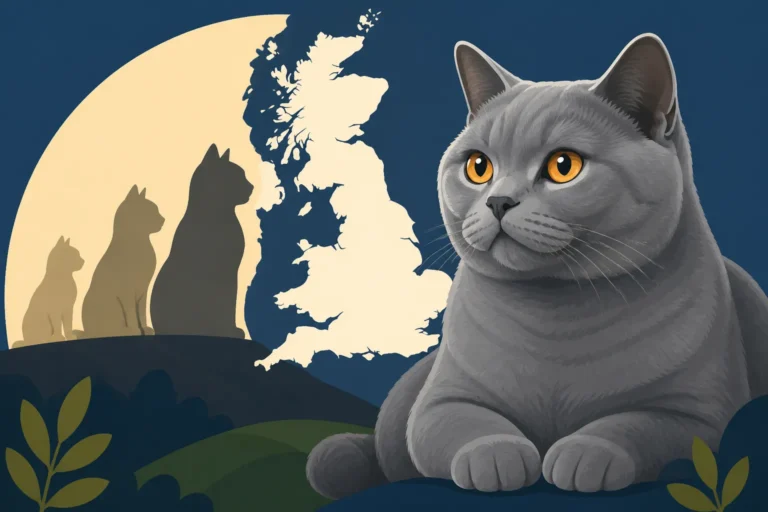
The British Shorthair developed in Britain
The British Shorthair’s history is tied to domestic cats in Britain and to the later development of organized cat breeding. Breeders shaped a sturdy, rounded cat with a dense coat, and the breed became especially associated with its blue coat. The British Shorthair is not limited to that color, even if the blue version is the one many people picture first.
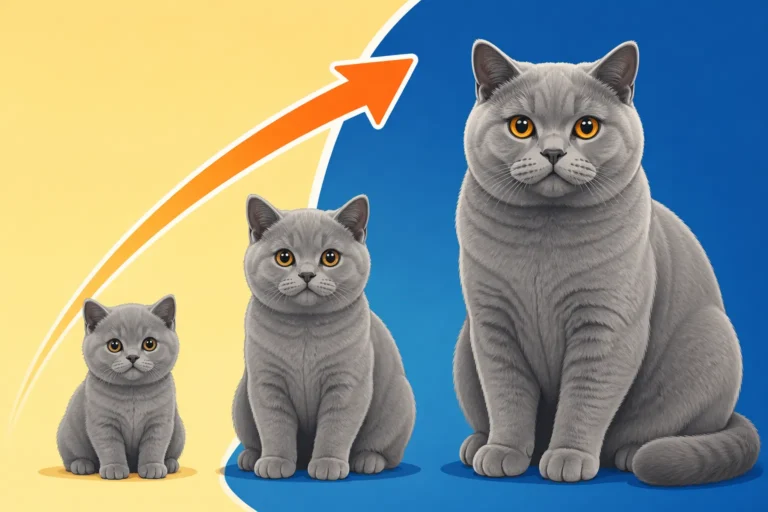
Over time, deliberate breeding emphasized a broad head, full cheeks, a compact body, and the thick coat that gives the breed its distinctive outline. Those traits are part of why a British Shorthair may look heavier than a similarly sized cat with a closer coat. The breed also tends to fill out slowly, so a young cat may not yet have the mature breadth or cheek development people expect.
The history is more layered than the familiar blue-cat image suggests. Where the British Shorthair Comes From and The Persians That Rebuilt the British Shorthair After the War offer more background on how the breed developed and how its appearance was shaped.
The American Shorthair developed from working cats in North America
The American Shorthair’s story is associated with domestic cats that lived and worked alongside people in North America. Over generations, cats valued for strength, sound health, and the ability to adapt were developed into a pedigreed breed with a recognized appearance and temperament.
That working background helps make sense of the American Shorthair’s balanced, muscular build. It was not developed solely to have a round face or a particular coat color. The modern breed can be affectionate and relaxed at home while still showing curiosity and interest in its surroundings.
The two breeds can therefore look like distant cousins without being interchangeable. A broad head or sturdy body does not establish that a cat is a British Shorthair, just as a tabby pattern does not prove that a cat is an American Shorthair. If you are assessing a cat whose background is unknown, appearance can suggest possibilities, but pedigree documentation is what establishes registration as a particular breed. How to Tell a British Shorthair From a Moggy is useful background when a cat resembles a breed but has no documented lineage.
Temperament, activity, and life at home
Breed descriptions can offer a starting point, but they are not personality guarantees. The British Shorthair is often described as easygoing and independent, while the American Shorthair is commonly characterized as adaptable and playful. In real homes, the difference may be subtle: one cat might enjoy being nearby without being carried, while another may be more eager to investigate a new toy or visitor.
Both can be affectionate without being clingy
A British Shorthair may show affection by choosing the same room, settling beside you, or keeping an eye on household routines. That does not necessarily mean it wants to spend the evening in your arms. Many owners are surprised when a cat with a cuddly appearance prefers a nearby chair to a lap.
American Shorthairs can also be devoted companions without needing constant physical contact. They may enjoy interaction and play while still being comfortable with quiet time. In either breed, a cat’s early handling, confidence, and individual temperament shape how it responds to being touched, picked up, or introduced to new people.
If a household wants a cat that will reliably tolerate being carried, breed choice alone cannot guarantee that. Spend time with the individual cat when possible, ask the breeder or rescue about its behavior, and respect signs that it wants space. A calm cat is not necessarily a cat that enjoys every kind of handling.
Activity needs depend on the individual cat
Neither breed should be treated as a decorative, no-effort pet. British Shorthairs are often less inclined to leap around constantly, but they still benefit from daily play and opportunities to move. Their solid build can make weight management particularly important, especially if food is freely available and play is occasional.
American Shorthairs may show more interest in chasing toys or exploring, but they also need routines that suit their age and health. A few short play sessions, rotating toys, and access to safe places to climb or watch outdoors can help keep either breed engaged. A cat who seems unusually inactive may be bored, uncomfortable, overweight, or unwell, rather than simply behaving according to breed stereotype.
Think about your ordinary week, not the idealized version of it. If you work long days, plan for predictable play and enrichment before assuming either breed will entertain itself. For a closer look at the British Shorthair’s size and growth, see When a British Shorthair Reaches Full Size. Its mature proportions can affect the kind of climbing and resting spaces that work comfortably.
Choosing between them and preparing your home
The most useful question is not which breed is “better.” It is which individual cat’s needs and temperament fit your household, and whether you can meet those needs over the long term. Appearance can draw you in, but practical details—health history, daily activity, grooming, and the cat’s response to people—deserve equal attention.
What to ask a breeder or rescue
Ask about the cat’s health history, veterinary care, behavior, and the health information available for its parents or relatives. A responsible breeder should be able to explain how they assess the health of their breeding cats and what records they can provide. A rescue may not know the cat’s full background, but it can often describe observed behavior and any medical care already given.
When comparing breeds, avoid relying on claims such as “this breed never has health problems” or “that color means the cat will be calm.” No breed or coat color can guarantee good health or a particular personality. Ask what the cat is like in ordinary situations: Does it approach people? Does it enjoy play? How does it respond to grooming, household noise, or being placed in a carrier?
Plan for preventive veterinary care whichever breed you choose. Body condition deserves particular attention in both, and a thick British Shorthair coat can make visual weight checks tricky. Discuss appropriate food portions, activity, and routine examinations with your veterinarian rather than assuming that a breed-specific label on a food package is a complete care plan.
Set up supplies for the cat you actually bring home
A sturdy scratching post, comfortable resting places, suitable grooming tools, and an easy-to-access litter box are sensible basics for either breed. For a larger or especially broad cat, check the usable space inside a litter box rather than judging by the outside dimensions. A cat should be able to turn around and posture comfortably without bumping into the sides.
If you are comparing equipment online, listings on Chewy can be one place to check product dimensions, but measure the space in your home and compare it with the item’s interior measurements before ordering. That extra step can prevent the familiar frustration of receiving a box or bed that looks roomy in a photo but feels cramped in person. Chewy listings may also let you compare different shapes and styles; the important thing is whether the product suits your cat’s size and mobility, not the breed label on the packaging.
For grooming, a comb that reaches through the coat is often more useful for a British Shorthair than a harsh tool designed to strip out large amounts of undercoat. An American Shorthair may need less intensive coat work, but regular checks still help you spot loose fur, skin irritation, or a new lump. If choosing supplies online, Chewy can help you compare comb styles and product measurements, while your veterinarian or groomer can advise whether a particular tool is appropriate for your cat’s coat.
Whatever you choose, introduce new equipment gradually. Leave a carrier open at home, place treats or bedding nearby, and let the cat investigate without pressure. A little patience at the start can make routine care much less stressful later.
Disclaimer
This article is for general informational purposes only and does not constitute professional advice. Laws, prices and regulations vary by location and change over time. Consult a qualified professional for guidance on your specific situation.