Whether a Blue Eyed British Shorthair Exists
A blue-eyed British Shorthair is possible, but it is not the usual look of a solid blue British Shorthair. The distinction between blue fur and blue eyes causes a lot of confusion, especially in kitten listings. This guide explains which coat patterns can have blue eyes, how to tell a plausible pedigree from a misleading description, and what to ask a breeder or veterinarian.
Can a British Shorthair have blue eyes
Yes, a British Shorthair can have blue eyes, but the answer depends on the cat’s coat pattern and the registry involved. Blue eyes are not the expected eye color for a solid blue-coated British Shorthair. They are more plausibly associated with certain patterns, especially colorpoint, or with a white coat.
It helps to separate three ideas that sellers and online listings sometimes blur together: blue fur, blue eyes, and breed registration. A cat can have one without the others.
Blue fur does not mean blue eyes
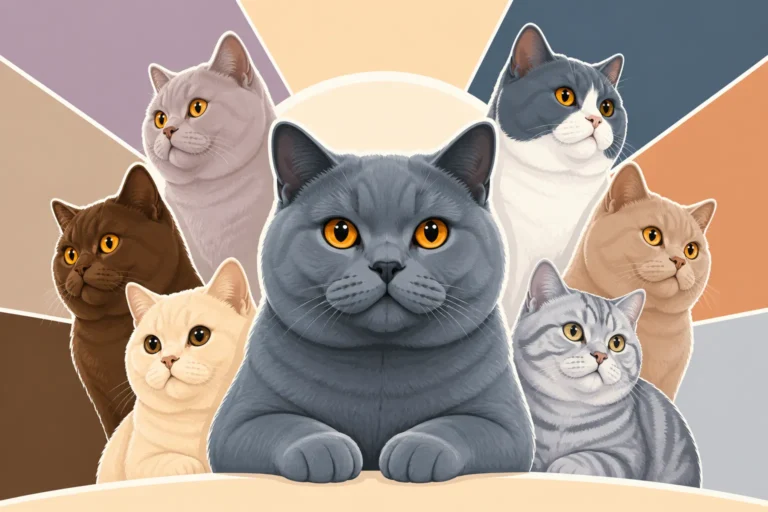
In cat descriptions, “blue” usually means a soft gray-blue coat, not blue irises. The familiar solid blue British Shorthair generally has copper, gold, or orange-colored eyes as it matures. Its coat color and eye color are separate traits, so a blue-coated cat does not automatically have blue eyes.
This is one reason a photo can be confusing. Lighting, editing, reflections, and a kitten’s still-developing eye color can all make the eyes look bluer than they will later. If you are comparing a kitten listing with the adult breed appearance, check both the coat description and the stated pattern rather than relying on a photo alone.
For a broader explanation of coat colors, see Which Colors a British Shorthair Comes In. For eye-color expectations across the breed, Which Eye Colors a British Shorthair Has is a useful companion topic.
Colorpoint British Shorthairs can have blue eyes
A colorpoint coat has darker coloring on the cooler parts of the body, such as the face, ears, paws, and tail, with a lighter body. The pattern is associated with blue eyes. A British Shorthair described as colorpoint may therefore be a more credible example of the breed with blue eyes than a solid blue cat advertised with that eye color.
That does not mean every cat registry treats every colorpoint variety in exactly the same way. Breed standards and registration policies can differ, so a cat may be described as a British Shorthair by one breeder or organization while a particular color-pattern combination is not accepted under another registry’s rules. Ask which registry the breeder uses and whether the kitten’s pattern is eligible for registration there. See Whether a Colorpoint British Shorthair Is Standard for more on that distinction.
A colorpoint kitten’s appearance can also develop over time. The contrast between its body and points may become clearer as it grows, so ask the breeder to show photos of the parents and, if possible, adult relatives with the same pattern.
Why blue eyes appear in some cats
Eye color is influenced by pigment in the iris and by inherited traits that affect how pigment develops. In cats, blue eyes are often linked to low pigment in the iris. The coat pattern can offer clues, but it is not a guarantee of a specific appearance in every individual kitten.
Understanding the difference between a plausible color pattern and a claim about breed identity is particularly helpful when you are choosing a kitten. Eye color alone cannot prove that a cat is a British Shorthair.
Colorpoint pattern and blue eyes
The colorpoint pattern is tied to a temperature-sensitive pigment process. In simplified terms, pigment develops more strongly in cooler areas of the body, creating darker points, while the warmer central body remains lighter. Blue eyes commonly accompany this pattern.
If a breeder advertises a blue-eyed British Shorthair, ask whether the kitten is colorpoint and request the formal color or pattern description used in its pedigree or registration documents. A clear answer is more useful than a vague label like “rare blue-eyed British.” If the seller cannot explain the pattern or show relevant paperwork, take time to verify the claim before paying a deposit.
You can also ask whether the parents have the same pattern and eye color, and whether the breeder has raised similar kittens before. These questions do not replace registration documents, but they can reveal whether the seller understands the variety they are describing.
White coats and blue eyes
A white British Shorthair may also have blue eyes, though white coat color and blue eyes are different traits. Some white cats have blue eyes, some have eyes of another color, and some have one blue eye and one eye of a different color. A white coat can also be associated with an increased risk of congenital deafness, particularly in cats with blue eyes. That is a reason to ask about hearing assessment, not to assume a particular cat is deaf.
If you are considering a white, blue-eyed kitten, ask what hearing checks have been performed and whether there is documentation. A veterinarian can discuss appropriate evaluation, including formal hearing testing when needed. The risk is not a diagnosis: many white, blue-eyed cats hear normally. More detail is available in Whether a White British Shorthair Goes Deaf.
Eye color is only one piece of the health picture. A breeder should be willing to discuss health screening, veterinary care, and the kitten’s background without treating a striking eye color as a substitute for those basics.
How to check a blue-eyed British Shorthair listing
A listing can use attractive language without explaining what the cat’s coat pattern actually is. Before you commit, focus on documentation, the cat’s age, and the breeder’s willingness to answer questions. This is especially important if a seller describes a blue-eyed solid blue British Shorthair as exceptionally rare.
| What you see or are told | What it may mean | What to ask next |
|---|---|---|
| Solid blue coat and blue eyes | The kitten may be young, the photo may be misleading, or the description may need clarification | How old is the kitten, and what eye color do the parents have as adults? |
| Light body with darker face, ears, paws, and tail | A colorpoint pattern may explain the blue eyes | What is the formal pattern description, and can you see the pedigree or registration details? |
| White coat and blue eyes | Possible in a white cat, but hearing should be discussed | Has hearing been assessed, and what records are available? |
| “Rare blue-eyed British” with no pattern details | The wording alone does not establish coat variety or breed | Which registry is involved, and what documents identify the kitten? |
| Blue eyes shown only in heavily edited photos | Lighting or image editing may affect how the eyes appear | Can you see recent, unfiltered photos and meet the kitten in person or by live video? |
Ask for the kitten’s age and adult-family photos
Kittens’ eyes often start out blue, and their permanent color develops as they mature. The timing varies, so a very young kitten’s eye color should not be treated as a reliable prediction of its adult eyes. Ask the breeder for the kitten’s age and whether the eye color has begun to change. Photos of parents and adult relatives can help you understand what is typical in that family.
Be cautious if a seller promises a precise adult eye color based only on a very young kitten’s appearance. A responsible answer may explain what is likely while acknowledging that development takes time. For more on this change, see Whether a British Shorthair Kitten's Eye Color Lasts.
If the eyes look cloudy, unusually red, swollen, or persistently watery, treat that as a health question rather than a color feature. Ask the breeder what the kitten’s veterinary checks have covered, and have your own veterinarian examine the cat after adoption.
Check registration and breed claims separately
A pedigree or registration record can help document a cat’s ancestry, but breed appearance alone cannot confirm a cat’s registration status. Likewise, a DNA result should not be treated as a standalone certificate of pedigree. Ask for the name of the registry, the parents’ documentation, and the exact registered color or pattern where applicable.
It is also reasonable to ask whether the breeder’s description follows a recognized standard or is simply a sales term. A color may be genuine even if it is not accepted in every organization’s show standard. The relevant question is not just “Does this cat look like a British Shorthair?” but also “What does the breeder mean by British Shorthair, and what documents support that description?”
If the cat is being sold as a blue-eyed British Shorthair but has no clear pattern explanation, compare the description with Whether a British Blue Is a Separate Breed From the British Shorthair and Whether a DNA Test Confirms a British Shorthair. The latter is especially useful for understanding why ancestry claims and visual traits are not interchangeable.
Caring for blue eyes and knowing when to ask a vet
Blue eyes do not automatically require special care, and they are not a health problem by themselves. What matters is whether the eyes are comfortable and healthy, and whether the cat’s overall history has been properly discussed. Avoid buying products or treatments just because a listing calls a particular eye color unusual.
Normal eye appearance versus a concern
Healthy-looking eyes are generally clear and comfortable, without persistent discharge, marked redness, squinting, or repeated pawing. A small amount of dried material at the inner corner can happen, but ongoing watery or sticky discharge deserves attention, especially if it affects one eye more than the other.
Contact a veterinarian if you notice sudden changes, cloudiness, swelling, squinting, sensitivity to light, or discharge that is persistent or worsening. Eye problems can have causes unrelated to coat color or breed, and trying human eye drops or unapproved remedies may make matters worse.
If a veterinarian recommends a specific cleaning product for a particular problem, use the exact product and method they advise. Chewy can be a place to look up a veterinarian-recommended product by its full name, but a retailer listing is not a substitute for a diagnosis. Avoid products marketed to “enhance” or change eye color; a cat’s natural iris color should not need cosmetic treatment.
Practical questions to ask before bringing a kitten home
A few calm, specific questions can help you distinguish a well-explained color pattern from a vague sales claim:
- What is the kitten’s exact coat color and pattern description?
- Which registry, if any, documents the kitten and its parents?
- How old is the kitten, and has its eye color started to change?
- Can I see recent photos of the parents and adult cats with the same pattern?
- If the kitten is white and blue-eyed, has hearing been assessed?
- What veterinary examinations and records will come with the kitten?
A responsible breeder should not become defensive because you ask for details. If the explanation is unclear, take a pause rather than feeling pressured to reserve the kitten immediately. For a kitten with eye discharge or a history of irritation, ask the breeder for veterinary records and discuss the issue with your own veterinarian. Chewy may help you compare a vet-recommended eye-care item, but do not choose a product based only on a listing or customer review.
The short version is that blue-eyed British Shorthairs can exist, particularly when a pattern such as colorpoint or a white coat is involved. A solid blue coat is not the same thing as blue eyes, and eye color by itself does not establish a cat’s breed or registration. Confirm the cat’s age, pattern, records, and health history, and seek veterinary advice for any eye symptoms. If your veterinarian recommends a specific care item, Chewy can be one option for checking the product details before you buy.
Disclaimer
This article is for general informational purposes only and does not constitute professional advice. Laws, prices and regulations vary by location and change over time. Consult a qualified professional for guidance on your specific situation.