Why a British Shorthair Looks Like It Is Smiling
One of the most charming and instantly recognizable traits of the British Shorthair is that perpetually pleasant expression, often described as a subtle, Mona Lisa-esque smile. It's not just a trick of the light or a fleeting moment; this distinctive look is deeply ingrained in their physical characteristics and breed standard, making them appear perpetually content even when they're merely contemplating their next nap. This guide will delve into the specific anatomical features, genetic influences, and cultural connections that give the British Shorthair its beloved "smiling" appearance, helping you understand the unique allure of these wonderful cats.
The Unique Facial Anatomy of the British Shorthair
The British Shorthair's face is a masterpiece of roundness, plushness, and careful structure, all contributing to that sweet, slightly upturned expression we adore. It's a combination of specific features that, when viewed together, create an illusion of a gentle smile. These aren't accidental traits; they've been carefully cultivated over generations of thoughtful breeding.
The Full, Round Cheeks and Prominent Whisker Pads
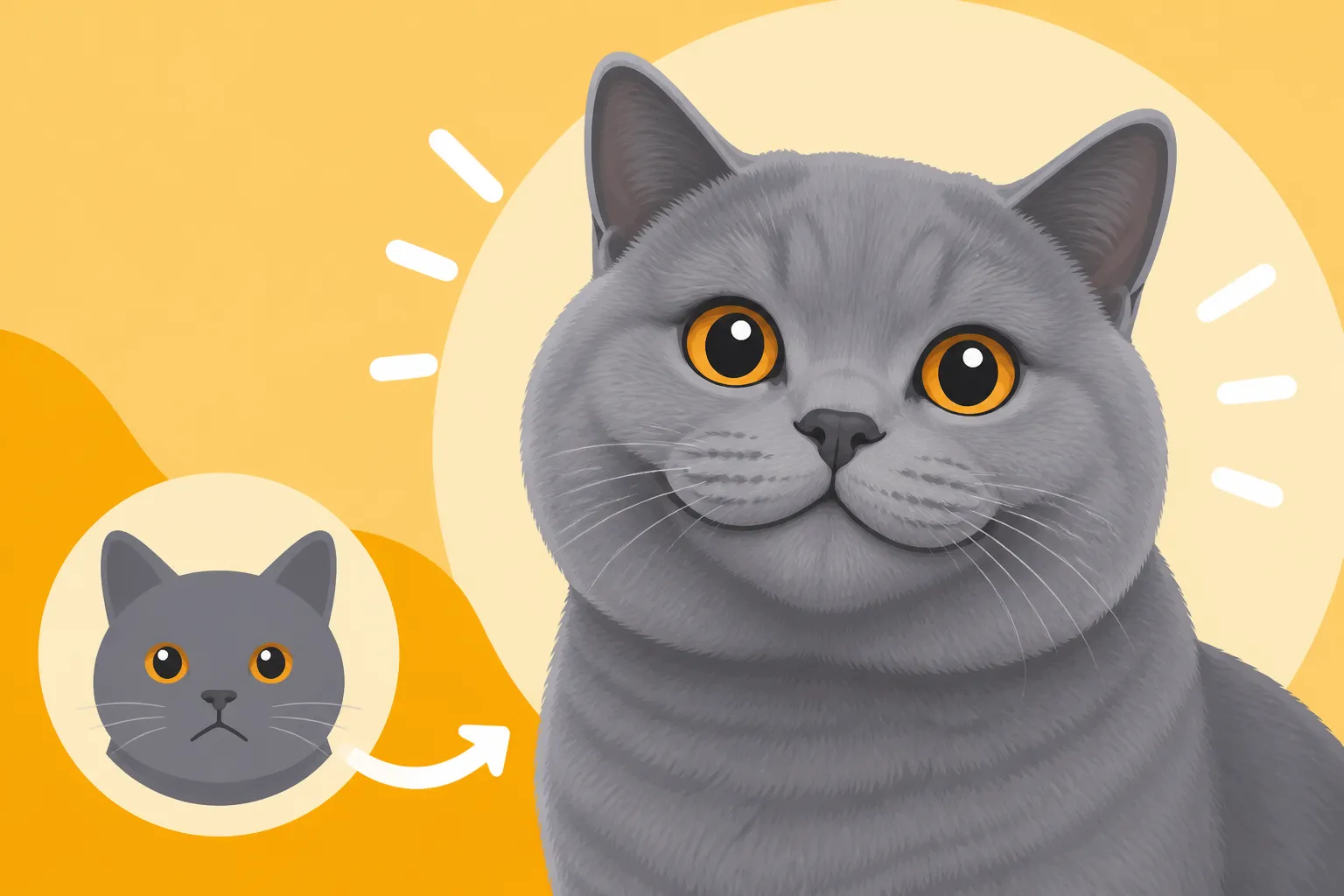
When you look at a British Shorthair, your eyes are immediately drawn to their incredibly full, round cheeks. These aren't merely cute; they are a defining characteristic of the breed and a major contributor to the "smile." Think of how a human's cheeks lift when they grin, pushing up the corners of their mouth. The British Shorthair has this structure built-in. These substantial cheeks give the face a broad, benevolent look. They create a strong foundation for the whisker pads, which are also notably full and pronounced. These whisker pads are plump and stand out, curving gently upwards from the sides of the muzzle. This upward curve subtly pulls the corners of the mouth area with it, giving the impression of an upward turn, much like the beginning of a smile.
It’s this very fullness that gives them that endearing "teddy bear" look, which is a major part of their appeal. Without those robust cheeks and significant whisker pads, the overall facial expression would be much flatter and less expressive. These features are essentially the architectural foundation for their signature grin. You can definitely see What Full Cheeks Mean on a British Shorthair in terms of breed conformation. They aren't just for aesthetics; they are part of the overall cobby, robust build of the cat.
The Short, Broad Muzzle and Upward Curve of the Mouth
Complementing the full cheeks is the British Shorthair's short, broad muzzle. Unlike breeds with more pointed or elongated muzzles, the British Shorthair's is relatively short, wide, and well-rounded. This broadness prevents the face from looking sharp or angular, instead contributing to the overall softness and roundness that defines the breed. The muzzle transitions smoothly into the cheeks, without any harsh lines or abrupt changes in contour. What truly completes the "smiling" effect is the specific way their mouth is set. While cats don't truly smile in the human sense, the British Shorthair's mouth often has a natural, slight upward curve at the corners. This isn't a muscular expression but rather a structural characteristic of their lips and underlying bone structure.
This subtle upward curve, combined with the way their full whisker pads push up from underneath, creates a visual effect that mimics a gentle smirk or a contented smile. It’s an optical illusion, if you will, but one that is consistently present across many individuals of the breed. This structural detail is highly valued in the breed standard because it contributes so significantly to their universally appealing, friendly demeanor.
The Large, Round Eyes and Their Contribution to Expression
Beyond the mouth and cheeks, the British Shorthair's eyes play a crucial role in enhancing their "smiling" appearance. They possess large, round, wide-set eyes that are typically a brilliant copper or gold, though other colors appear in specific coat patterns. These large, open eyes give them an innocent, alert, and often wise expression. When combined with the upward curve of the mouth and the fullness of the cheeks, these eyes contribute to an overall look of geniality. Imagine trying to smile without engaging your eyes – it often looks forced or insincere. For the British Shorthair, their eye shape and placement naturally complement their facial structure, making the "smile" seem even more genuine and inviting. The eyes appear to crinkle slightly at the corners, not due to muscle movement, but due to the surrounding facial structure, adding another layer to the illusion of happiness.
The contrast of the bright, often intense eye color against their dense, plush fur further draws attention to their gaze, making their expressions even more captivating. This combination of roundness – in the head, cheeks, and eyes – forms the quintessential What Shape a British Shorthair's Head Should Be and is integral to their signature look.
Genetics and Breed Standard Influences
The distinctive "smiling" face of the British Shorthair isn't just a happy accident; it's the result of generations of selective breeding guided by a very specific breed standard. This standard outlines the ideal physical traits, and breeders work diligently to reproduce these characteristics, ensuring the iconic look remains consistent. Understanding the history and goals behind the breed standard helps us appreciate why they look the way they do.
How Breed Standards Shape the British Shorthair's Face
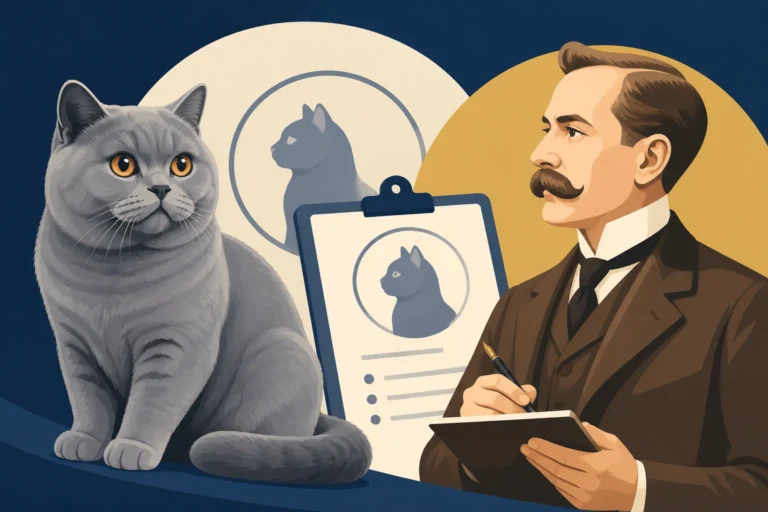
Every recognized cat breed has a written standard that describes the ideal physical traits, temperament, and overall appearance. For the British Shorthair, these standards emphasize extreme roundness and robustness. Key descriptors often include a round, massive head, full cheeks, a short, broad nose, and large, round eyes. These aren't vague suggestions; they are precise guidelines that breeders strive to achieve in their cats. When judging a British Shorthair, a cat that exhibits these features prominently, especially the fullness of the face and the slight upward turn of the mouth, will be highly regarded. This constant selection for these specific traits over many generations has effectively "sculpted" the British Shorthair's face into its current form, baking in the characteristics that contribute to the "smile."
Breeders carefully choose their breeding pairs based on how well they exemplify these characteristics. If a particular cat consistently passes on its wonderfully round face and expressive features, it becomes a highly prized asset in a breeding program. This focus ensures that the defining traits, including the smiling appearance, are maintained and even enhanced over time. You can often find detailed descriptions of these standards when looking into Which British Shorthair Standard Harrison Weir Wrote.
The Role of Outcrossing in Developing the Breed's Features
The British Shorthair breed, like many others, faced near extinction after the World Wars. To rebuild their numbers and genetic diversity, responsible breeders used outcrosses with other breeds, most notably the Persian. This outcrossing, while controversial at the time, played a significant role in solidifying and enhancing some of the British Shorthair's most beloved traits, including its facial structure. The Persian is known for its extreme brachycephalic (short-nosed) features, massive round head, and heavy boning. While British Shorthairs were already robust, the infusion of Persian blood helped to intensify the roundness of the head, the fullness of the cheeks, and the overall cobby body type.
This genetic contribution from the Persian specifically contributed to the broadness of the muzzle and the development of those famously full jowls and whisker pads. These are precisely the features that push up the corners of the mouth area, making the cat appear to smile. Without this historical outcrossing, the British Shorthair's face might not have developed the same degree of roundness and plushness that defines its "smiling" look today. It was a critical point in the breed's development, fundamentally shaping the visual identity we recognize and cherish.
The "Cobby" Body and Its Harmony with Facial Structure
The British Shorthair is often described as "cobby," which refers to a compact, powerfully built body with a broad chest, short, strong legs, and a thick tail. This cobby body type isn't just a separate physical attribute; it's entirely harmonious with their facial structure, contributing to the overall impression of a well-rounded, substantial, and often contented creature. A cobby cat presents a sense of solidity and strength, which can subconsciously reinforce the idea of a calm, happy demeanor. When a cat has a robust, settled posture, it complements a face that appears to be smiling. The impression is one of a cat that is utterly at peace with its world.
This holistic approach to the breed standard means that no single feature exists in isolation. The round head sits atop a thick, short neck, which then flows into a broad, cobby body. Everything about the British Shorthair is designed for roundness and substance, from its How Much a British Shorthair Weighs to the tip of its thick tail. This consistent theme of well-roundedness across their entire physique contributes to the comforting, friendly image, further enhancing the perception of a perpetual smile. It's a cohesive aesthetic that speaks to their calm and unruffled nature.
The "Cheshire Cat" Connection
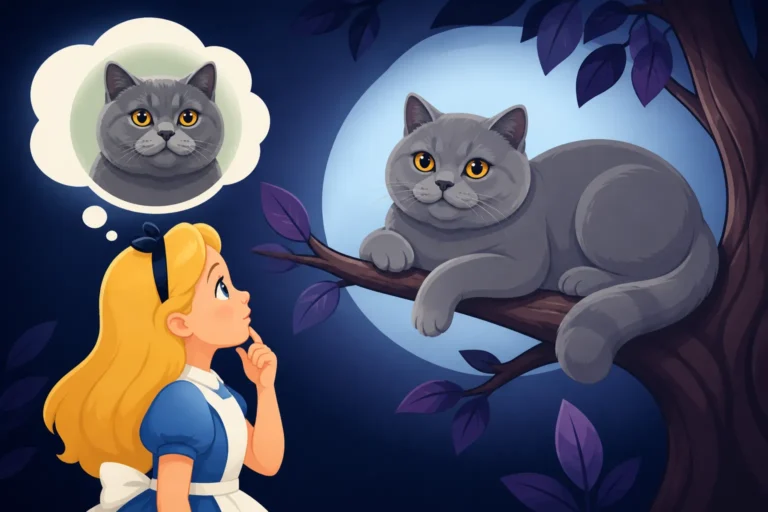
It’s impossible to discuss the British Shorthair’s smiling face without mentioning its most famous fictional counterpart: the Cheshire Cat from Lewis Carroll's Alice's Adventures in Wonderland. This iconic character, known for its mischievous grin, has undoubtedly influenced popular perception and further cemented the idea of the "smiling cat" in the collective imagination, often with the British Shorthair in mind.
The Cultural Icon and the British Shorthair
The image of the Cheshire Cat, with its wide, disembodied grin, has become a pervasive cultural icon. What many people don't realize is that the British Shorthair is widely believed to be the inspiration for this famous feline character. Lewis Carroll was known to have lived in areas where domestic shorthairs, the ancestors of the modern British Shorthair, were common. Their naturally rounded faces and sometimes exaggerated grins, which were simply anatomical features rather than expressions of amusement, would have been familiar to him. The connection is so strong that the British Shorthair is often fondly referred to as "the Cheshire Cat" of the feline world. This cultural association has lent an almost mythical quality to their facial expression, embedding the idea of a "smiling" cat deeply within our minds when we encounter a British Shorthair.
Even if you weren't consciously aware of the breed's history, seeing a British Shorthair's face often evokes that same sense of whimsical mystery and quiet amusement that the Cheshire Cat embodies. It's a testament to how profoundly visual characteristics can shape our interpretation of an animal's personality. Indeed, the claim that The Cheshire Cat Was a British Shorthair is a popular one among breed enthusiasts.
How Visuals and Narratives Reinforce the Image
Beyond the original literary connection, various visual media, from illustrations to animated films, have repeatedly depicted British Shorthair-like cats with pronounced grins. These portrayals, whether intentional or not, reinforce the idea that this breed naturally possesses a smiling face. Artists and animators, when creating cat characters, often gravitate towards the distinct, rounded features of the British Shorthair because they are inherently expressive and appealing. When a cat in a cartoon or a book is shown with a broad, contented smile, it often bears a striking resemblance to a British Shorthair. This constant visual reinforcement further solidifies the public's perception.
Furthermore, the quiet, calm, and often slightly aloof demeanor of the British Shorthair also lends itself well to the image of a cat that holds a secret, knowing smile. They aren't typically overly boisterous or overtly demonstrative, leading people to project a more contemplative, perhaps even sly, intelligence onto their expressions. This narrative, combined with their actual facial structure, creates a powerful feedback loop where their look is continually interpreted through the lens of a perpetual, gentle smile.
The Enduring Appeal of the "Smiling" Cat
The enduring appeal of the "smiling" British Shorthair lies in its ability to evoke feelings of comfort, happiness, and whimsical charm. In a world that can be stressful, a creature that appears perpetually contented offers a small, delightful solace. This inherent "happiness" in their appearance is incredibly attractive to prospective owners. People are drawn to pets that exude a sense of peace and affection, and the British Shorthair's face communicates exactly that. It suggests a cat that is easygoing, friendly, and a joy to have around, even if their actual personality is more reserved than their face suggests.
This visual charm translates into immense popularity, making them one of the most sought-after breeds. The "smile" makes them instantly approachable and lovable, setting them apart from other breeds that might have more angular or serious expressions. It's a key part of their brand, a visual promise of the calm, affectionate companion they often prove to be. Whether you're looking for Whether a British Shorthair Is Right for You or simply admiring them online, that smile is usually the first thing that captures your heart.
Beyond the Smile: Reading British Shorthair Expressions
While the British Shorthair's facial structure often gives the appearance of a smile, it's crucial for owners to understand that this is an anatomical trait, not always an indicator of their immediate emotional state. Like all cats, British Shorthairs communicate their true feelings through a combination of subtle body language cues, ear position, tail movements, and vocalizations. Relying solely on their "smile" can lead to misinterpretations.
Subtle Cues in Body Language and Ear Position
To truly understand what your British Shorthair is feeling, you need to look beyond their fixed facial structure and observe their entire body. A relaxed British Shorthair will have a soft, loosely held posture. Their ears will be pointing forward or slightly to the sides, relaxed and not flattened. Their tail will be held high with a slight curl at the end, or gently draped around their body if they are resting. If they are truly content and happy, they might slowly blink at you, known as a "cat kiss." A direct, unblinking stare, on the other hand, can indicate challenge or alertness, even if their face looks "smiling."
Conversely, a British Shorthair that is stressed or unhappy might still have that "smiling" face, but their body language will tell a different story. Their ears might be flattened against their head, their tail tucked tightly, their body tense and low to the ground, or their pupils dilated. A cat might also shift its weight, crouch, or even try to hide. These are far more accurate indicators of their internal state than the permanent curve of their mouth. Pay attention to the whole picture, not just the illusion of a smile. It is an art to How to Read a British Shorthair's Face, but a rewarding one.
Vocalizations and Their Meaning
British Shorthairs are generally known for being a relatively quiet breed, but they do use vocalizations to communicate. These sounds are often soft chirps, trills, or gentle purrs, rather than loud meows. A happy, content British Shorthair might offer a soft purr when stroked, or a quiet trill as they greet you. These are clear signs of their pleasure and comfort. A louder, more insistent meow might indicate a demand for food or attention, or perhaps discomfort if it's accompanied by other signs of distress. Even if their face always looks content, a worried or unhappy cat will often vocalize its distress through unusual meows, hisses, or growls.
It's important to learn your individual cat's range of vocalizations and what each sound typically signifies. Every cat is unique, and while the breed tends to be quiet, individual personalities vary. Some British Shorthairs might be more chatty than others. For example, a purr can also be a comfort mechanism when a cat is in pain, so always observe other cues. If your cat suddenly changes its vocal patterns, or becomes unusually silent or excessively vocal, it's a good idea to consider other factors that might be impacting its well-being.
Common Misinterpretations of the "Grumpy" or "Smiling" Face
The British Shorthair's unique facial structure can sometimes lead to misinterpretations in both directions. While many see a "smile," others might perceive a "grumpy" or "stoic" expression due to their full jowls and sometimes slightly down-turned inner brow. This duality is part of their charm. The reality is, they are often neither truly smiling nor truly grumpy in the human sense; they simply have a distinct feline face. The mistake comes when owners project human emotions onto these fixed features. A British Shorthair isn't perpetually happy just because it looks like it's smiling, nor is it perpetually annoyed because it looks a bit serious.
Their calm, unflappable nature often matches their serene facial expression, but it's vital to remember that appearances can be deceiving. A truly happy British Shorthair will be engaged, seeking interaction (on their terms, of course), purring, and showing relaxed body language. A cat that's unwell or unhappy might retreat, refuse food, or show subtle signs of pain, all while maintaining that characteristic "smiling" or "grumpy" facade. Always consider the full context of their behavior rather than relying solely on their static facial features to gauge their mood. Remember, Whether a British Shorthair Always Looks Grumpy is just another perspective on their unique facial structure.
Distinguishing the British Shorthair's Look from Other Breeds
The British Shorthair's distinctive "smiling" face, combined with its cobby body and dense coat, makes it relatively easy to identify for those familiar with the breed. However, there are other breeds that share some superficial similarities, leading to occasional confusion. Understanding the nuances that set the British Shorthair apart is key to appreciating its unique attributes.
British Shorthair vs. American Shorthair
One of the most common comparisons is between the British Shorthair and the American Shorthair. While both are "shorthairs" and share a common ancestry of working cats, their looks have diverged significantly through selective breeding. The British Shorthair is characterized by its extreme roundness – a round head, full cheeks, large round eyes, and a cobby, substantial body. Their coat is short, dense, and "crisp" to the touch, standing away from the body. The overall impression is one of solid, teddy-bear-like plushness. This is where the "smile" originates.
In contrast, the American Shorthair tends to have a more athletic, medium-sized build. Their head is also somewhat rounded, but it's typically longer than the British Shorthair's, with a longer muzzle and less pronounced jowls. Their eyes are large but can be more oval-shaped, and their expression is generally more alert and less "plush." The American Shorthair's coat is also short and dense, but often not as thick or "crisp" as the British. While still lovely cats, they generally lack the specific facial architecture that creates the British Shorthair's characteristic smile. Understanding How a British Shorthair Differs From an American Shorthair helps clarify these distinctions.
British Shorthair vs. Chartreux and Russian Blue
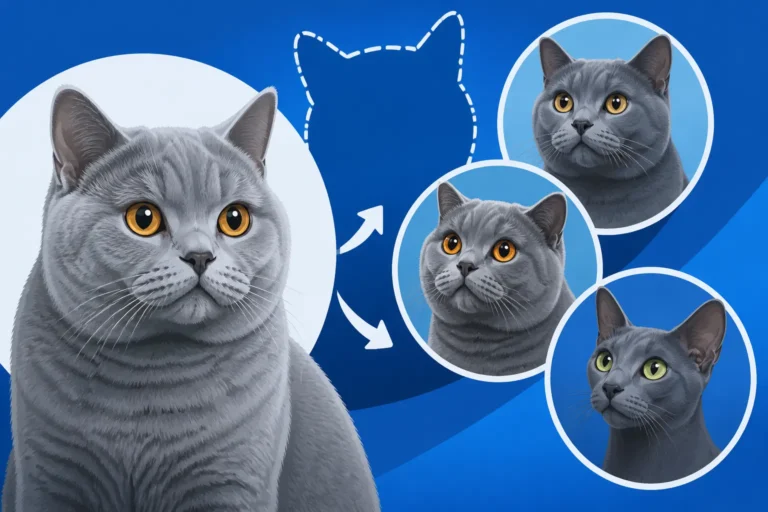
Two other breeds often mistaken for British Shorthairs, particularly the blue variety, are the Chartreux and the Russian Blue. All three breeds can have blue coats and a calm demeanor, but their facial features and body types are distinct.
The Chartreux is a French breed known for its robust, powerful build, similar in some ways to the British Shorthair's cobby frame. They also have a relatively broad head. However, the Chartreux typically has a more fox-like face, with a less pronounced muzzle, and smaller, rounder eyes that are usually copper to orange. Their ears are set higher and closer together, and their smile is often described as a more pronounced, almost "grimacing" grin, different from the softer, gentle upward curve of the British Shorthair. Their fur is also dense but tends to be a bit woollier.
The Russian Blue, on the other hand, is a much more elegant and slender cat. They have a wedge-shaped head, large, pointed ears set high on the head, and vivid green eyes. Their muzzle is much finer and more delicate, completely lacking the robust jowls and full cheeks of the British Shorthair. Their blue coat is famously plush and soft, almost like velvet, but is shorter and finer than the British Shorthair's, lacking the "crisp" texture. The Russian Blue's expression is refined and somewhat enigmatic, but definitely not one that gives the impression of a perpetual smile. Comparing How a British Shorthair Differs From a Russian Blue or How a British Shorthair Differs From a Chartreux reveals these clear differences.
To help distinguish these breeds, here's a quick comparison table of key facial and body characteristics:
| Feature | British Shorthair | American Shorthair | Chartreux | Russian Blue |
|---|---|---|---|---|
| Head Shape | Very round, massive | Moderately round, slightly longer | Broad, "fox-like" | Wedge-shaped |
| Cheeks/Jowls | Extremely full, prominent | Moderately full | Less pronounced | Fine, delicate |
| Muzzle | Short, broad, well-rounded, often with upward curve | Medium length, square-ish, less rounded | Relatively short and fine | Delicate, pointed |
| Eye Shape | Large, round | Large, round to slightly oval | Round, smaller than BSH | Large, almond-shaped |
| Eye Color | Copper/gold (most common), blue, green | Gold/green (various depending on coat) | Copper to orange | Vivid green |
| Ear Placement | Medium size, wide-set | Medium size, well-placed | Medium size, high-set, closer together | Large, pointed, set high |
| Coat Texture | Dense, short, "crisp," stands off body | Dense, short, firm | Dense, short, slightly woolly | Dense, short, plush, "velvety" |
| Body Type | Cobby, powerful, heavy boned | Medium, muscular, agile | Robust, powerful, heavy boned | Fine-boned, elegant, lithe |
| "Smile" Factor | High (due to structural features) | Low (more alert, natural feline expression) | Moderate (more of a "grimace" for some) | Low (elegant, refined expression) |
How to Spot a Genuine British Shorthair Face
When you're looking at a cat, particularly online or at a show, and you want to confirm if it's a true British Shorthair and not a mix or another breed, focus on the overall impression of roundness and substance. A genuine British Shorthair face should look almost spherical, with those characteristic full, chubby cheeks that create a continuous curve from ear to ear. The eyes should be large, round, and wide-set, contributing to that open, gentle expression. The muzzle will be short and broad, blending smoothly into the rounded head, and the chin should be firm and well-developed. It’s this cohesive package of rounded features that creates the illusion of their famous smile. If the face looks too angular, the muzzle too long, or the eyes too narrow or almond-shaped, it's likely not a purebred British Shorthair.
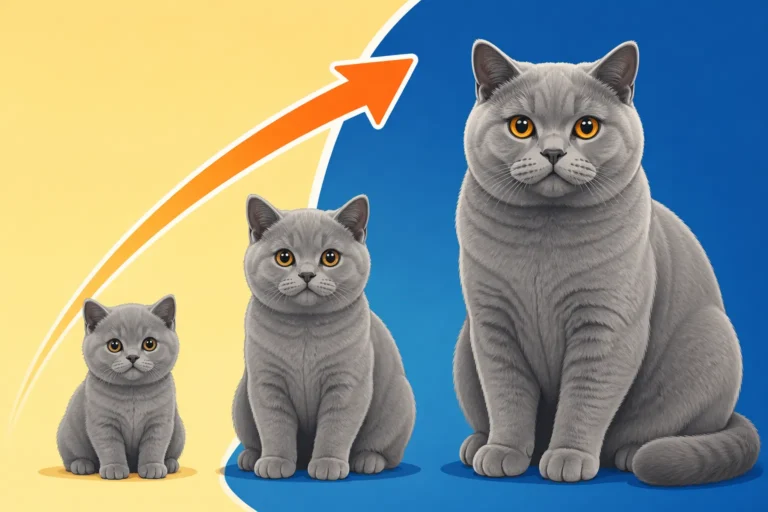
Even if a cat has a dense, blue coat, those facial details are the ultimate giveaway. The British Shorthair is all about plush curves and solid structure. You can often see this even in very young kittens, though their features become more pronounced as they mature and develop those wonderful jowls. A reputable breeder will always be happy to discuss the breed standard and point out these defining characteristics in their cats. For all your pet needs, including the right bowls for their wide faces or toys to keep their relaxed bodies active, places like Chewy offer a great selection.
This article for general informational purposes only and does not constitute professional advice. Laws, prices and regulations vary by location and change over time. Consult a qualified professional for guidance on your specific situation.