Why British Shorthair Numbers Collapsed in the Wars
It’s easy to look at the robust, healthy British Shorthair today and assume this beloved breed has always enjoyed such prominence and stability. Their calm demeanor and teddy-bear looks are celebrated worldwide, but what many don't realize is that this iconic cat faced near extinction not once, but twice, due to the devastating impact of global conflicts. This guide will delve into the somber history of how two World Wars brought the British Shorthair to its knees and how dedicated fanciers painstakingly brought it back from the brink.
The Golden Age Pre-War: A Flourishing Breed
Before the shadow of war loomed large, the British Shorthair was a celebrated feline, enjoying a period of significant popularity and development. The late 19th and early 20th centuries were pivotal for the breed, solidifying its place in the hearts of cat enthusiasts and establishing its distinctive characteristics.
The British Shorthair's Early Popularity
The British Shorthair's origins trace back to the common street cats of Great Britain, but it was Harrison Weir, often considered the "Father of the Cat Fancy," who championed their recognition as a distinct breed. Weir's efforts led to the first organized cat show at London's Crystal Palace in 1871, where a British Shorthair took the Best in Show prize. This initial success ignited public interest, and the breed quickly became a favorite. People were charmed by their sturdy build, dense coats, and calm dispositions, seeing them as the quintessential British companion. They were considered a testament to the nation's character – resilient, dignified, and quietly charming. Harrison Weir Put a British Shorthair on the Bench in 1871 goes into more detail about this foundational period.
Breeding Practices Before the Conflict
In those burgeoning days of cat fancy, breeding was often a passionate hobby rather than a commercial enterprise. Dedicated individuals focused on refining the breed standard, aiming for the characteristic round head, plush coat, and copper eyes we associate with the British Shorthair today. Records were kept, though perhaps not as meticulously as today's DNA testing and echocardiogram results demand. Breeders strived for health and temperament, ensuring their lines embodied the ideal British Shorthair qualities. This pre-war era saw the establishment of some of the foundational catteries and lines that would unfortunately be severely tested by the coming global upheavals. The focus was on solidifying the breed's identity and genetic health, a task made infinitely harder once external factors intervened.
The Lifestyle of Cat Ownership at the Time
Owning a British Shorthair in the early 20th century was part of a certain lifestyle. These cats were cherished household members, often living lives of relative comfort, though perhaps not with the array of specialized foods, toys, and veterinary care we consider standard today. They were appreciated for their quiet companionship, their ability to keep rodent populations in check, and their aesthetic appeal. Pet food was far less commercialized; cats often ate table scraps or raw meat. Veterinary medicine was rudimentary compared to modern standards. However, the devotion to these animals was strong, forming a bond that would be sorely tested when resources became scarce and priorities shifted dramatically. The idea of a cat being a low-maintenance, self-sufficient member of the family was perhaps more prevalent, but their welfare was still deeply important to their owners.
World War I: The First Devastating Blow
The outbreak of World War I in 1914 plunged the world into an unprecedented conflict, and its repercussions rippled through every aspect of daily life, including the seemingly peripheral world of pet ownership and breeding. The British Shorthair, like many other breeds, suffered immensely.
Scarcity of Resources and Pet Ownership
As the war intensified, national resources were almost entirely diverted to the war effort. Food, fuel, and manpower became incredibly scarce. For many families, simply feeding themselves was a struggle, making the luxury of feeding a pet increasingly difficult, if not impossible. Cat food as we know it didn't exist in a commercial sense, and what little meat or fish was available was prioritized for human consumption. People had to make heartbreaking choices, and often, pets were surrendered, or worse, put down because their owners could no longer sustain them. The idea of ordering specialized food from a place like Chewy or a similar online retailer was, of course, a distant fantasy in an era grappling with such basic survival needs. This fundamental lack of resources struck at the very heart of pet keeping.
The Focus Shift to War Efforts
With millions of men serving on the front lines and women entering factories to support the war, the national psyche was entirely consumed by the conflict. Leisure activities, including showing and breeding pedigree cats, seemed trivial and even unpatriotic in the face of such widespread suffering and sacrifice. Cat shows, which were once vibrant events where breeders proudly displayed their stock, dwindled and eventually ceased. The focus of the entire nation shifted to survival and victory, leaving little room or enthusiasm for the intricate hobby of cat fancy. Breeders, if they weren't serving themselves, often found their personal circumstances changed dramatically, forcing them to abandon their breeding programs.
Disruption to Breeding Programs
The disruption to breeding was profound and immediate. Many catteries simply closed down. Stud cats were not bred, queens were not given the care needed for successful litters, and pedigrees, if they survived, were no longer actively maintained. The careful selective breeding that had defined the golden age came to a grinding halt. Even if a breeder managed to keep a few cats, finding suitable mates from quality lines became almost impossible as other breeders faced similar pressures. This meant a significant loss of genetic diversity and a shrinking gene pool, creating bottlenecks that would have lasting effects. The continuity of carefully curated lines was broken, and with it, much of the progress made in establishing the breed's type and health.
The Interwar Period: A Brief Respite and Lingering Challenges
After the Armistice in 1918, there was a collective sigh of relief, and some semblance of normalcy began to return. However, the period between the two World Wars was not a complete recovery for the British Shorthair; it was a fragile time marked by attempts at revival against a backdrop of economic hardship and a looming sense of unease.
Attempts at Revival and Registration
In the years following World War I, a handful of dedicated fanciers, true stalwarts of the British Shorthair, began the arduous task of rebuilding. They searched for surviving examples of the breed, often finding them far removed from the pedigree circles of pre-war days. Cat clubs slowly reformed, and efforts were made to re-register existing cats and identify new breeding stock. This was a challenging endeavor, as many records had been lost or neglected, and the quality of the remaining cats varied widely. It was a testament to their passion that they even attempted such a feat, holding onto the hope that the beloved "Brit" could rise again.
Economic Hardship and Its Impact
Despite the peace, the economic landscape of the interwar period was often harsh. The Great Depression, in particular, brought widespread poverty and unemployment, especially in the 1930s. Just as during the war, this meant that keeping and breeding pedigree cats remained a luxury few could afford. Families struggled to put food on their own tables, making it difficult to justify the expense of feeding and caring for non-working animals. The recovery of the British Shorthair was slow and tentative because the financial stability needed to support a thriving cat fancy simply wasn't there for many. Every penny counted, and discretionary spending on pets was often the first to go.
The Looming Threat of Another Conflict
As the 1930s drew to a close, political tensions mounted across Europe, and the threat of another major war became increasingly apparent. This pervasive anxiety naturally stifled any significant resurgence in the British Shorthair breed. Why invest time, money, and effort into developing a breeding program when the very real possibility of another devastating conflict loomed? The memories of the first war's impact were still fresh in people's minds, making them hesitant to commit to long-term projects like pedigree breeding. This meant that the breed never truly regained its pre-1914 strength before it was plunged into an even greater crisis.
World War II: The Near Extinction Event
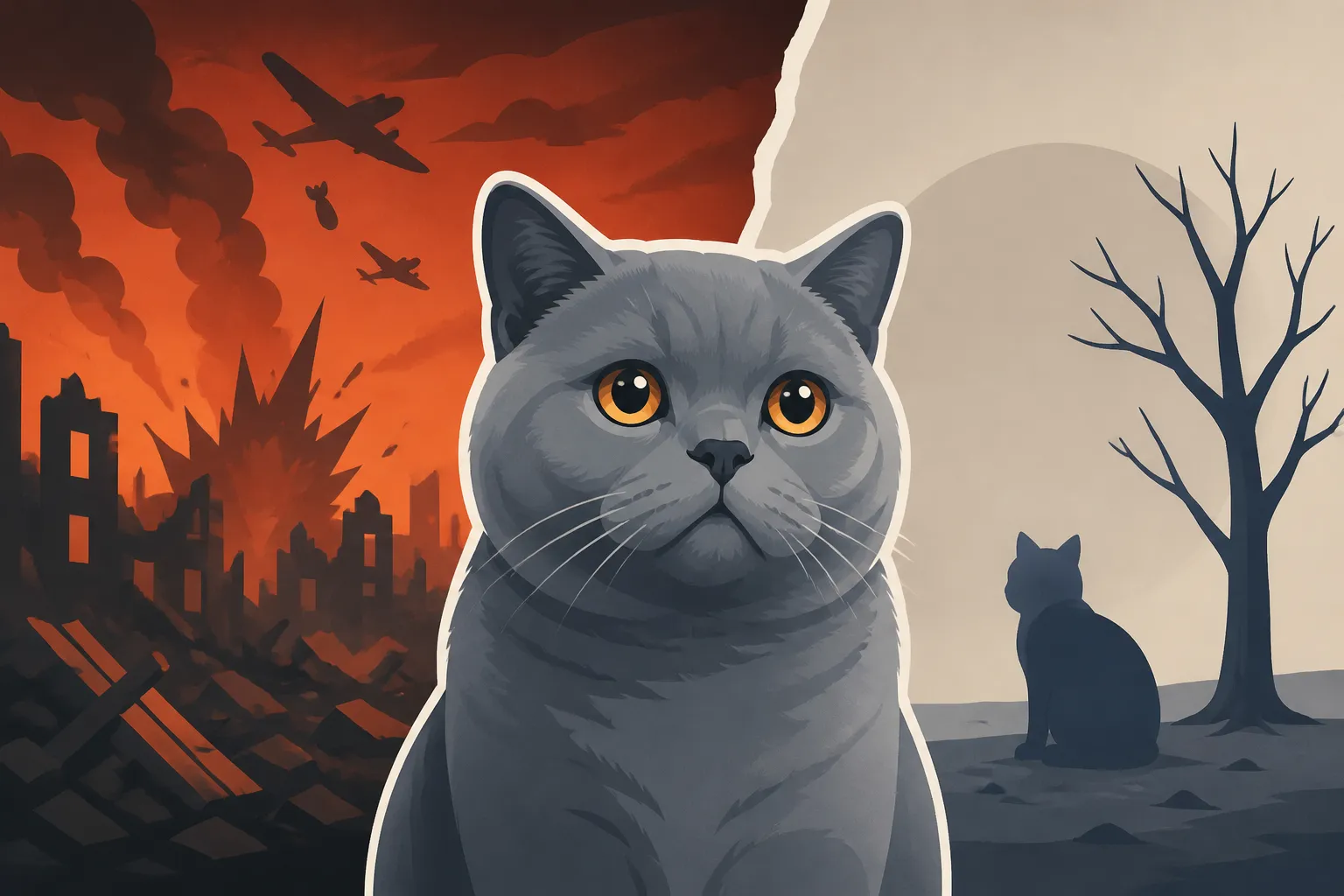
If World War I was a devastating blow, World War II proved to be an almost fatal one for the British Shorthair. The scale of the second global conflict, with its widespread bombings and even more severe rationing, pushed the breed to the absolute precipice of extinction.
Severe Rationing and Food Shortages
World War II brought rationing on an unprecedented scale, affecting everything from food and clothing to fuel. For domestic animals, this meant extreme hardship. Government propaganda often encouraged putting down pets to conserve food for humans, a truly grim reality for pet owners. Meat, fish, and dairy products became almost impossible to acquire for pets. Even when British Shorthair owners were fiercely devoted, the sheer lack of available nutrition meant many cats struggled to survive, let alone thrive enough to reproduce. Breeders, even the most committed, found it nearly impossible to provide the adequate diet necessary for pregnant queens or growing kittens. It was a grim time where the fundamental act of feeding a cat became an almost insurmountable challenge.
Loss of Breeders and Breeding Stock
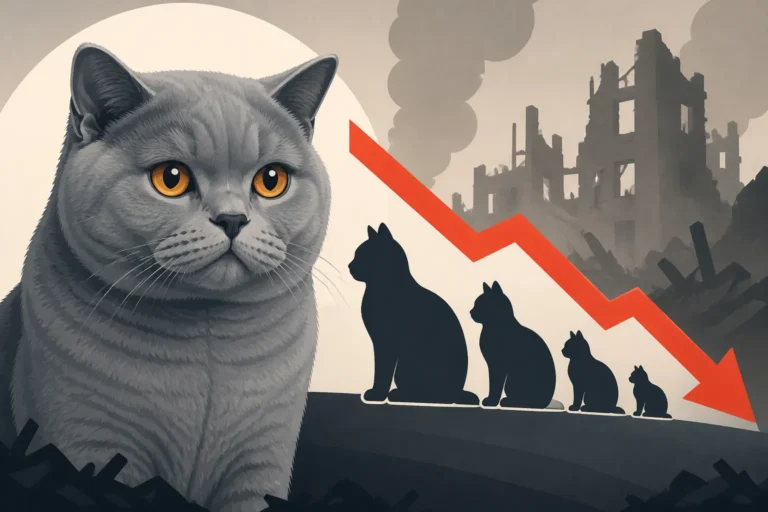
The impact on the breeding community was catastrophic. Many breeders themselves were directly involved in the war effort, evacuated from their homes, or lost their lives. Homes and catteries were destroyed during bombing raids, especially in urban areas. This meant the physical loss of cats, pedigrees, and breeding records. Even those who survived often had to cease breeding altogether, focusing on personal survival and contributing to the war. The few remaining British Shorthairs were often isolated, making it incredibly difficult to find suitable, healthy mates. The gene pool shrank dramatically, leading to fears that the distinct British Shorthair type, built over decades, would be irrevocably lost. How Far British Shorthair Numbers Fell by 1945 provides a stark look at the severity of this decline.
The Challenge of Maintaining Pedigrees
Keeping accurate pedigree records became an almost impossible task during the war years. With homes destroyed, people displaced, and all resources directed towards survival, the meticulous record-keeping essential for pedigree breeding fell by the wayside. This meant that even if a few British Shorthairs survived, their lineage often became muddled or completely lost. The lack of documented ancestry made post-war rebuilding even more complex, as breeders couldn't easily trace lines to ensure genetic diversity or avoid inbreeding. It was a race against time and memory to piece together the fragmented history of the breed.
The Aftermath and the Road to Recovery
The end of World War II in 1945 did not instantly herald a golden age for the British Shorthair. The breed was in a perilous state, truly teetering on the edge. Its survival is a testament to the unwavering dedication of a few tenacious individuals who refused to let this iconic cat vanish from history.
Dedicated Breeders and Crossbreeding Efforts
Faced with a critically depleted gene pool and a scarcity of true British Shorthairs, a small band of devoted breeders understood that extraordinary measures were necessary. They embarked on what would become a controversial but ultimately vital strategy: judicious outcrossing. This meant introducing other breeds, primarily Persians and Russian Blues, to infuse new blood and genetic diversity back into the British Shorthair lines. The goal was to rebuild the breed's numbers and health while carefully selecting offspring that still embodied the characteristic British Shorthair type. It was a painstaking process, requiring immense knowledge of genetics and a clear vision of the breed standard. Which Breeds Rebuilt the British Shorthair delves into the specific breeds used and the challenges faced.
These breeders weren't just thinking about the immediate future; they were laying the groundwork for generations to come. They understood that the integrity of the breed depended on widening the genetic base while simultaneously refining the distinct physical traits that define a British Shorthair. This period of recovery was slow, demanding constant vigilance and careful decision-making to ensure that the essence of the British Shorthair was preserved and strengthened.
The Role of Outcrosses in Rebuilding the Gene Pool
The use of outcrosses, particularly the Persian, was instrumental in saving the British Shorthair from extinction. While some purists initially balked at the idea of diluting the purebred lines, the reality was that without new genetic material, the breed would have collapsed entirely due to inbreeding depression and insufficient numbers. The Persian was chosen for its cobby body type, dense coat, and round head, qualities that could be carefully integrated without completely altering the British Shorthair's fundamental appearance.
The process involved breeding a British Shorthair to a Persian, then back-crossing the offspring repeatedly to British Shorthairs to "breed out" the longhair gene and other non-standard Persian traits, while retaining the desired genetic robustness. This was a multi-generational project, and it took decades to stabilize the breed to a point where the influence of the outcrosses was largely invisible, save for the broadened gene pool. What the Persian Cross Gave the British Shorthair provides more context on this critical decision. This method also inadvertently introduced some health considerations, such as Polycystic Kidney Disease Came Into the British Shorthair With the Persians, a condition that had to be later addressed through careful screening.
The Modern British Shorthair: A Legacy of Resilience
Today, the British Shorthair stands as a testament to this incredible journey of resilience and dedicated preservation. The breed is once again immensely popular worldwide, recognized by all major cat registries, and cherished for its placid nature and distinctive appearance. While the historical struggles of the World Wars are often overlooked, they are a crucial part of the breed's story.
The careful work of those post-war breeders means that modern British Shorthairs can enjoy long, healthy lives, a stark contrast to their ancestors who struggled to find food during wartime. Owners today have access to a wealth of resources, from high-quality nutrition available through retailers like Chewy to advanced veterinary care. When we enjoy the companionship of these magnificent cats, we are witnessing the triumph of a breed that survived against immense odds, a true phoenix of the cat fancy world. Understanding this history gives us a deeper appreciation for their enduring spirit and the tireless efforts of the people who ensured their survival for future generations.
| War Period | Key Challenges for British Shorthairs | Impact on Breed Numbers | Recovery Efforts |
|---|---|---|---|
| Pre-WWI (Golden Age) | Focus on refinement and establishing breed standard | Flourishing, high popularity | N/A (period of growth) |
| World War I | Resource scarcity, shift in national priorities, show cancellations | Significant decline, disruption of breeding lines | Minimal, initial attempts at revival |
| Interwar Period | Economic hardship, lingering war trauma, looming new conflict | Slow, fragile recovery, numbers remained low | Reforming clubs, re-registering existing cats |
| World War II | Severe rationing, destruction of catteries, loss of life, isolation | Near extinction, critically low numbers | Intense, controversial outcrossing with Persians and Russian Blues |
| Post-WWII (Recovery) | Rebuilding gene pool, re-establishing type, fighting inbreeding | Gradual increase, genetic stabilization | Selective breeding, rigorous health screening |
Disclaimer
This article is for general informational purposes only and does not constitute professional advice. Laws, prices and regulations vary by location and change over time. Consult a qualified professional for guidance on your specific situation.