Whether Roman Cats Founded the British Shorthair
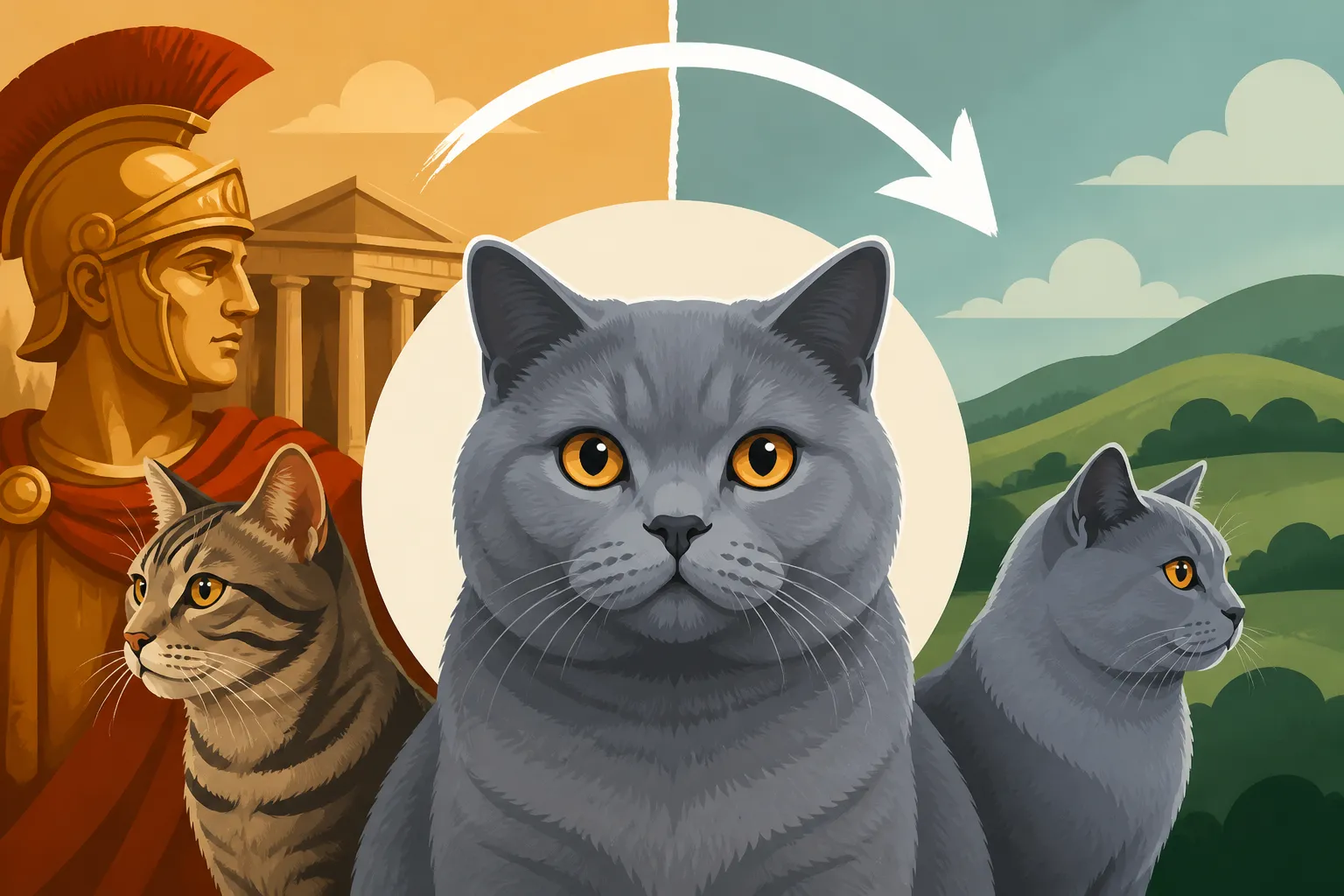
It's a question that sparks the imagination of many British Shorthair enthusiasts: did those ancient Roman legions, trudging across the muddy landscapes of Britannia, bring with them the very ancestors of our beloved round-faced companions? The idea of your dignified, teddy bear-like British Shorthair having roots stretching back to the Roman Empire is certainly a romantic one, and it’s a theory that often comes up in discussions about the breed's deep history. This guide delves into the fascinating origins of the British Shorthair, exploring the historical evidence, the compelling theories, and the modern understanding of how these charming cats came to be.
The Historical Tapestry of the British Shorthair
Understanding whether Roman cats played a role in founding the British Shorthair breed requires us to look far beyond the formal establishment of the breed in the 19th century. We need to cast our minds back to the very dawn of feline companionship and their spread across the globe. Cats, unlike many other domestic animals, chose us as much as we chose them, drawn to human settlements by the abundance of rodents that thrived alongside grain stores. Their journey with humanity is a long, winding one, marked by ancient trade routes, military campaigns, and migration.
Tracing the Origins: From Wildcat to Domestic Companion
Long before any Roman set foot on British soil, the wild ancestors of our domestic cats, believed to be the African wildcat (Felis lybica), began their gradual domestication process in the Near East. This process wasn't a sudden event but rather a slow co-evolution spanning thousands of years. As humans started agricultural settlements, storing grain, mice and rats became abundant, and wildcats saw an easy food source. Humans, in turn, appreciated these natural pest controllers and began to tolerate, then encourage, their presence. This symbiotic relationship led to the gradual taming and genetic changes that distinguish domestic cats from their wild cousins.
These proto-domesticated cats then began to spread with human migration and trade. Phoenician traders, ancient Egyptians, and other maritime cultures would have carried cats on their ships to protect cargo from rodents, inadvertently distributing them across the Mediterranean and beyond. It’s entirely plausible, even likely, that some cats made their way to the British Isles before the Romans ever arrived, brought by earlier settlers or traders. However, definitive proof of a widespread, established feline population in pre-Roman Britain is scarce, leaving a gap in our knowledge about their prevalence and genetic makeup before the Roman invasion.
The Roman Empire's Paw Prints Across Europe
The Roman Empire was a massive, interconnected network of roads, trade, and military movement, and where humans went, their animals often followed. Cats held a practical and sometimes symbolic place in Roman society. While they weren't venerated to the same extent as in ancient Egypt, Roman households and granaries certainly benefited from their rodent-hunting prowess. Cats served as efficient, living pest control, protecting valuable food stores and preventing the spread of disease, making them invaluable companions for legions on the march and settlers establishing new outposts.
As the Roman legions advanced across Europe, establishing new provinces, building cities, and creating vast supply lines, they would have brought various animals with them: horses for cavalry, cattle for food, and, yes, cats to keep the camps and settlements clear of vermin. These Roman cats, descended from the same Near Eastern wildcat lineage, would have mingled with any existing local feline populations, if they existed, contributing to the genetic melting pot of European domestic cats. The efficiency of the Roman infrastructure meant that animals could be transported over vast distances, significantly contributing to the spread of certain animal populations, including felines, across the continent and into newly conquered territories like Britannia.
The Roman Cat Theory and Its Evidence
The idea that Roman cats were the foundational stock for the British Shorthair is rooted in the undeniable fact of the Roman presence in Britain for nearly four centuries. During this time, a considerable exchange of goods, people, and animals occurred between the continent and the island. It stands to reason that cats, valued for their utility, would have been part of this exchange. The theory posits that these Roman imports established a robust feline population that would eventually adapt to the British climate and form the basis of the indigenous "shorthair" type.
Archeological Findings and Skeletal Remains
Archaeological excavations at Roman sites across Britain have indeed unearthed feline remains, providing tangible evidence of cats living alongside humans during the Roman occupation. These findings often include skeletal fragments, which can offer clues about the size and general type of cats present. For instance, remains found at places like Fishbourne Roman Palace or various Roman forts suggest the presence of domestic cats. However, identifying these ancient bones as direct ancestors of the modern British Shorthair is a complex task.
The challenge lies in the nature of archaeological evidence. While we can confirm the presence of domestic cats, differentiating them purely by skeletal structure as a specific "breed precursor" is incredibly difficult, if not impossible, given that the British Shorthair as a recognized breed didn't exist until much later. The "British Shorthair type" that Harrison Weir sought to standardize in the 19th century was based on a robust, cobby-bodied, short-haired cat that was common in Britain. It's plausible that these ancient Roman cats contributed to a widespread, un-standardized population of sturdy, short-haired cats across the island. But a direct, unbroken lineage proving they founded the specific British Shorthair breed, as we know it today, is something archaeology alone struggles to provide. It shows cats were there, but not necessarily the British Shorthair. You might find a cat bowl similar to those available on Chewy today, but it wouldn't tell you the breed of cat that ate from it millennia ago!
The Journey from Roman Cat to British Street Cat
After the Roman withdrawal from Britain in the early 5th century, the cats they brought with them didn't simply vanish. They would have continued to thrive, reproducing and adapting to the changing landscape and human settlements. Over centuries, these cats, along with any existing native feline populations, would have formed a distinct "landrace" – a localized population of domestic animals adapted to their environment without intentional selective breeding by humans. These were the common "street cats," "farm cats," and "alley cats" of Britain.
These landrace cats would have been characterized by their resilience, hunting skills, and short, dense coats – a practical adaptation to the often-damp and chilly British climate. They were working cats, earning their keep by keeping rodent populations in check in barns, homes, and around burgeoning towns. It's these centuries of natural selection, interbreeding, and adaptation that shaped the physical characteristics and robust health of the average British domestic cat. This hardy, short-haired type became synonymous with the British feline population and would eventually catch the eye of early cat fanciers, leading us directly to the formal establishment of the breed. This period, from Roman departure to the 19th century, is crucial for understanding the deep roots of the British Shorthair, even if it's less clear-cut than a direct Roman ancestry. Whether the British Shorthair Was Ever a Working Cat explores this working history in more detail.
The British Shorthair's Official Breeding History
While the Roman cat theory offers a compelling narrative for the presence of cats in Britain, the story of the British Shorthair breed officially begins much, much later. The journey from a ubiquitous British street cat to a recognized, pedigreed breed with specific standards is a tale of dedicated individuals, the rise of cat fancy, and the resilience of a much-loved feline type. The formalization of breeds is a relatively modern concept, dating back only a couple of centuries.
Harrison Weir and the Birth of the Breed Standard
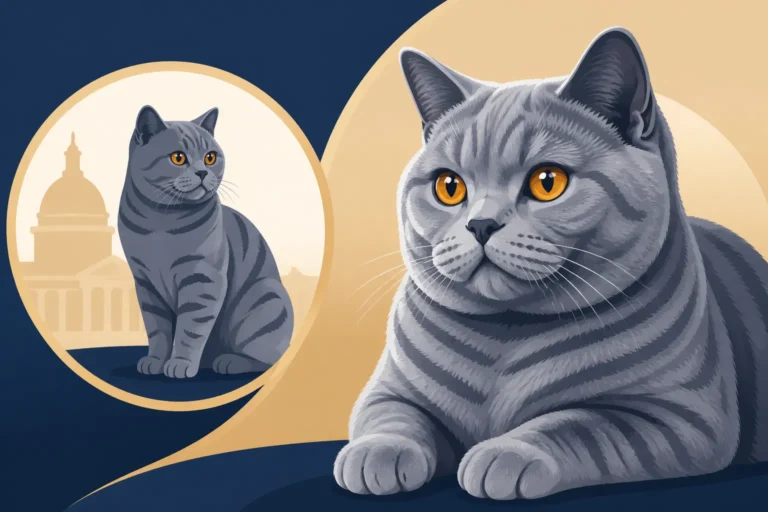
The person credited with truly establishing the British Shorthair as a recognized breed is Harrison Weir, often hailed as the "Father of the Cat Fancy." In the mid-19th century, Weir, a prominent artist and cat lover, grew concerned about the decline of native British domestic cats in favor of more exotic imports. He passionately advocated for the recognition and preservation of the sturdy, common British cat, which he saw as a distinct and valuable type. His efforts culminated in the world's first formal cat show, held at the Crystal Palace in London in 1871.
Weir painstakingly selected the best examples of these common British street cats, specifically those with broad faces, short dense coats, and stocky bodies, to define the breed standard. He aimed to elevate these ordinary, yet remarkable, cats to the same status as their pedigreed counterparts from other lands. His vision was to celebrate the indigenous feline population of Britain, solidifying its place in the burgeoning world of cat shows. Therefore, while Roman cats might have been part of the ancestral soup, it was Weir's deliberate actions that truly founded the British Shorthair as a distinct breed. You can learn more about his profound influence in Who Harrison Weir Was to the British Shorthair and What Happened to the British Shorthair at Crystal Palace.
The Impact of Wars and Outcrossing on the Breed
The early 20th century proved to be a tumultuous time for many pedigreed cat breeds, including the nascent British Shorthair. Both World War I and World War II had a devastating impact on cat fancy in Britain. Resources were scarce, breeding efforts dwindled, and many established lines were lost. The British Shorthair population, despite its hardy origins, suffered significantly, with numbers plummeting to critically low levels. Why British Shorthair Numbers Collapsed in the Wars details this challenging period.
To save the breed from extinction, dedicated breeders were forced to undertake a practice known as "outcrossing." This involved carefully breeding the remaining British Shorthairs with other breeds to introduce new bloodlines and genetic diversity. The Persian cat, with its cobby body, round head, and luxurious coat, was a prominent choice for outcrossing, as were other short-haired breeds like the Russian Blue and the Chartreux. While these outcrosses were vital for the breed's survival, they also brought new traits and genes into the British Shorthair lineage. The distinctive "Persian" influence, for example, is often credited with enhancing the breed's round head and dense coat, though it also brought potential health issues like Polycystic Kidney Disease, which Polycystic Kidney Disease Came Into the British Shorthair With the Persians discusses. This period of reconstruction means that while the core British street cat lineage is there, modern British Shorthairs also carry the genetic legacy of these crucial outcrosses. Which Breeds Rebuilt the British Shorthair further illuminates this fascinating chapter.
Genetic Ancestry Versus Historical Speculation
The question of Roman origins often blurs the lines between general feline ancestry in a region and the specific lineage of a modern breed. While it's highly probable that cats of Roman origin contributed to the overall feline population of Britain, directly attributing the founding of the British Shorthair to them requires a careful distinction between deep genetic history and selective breeding.
Modern Genetic Studies and Cat Lineages
In recent decades, advancements in genetic research have provided incredible insights into the origins and migration patterns of domestic cats worldwide. DNA analysis allows scientists to trace genetic lineages back thousands of years, pinpointing the geographical origins of feline populations and how they spread with human activity. These studies generally confirm that domestic cats largely originated from the Near Eastern wildcat and underwent multiple waves of dispersal. For instance, studies have shown genetic markers in European cats that indicate ancient connections to cats from the Near East, brought over millennia of human interaction.
When applied to the British Shorthair, these studies confirm its place within the broad Western European domestic cat population, which certainly has ancient roots that include cats brought by Romans. However, what genetic studies don't necessarily show is a direct, exclusive genetic "founder effect" specifically from Roman cats that only led to the British Shorthair. Instead, they paint a picture of a general feline population that diversified and adapted over time, eventually becoming the pool from which Harrison Weir later selected for specific traits. The genetic signature of the British Shorthair is a composite of these ancient lineages, later refined and augmented by careful human selection and, post-war, strategic outcrossing.
Distinguishing Ancient Lineage from Breed Formation
It's crucial to understand the difference between a broad ancient lineage and the deliberate formation of a distinct breed. Virtually all domestic cats in Europe share a common deep ancestry that includes cats spread by the Romans, Greeks, Egyptians, and other ancient civilizations. These ancient cats contributed to the diverse genetic pool of "landrace" felines that existed across the continent, including Britain. So, in a very general sense, if your British Shorthair is an inheritor of this broad European cat lineage, then, yes, Roman cats are part of its ancestral background.
However, the "British Shorthair" as a specific, standardized breed with a defined appearance and temperament, only came into existence in the 19th century. Harrison Weir didn't go out and find "Roman cats"; he selected the finest examples of the native British domestic cats, which had developed naturally over hundreds of years from various feline introductions. These cats, while perhaps tracing some distant lineage back to Roman times, had evolved and interbred extensively in Britain, becoming a distinct type. So, while Roman cats might have laid some groundwork by establishing a feline presence, they didn't found the specific breed itself. Think of it this way: your family tree might include immigrants from centuries ago, but your specific surname and immediate family identity were formed much more recently.
| Historical Period | Feline Presence in Britain | Link to British Shorthair |
|---|---|---|
| Pre-Roman Era | Possible presence of cats brought by earlier traders/settlers, though evidence is scarce. | Contributed to general feline gene pool. |
| Roman Occupation (43-410 AD) | Cats introduced by Roman legions and settlers for pest control. Archaeological evidence confirms their presence. | Likely contributed to the initial establishment of a robust feline population. |
| Post-Roman to 19th Century | Feline landrace developed through natural selection and interbreeding; hardy, short-haired cats common across Britain. | The direct ancestral stock from which Harrison Weir selected the foundation cats. |
| 19th Century | Harrison Weir formalizes the "British Shorthair" breed from native British cats at the first cat show (1871). | Official founding of the breed. |
| Early 20th Century | Breed nearly wiped out by World Wars, leading to outcrossing with Persians, Russian Blues, etc. | Significant genetic contribution and shaping of modern BSH appearance. |
Why This Question Matters to British Shorthair Owners
The quest to understand the British Shorthair's origins, whether definitively Roman or a more complex blend, isn't just an academic exercise. For those of us who share our homes with these magnificent felines, delving into their history adds a layer of depth and appreciation to our bond. It helps us understand the resilience, the robustness, and the unique characteristics that define the breed, even influencing our understanding of their health and behavior.
Understanding Breed Health and Heritage
Knowing the British Shorthair's journey from potential Roman settler to native street cat, then through formalization and post-war reconstruction, offers valuable insights into their genetic health and temperament. The fact that the breed was originally founded on hardy, indigenous British cats speaks to their inherent resilience and robust constitution. These were cats that survived and thrived in often challenging conditions, which contributes to the generally healthy nature we often see in modern British Shorthairs. This is a far cry from breeds created from a very small gene pool or with extreme features that compromise health.
The later outcrossing, particularly with Persian cats, while crucial for saving the breed, also brought some genetic considerations, such as the predisposition to Polycystic Kidney Disease (PKD). Responsible breeders today work diligently to test for and eliminate such inherited conditions, ensuring the health and longevity of the breed. This blend of ancient hardiness and later genetic influences is part of what makes the British Shorthair such a fascinating and relatively healthy companion. Looking for quality food from reputable sources like Chewy that cater to their unique nutritional needs can also support their overall well-being throughout their lifespan. Whether the British Shorthair Is a Healthy Breed delves deeper into common health considerations.
The Enduring Appeal of the British Shorthair
Ultimately, the exact percentage of Roman cat DNA in a modern British Shorthair might remain a fascinating mystery, but it doesn't diminish the enduring appeal of the breed. What captivates us most about British Shorthairs is their distinctive personality and appearance: their calm, gentle demeanor, their plush, teddy bear-like coats, and those captivating round faces and expressive eyes. What a British Shorthair's Temperament Is Really Like describes their personality in detail. These traits, forged over centuries of natural selection and later refined by dedicated breeders, are what make them such cherished family members today.
Whether they were brought by Roman legions or evolved from other early settlers, the ancestral cats that roamed Britain eventually contributed to the foundation stock of a truly remarkable breed. The British Shorthair carries within it the echoes of a long and storied past, a testament to feline resilience and the enduring human-animal bond. This rich history, combined with their affectionate yet independent nature, ensures their continued popularity. They represent a tangible link to a bygone era, living history purring contentedly on our sofas.
Disclaimer
This article is for general informational purposes only and does not constitute professional advice. Laws, prices and regulations vary by location and change over time. Consult a qualified professional for guidance on your specific situation.