Where the British Shorthair Ranks in Registrations
British Shorthair popularity in major cat registries, including the Cat Fanciers Association and The International Cat Association.
Is this the right one for you?
Origins and temperament, size and coat, what living with one is actually like, and how it compares to the breeds people weigh against it.
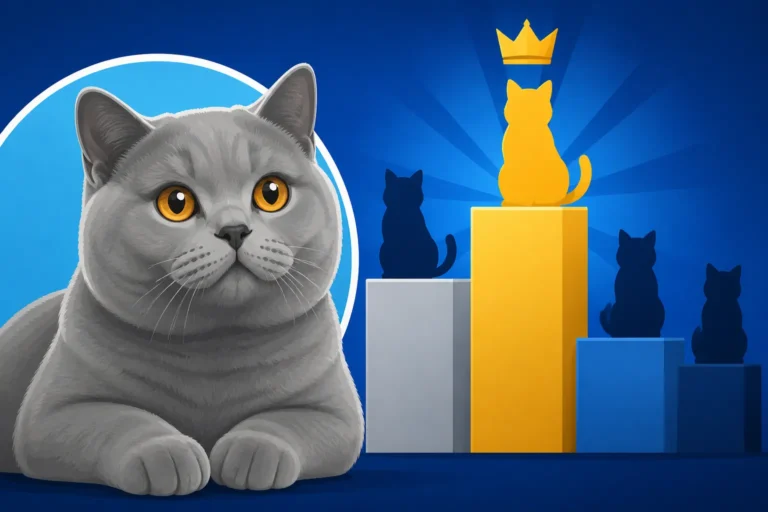
British Shorthair popularity in major cat registries, including the Cat Fanciers Association and The International Cat Association.
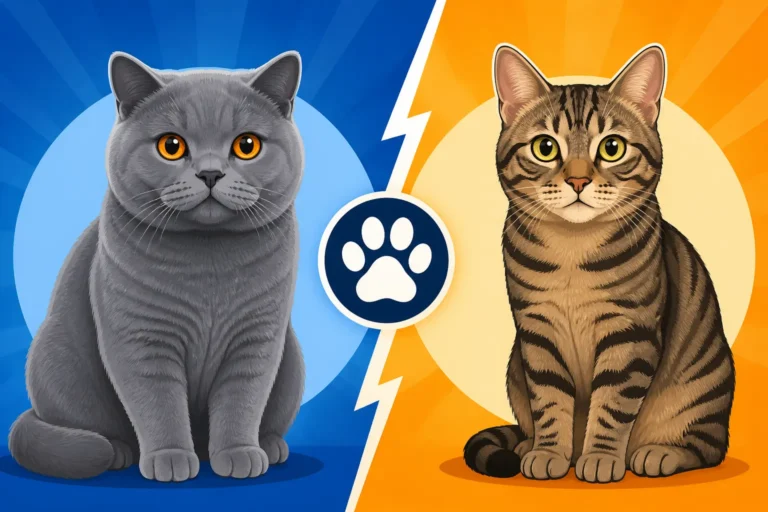
British Shorthair cats and domestic moggies differ through round heads, copper eyes, cobby body builds, and dense bones.
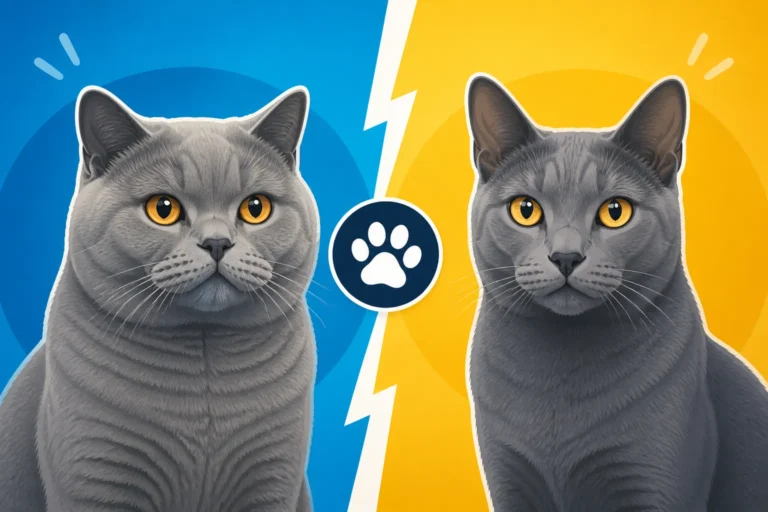
The British Shorthair and the Chartreux cat breeds have distinct geographical origins, histories, and coat characteristics.
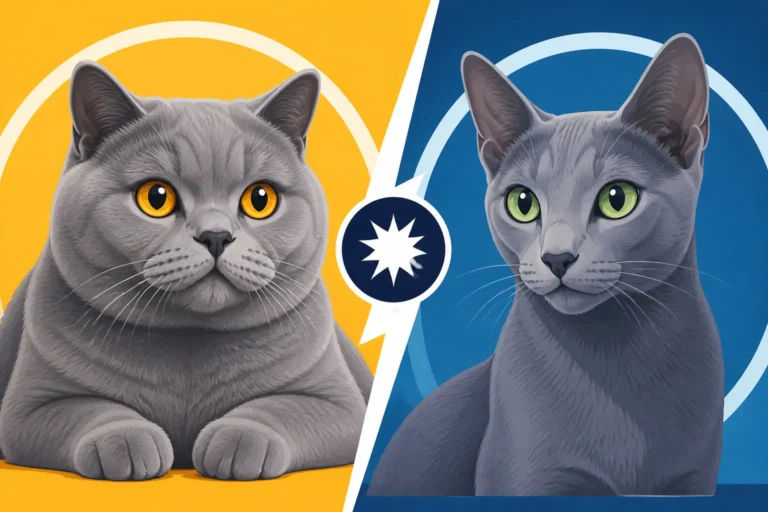
British Shorthair and Russian Blue cats have distinct histories, round or sleek bodies, and unique personalities.
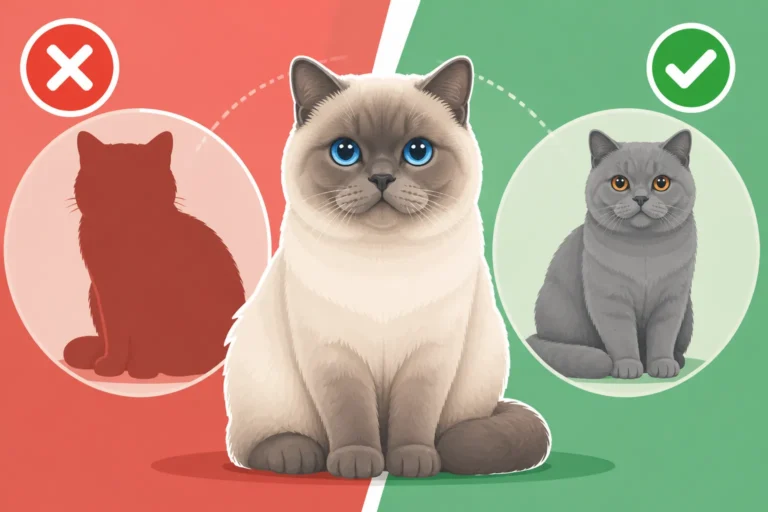
The Colorpoint British Shorthair and official breed standards are explained, clarifying correct physical characteristics and patterns.
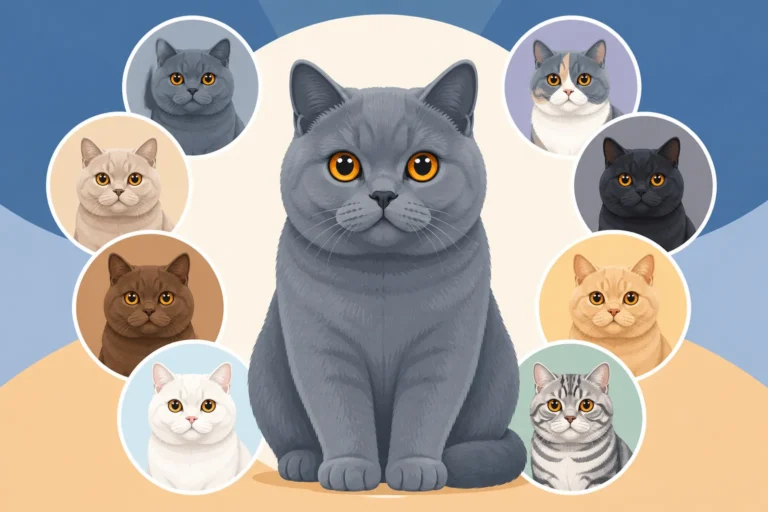
British Shorthair cats feature solid blue, black, white, and silver tabby coats alongside cobby bodies and copper eyes.
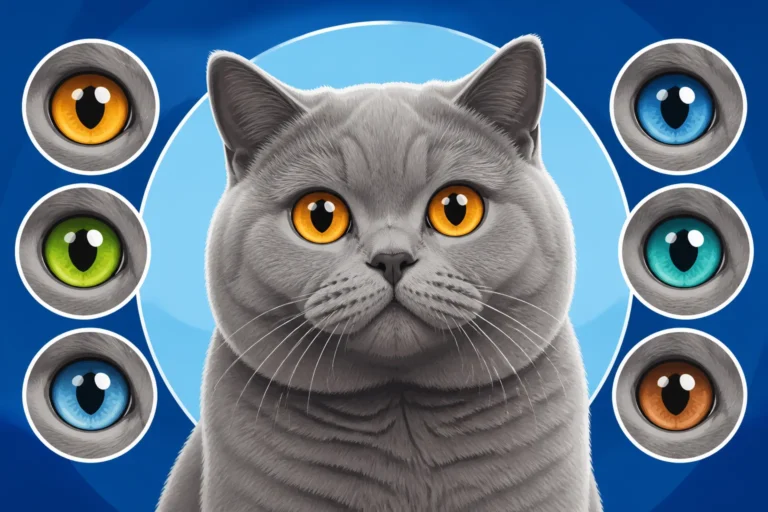
British Shorthair eye color variations, the genetics behind copper hues, and how kitten eye colors develop over time.
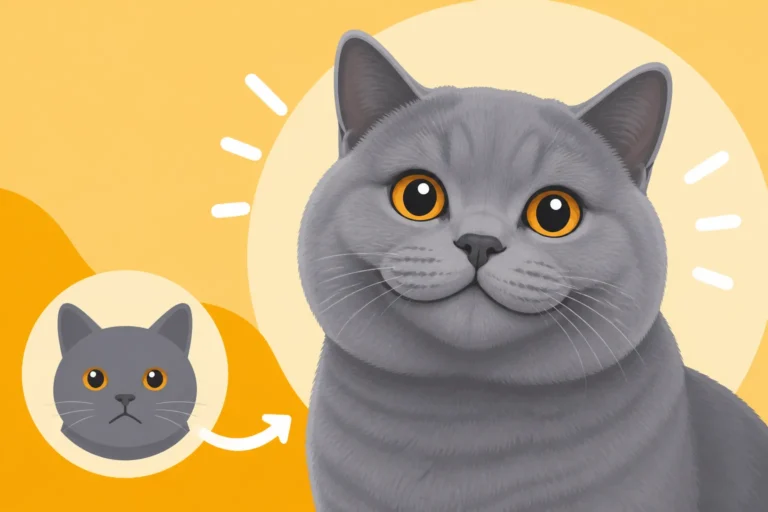
British Shorthair facial anatomy, including round cheeks and a short muzzle, creates a perpetual smiling expression.
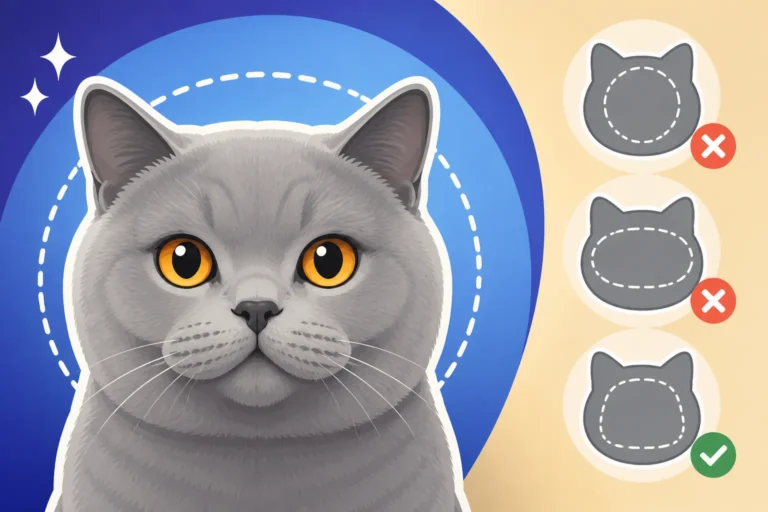
British Shorthair breed standards define the ideal round head shape, broad skull, and full cheeks creating the iconic teddy bear look.
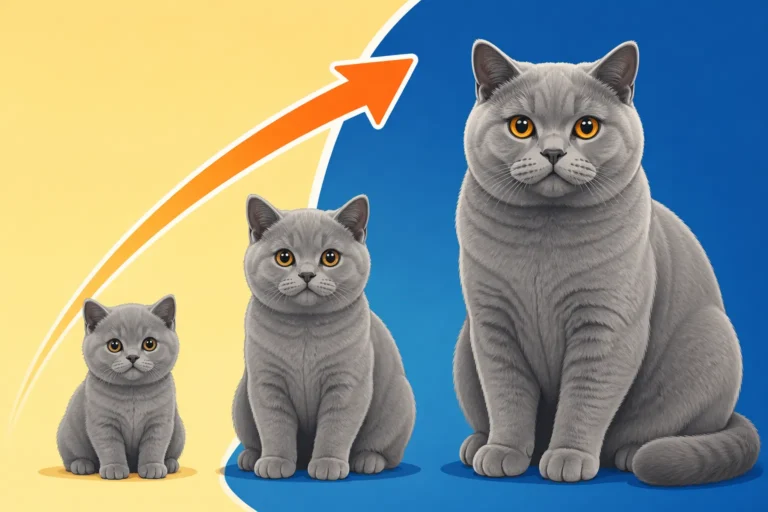
British Shorthair growth timelines span three to five years while cats build muscle mass and develop bone structure.