Whether Alice’s Cheshire Cat Was a British Shorthair
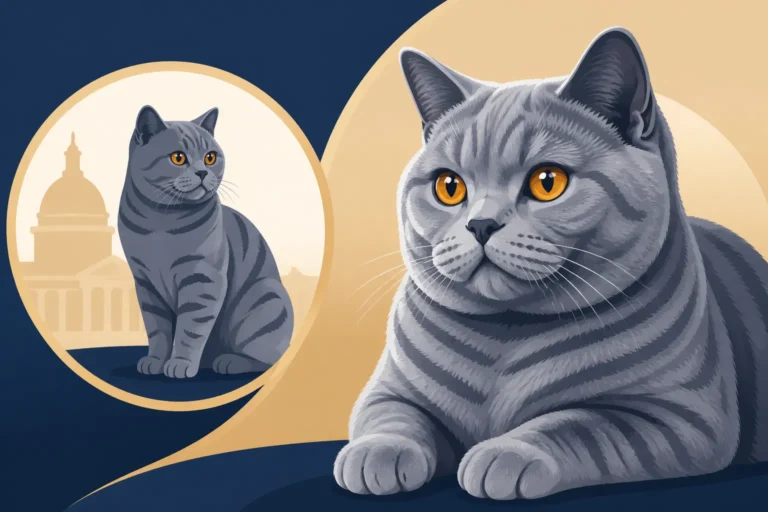
A round, grinning cat in a modern illustration can look remarkably like a British Shorthair, but that does not make the Cheshire Cat one. Lewis Carroll never gave the character a recorded breed, and the cat’s appearance changes across illustrations and adaptations. This guide explains what the original story tells us, why the resemblance is tempting, and what can—and cannot—be concluded.
What the original Cheshire Cat looks like
Lewis Carroll did not name a breed
In Alice’s Adventures in Wonderland, the Cheshire Cat is a strange, talkative character who can appear and disappear, sometimes leaving only its grin behind. Carroll gives it a personality and a few memorable visual details, but he does not identify it as a British Shorthair, or as any other particular breed.
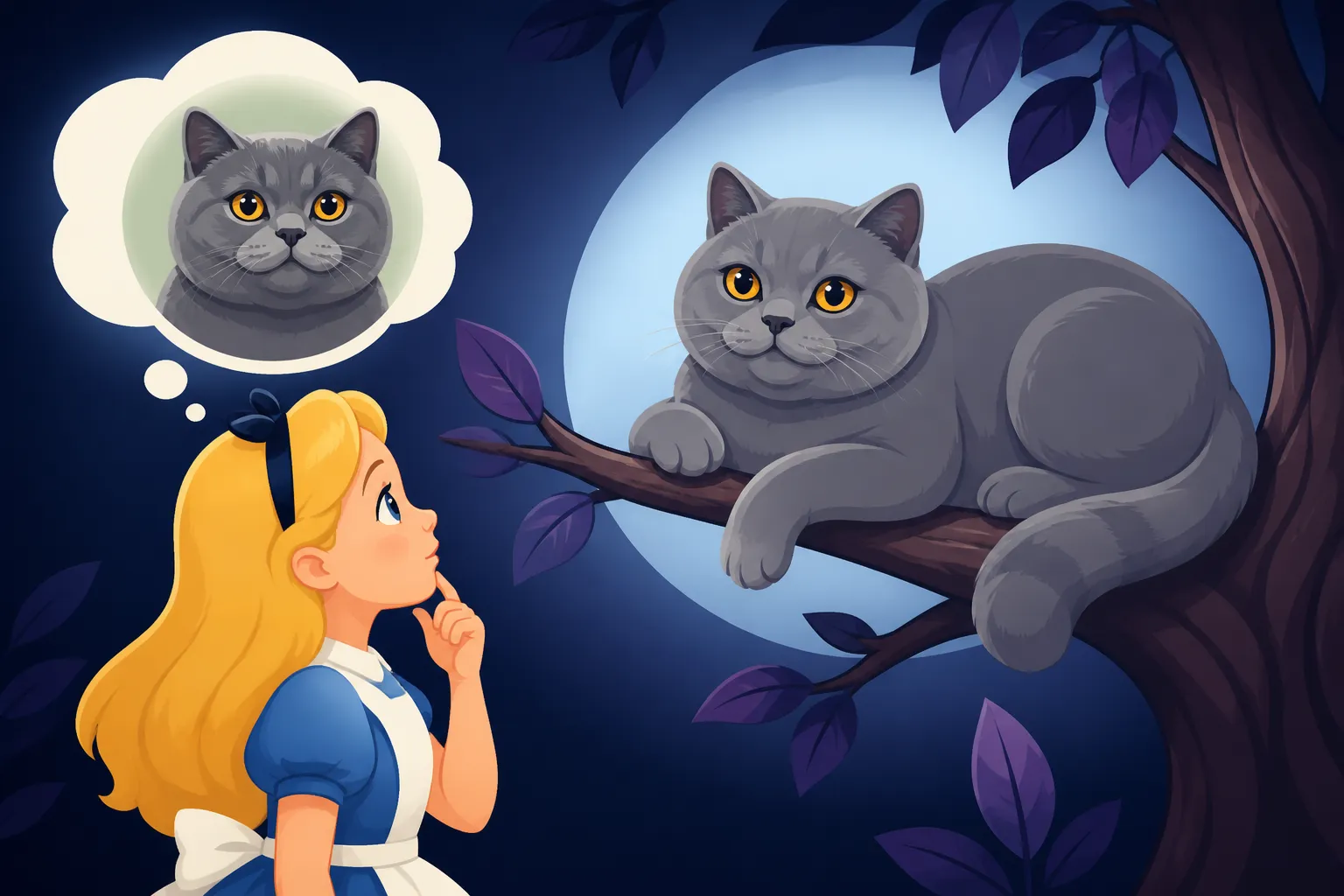
That distinction matters because a fictional character’s appearance is not the same thing as a documented breed identity. The original text gives readers room to picture the cat for themselves. One person may imagine a striped tabby; another may picture a plain-colored cat with a broad head and a mischievous expression. Neither interpretation turns the character into a confirmed pedigree cat.
The book’s illustrations also need to be considered separately from Carroll’s words. The best-known early illustrations, by John Tenniel, shaped how generations of readers imagined the character. They are influential artistic interpretations, not a written breed specification.
Illustrations offer clues, not a pedigree
Tenniel’s Cheshire Cat is generally shown as a striped, somewhat lean-looking cat with a wide grin. Those features do not point specifically to a British Shorthair. Stripes occur in many domestic cats, and a broad smile is an expression created by the illustration rather than a reliable marker of feline ancestry.
The cat’s changing visibility is part of the character’s magic, not a clue to its genetics. A drawing might emphasize the grin, the stripes, or the face; another artist may make the cat plumper, softer, or more brightly colored. Those choices reflect the illustrator’s style and the mood of the adaptation.
If you are comparing pictures, it helps to ask which version you mean. The cat in the original book’s illustrations, the cat in a stage production, and the cat in a later animated film are all artistic interpretations of the same fictional character. They do not necessarily share one consistent design.
The story’s origin is not the same as the cat’s breed
The phrase “Cheshire Cat” is associated with Cheshire, the English county. The book’s setting and the name can invite speculation about local cats, but a regional association does not establish a breed. Carroll did not say that the character was based on a particular household pet or a known British Shorthair line.
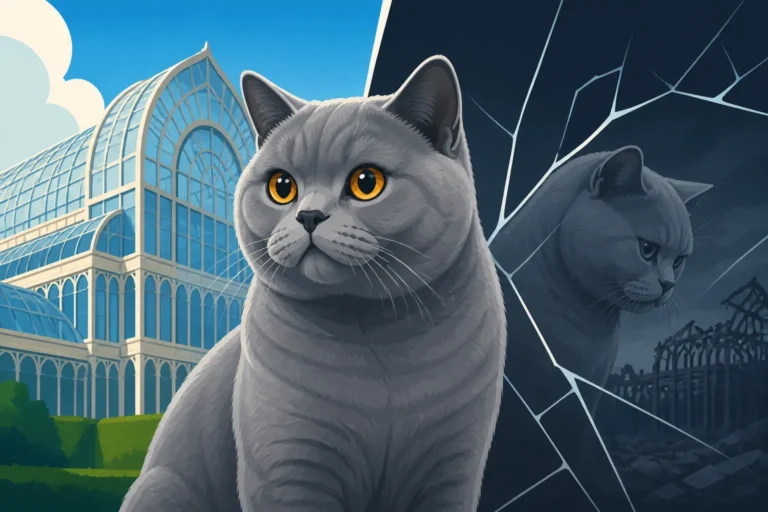
For a little historical context, the modern British Shorthair was shaped as a formal show breed during the Victorian period. That means the breed’s development overlaps broadly with the era in which the story appeared, but chronology alone cannot identify Carroll’s cat as one. A fictional cat may resemble a breed that existed in some form without being intended as a member of that breed.
Readers curious about how the breed took shape can explore Where the British Shorthair Comes From and How Old the British Shorthair Breed Is. Its history helps explain why the comparison is plausible, but it does not supply a missing breed label for Carroll’s character.
Why people associate the Cheshire Cat with British Shorthairs
The round face creates a familiar resemblance
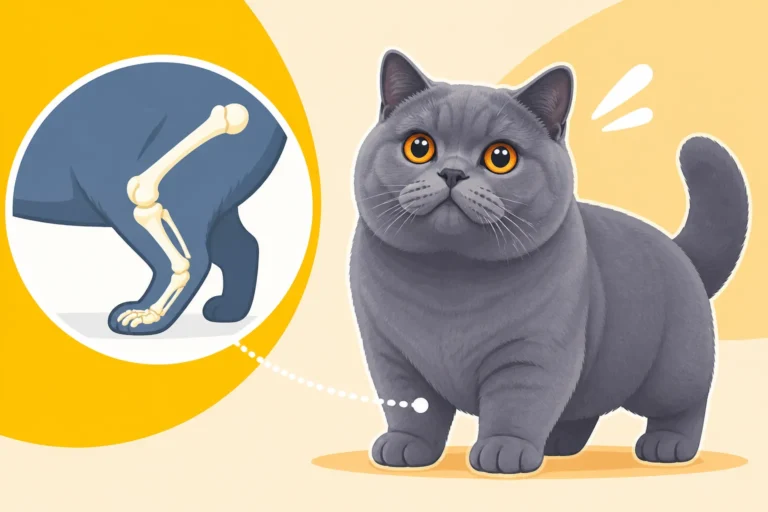
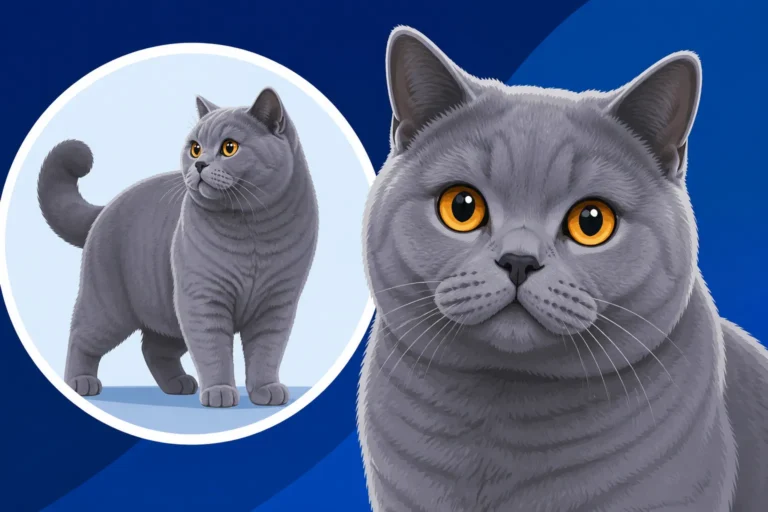
British Shorthairs are often recognized by their rounded heads, full cheeks, compact bodies, and dense coats. In a modern illustration, especially one with a broad face and a relaxed, self-assured expression, those features can bring the breed to mind. The resemblance may feel especially strong when the artist gives the character a plush, teddy-bear-like appearance.
But a round face is not exclusive to this breed. Domestic cats vary widely, and stylized art often exaggerates roundness to make a character look friendly, comical, or memorable. A fictional cat’s oversized cheeks or wide grin are visual design choices—not evidence that the artist intended a British Shorthair.
A useful comparison is the difference between “this cat looks a bit like a British Shorthair” and “this character is canonically a British Shorthair.” The first is an impression. The second would require some clear statement from Carroll or an authoritative source connected to the original work, and the story provides no such statement.
Color and coat are easy to read too much into
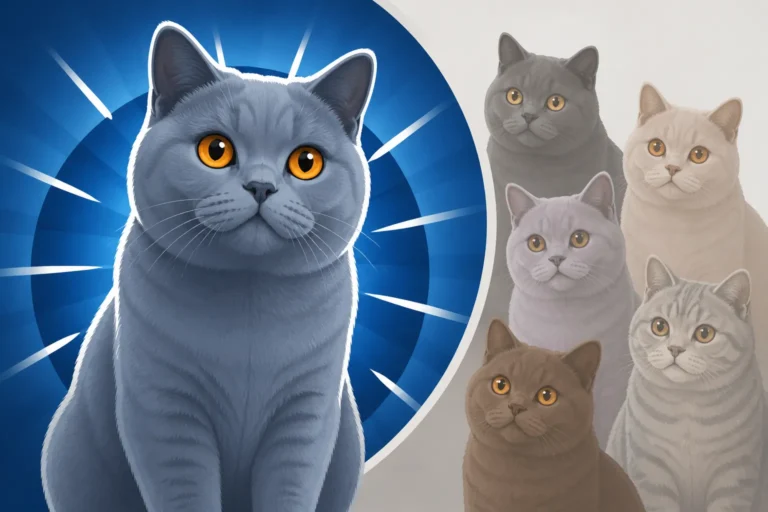
Many people picture a British Shorthair as blue-gray, with copper or gold eyes. That familiar image can influence how viewers interpret cat characters, especially when a modern adaptation uses a solid-colored, plush-looking design. Yet British Shorthairs come in many colors and patterns, while striped coats are common among cats outside the breed as well.
The famous Cheshire Cat designs also vary in color. A bright, contrasting coat in a screen adaptation may be chosen to make the character stand out against the background, or to give the story a dreamlike feel. It should not be treated as a literal representation of the breed’s coat or as a clue about the original character’s intended ancestry.
For readers interested in the real breed’s appearance, Which Colors a British Shorthair Comes In and What Shape a British Shorthair's Head Should Be offer useful context. They describe traits of actual cats, while the Cheshire Cat remains an illustrated character whose look shifts from one version to another.
The character’s temperament is a separate question
The Cheshire Cat is clever, cryptic, and independent in the story. It appears when it chooses, speaks in riddles, and does not behave like an ordinary pet. Those traits can make people think of a confident, self-possessed cat, but they do not identify a breed either.
British Shorthairs are often described as calm and composed, though individual cats vary. It can be tempting to connect that reputation with the Cheshire Cat’s unhurried manner, but literary personality and breed temperament are not interchangeable. Carroll’s cat acts according to the logic of a fantasy world, not a behavioral profile.
If you are comparing a real cat’s temperament with the character, What a British Shorthair's Temperament Is Really Like is a better guide than the fictional cat itself. It can help separate a breed’s common tendencies from the familiar but exaggerated traits of a storybook character.
How the Cheshire Cat changes across adaptations
The illustrator shapes the cat’s identity
Every adaptation makes choices about the Cheshire Cat’s shape, coloring, expression, and movement. A stage production may use a large costume or a mask so the audience can read the character from a distance. An animated version can make the cat stretch, fade, or grin in ways that would be difficult to represent in a still illustration. These choices shape what viewers remember.
That is why someone may confidently picture a plump, plush cat while another person remembers a striped, narrower-faced one. They may be thinking of different illustrations or adaptations, not disagreeing about a single fixed design. Over time, one popular version can become so familiar that it feels like the original, even when it is only one interpretation.
When an adaptation makes the cat look like a British Shorthair, that may be a deliberate visual reference, a convenient design choice, or simply a resemblance noticed by viewers. Unless the adaptation explicitly identifies the breed, it is safest to describe the character as British-Shorthair-like rather than to present the resemblance as established fact.
A recognizable design can still be flexible
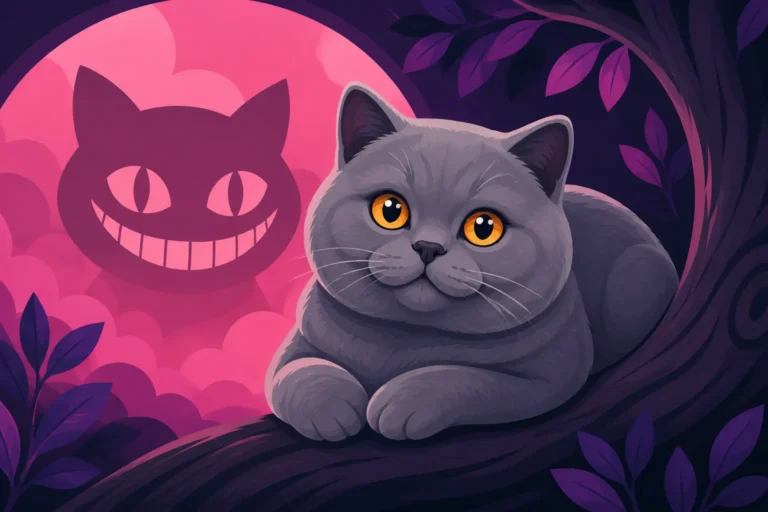
The grin is the Cheshire Cat’s most consistent visual idea. Coat color, body shape, and facial proportions are much more flexible. Artists can keep the grin and the character’s eerie disappearance while changing nearly everything else about the cat’s physical appearance.
This flexibility is part of why the character has endured. A director can make the cat comical, unsettling, elegant, or child-friendly without losing the central idea. A plush, round-faced version can read as warm and appealing; a thinner, more angular version can feel mysterious. The design serves the adaptation’s tone.
The British Shorthair comparison is therefore best understood as a modern visual association, not a settled fact about the character. It is perfectly reasonable to say that a particular Cheshire Cat looks like a British Shorthair. It is less accurate to say that Carroll’s Cheshire Cat was definitively one.
| Question | What can reasonably be said |
|---|---|
| Did Carroll name the Cheshire Cat’s breed? | No breed is specified in the story. |
| Do the original illustrations confirm a British Shorthair? | No. They are artistic depictions, not pedigree descriptions. |
| Can a modern Cheshire Cat look like a British Shorthair? | Yes. Some designs may share a round face or plush appearance. |
| Does the name “Cheshire” prove a breed connection? | No. A place association does not establish breed identity. |
| Is the cat’s famous grin a breed trait? | No. It is a defining fictional and artistic feature. |
For more on the distinction between breed appearance and specific standards, see How a British Shorthair Differs From a Moggy. A cat may have a breed-like look without having documented pedigree ancestry, and the same caution applies when interpreting fictional characters.
What to say when someone asks if it was a British Shorthair
The most accurate answer is that it is unknown
The straightforward answer is: the Cheshire Cat was not identified as a British Shorthair in the original story. It may resemble one in some illustrations or adaptations, but there is no basis for treating that resemblance as a confirmed breed identity.
That answer leaves room for the fun of the comparison. You can enjoy imagining the Cheshire Cat as a British Shorthair without turning the idea into a fact about Carroll’s writing. Fiction invites readers to picture characters in personal ways; the important thing is to distinguish an interpretation from something the text actually says.
A careful phrasing might be: “Some versions look like British Shorthairs, but Carroll did not specify the cat’s breed.” That is clear, accurate, and still allows for the visual connection that prompted the question.
Why the distinction is useful
Breed labels carry specific meanings when they are applied to real cats. A British Shorthair is not simply any round, gray, or plush-looking cat; it is a breed with recognized characteristics and a history of selective breeding. A resemblance alone cannot establish a real cat’s ancestry, and it certainly cannot settle the identity of a character whose creator left the matter open.
That distinction can be helpful beyond this one story. Popular illustrations often lead people to assume that a character represents a particular breed. Sometimes an artist has said so; sometimes viewers are making a reasonable visual comparison; and sometimes the character’s design changes enough that no single breed description fits.
If the question comes up in conversation, keep the answer simple: the Cheshire Cat can be drawn to look like a British Shorthair, but the original book does not say that it is one. For further background on the breed’s popular image, Why the Blue Is the Best Known British Shorthair and The Round Head and Copper Eye a British Shorthair Is Judged On explain why certain features have become so familiar.
Disclaimer
This article is for general informational purposes only and does not constitute professional advice. Laws, prices and regulations vary by location and change over time. Consult a qualified professional for guidance on your specific situation.