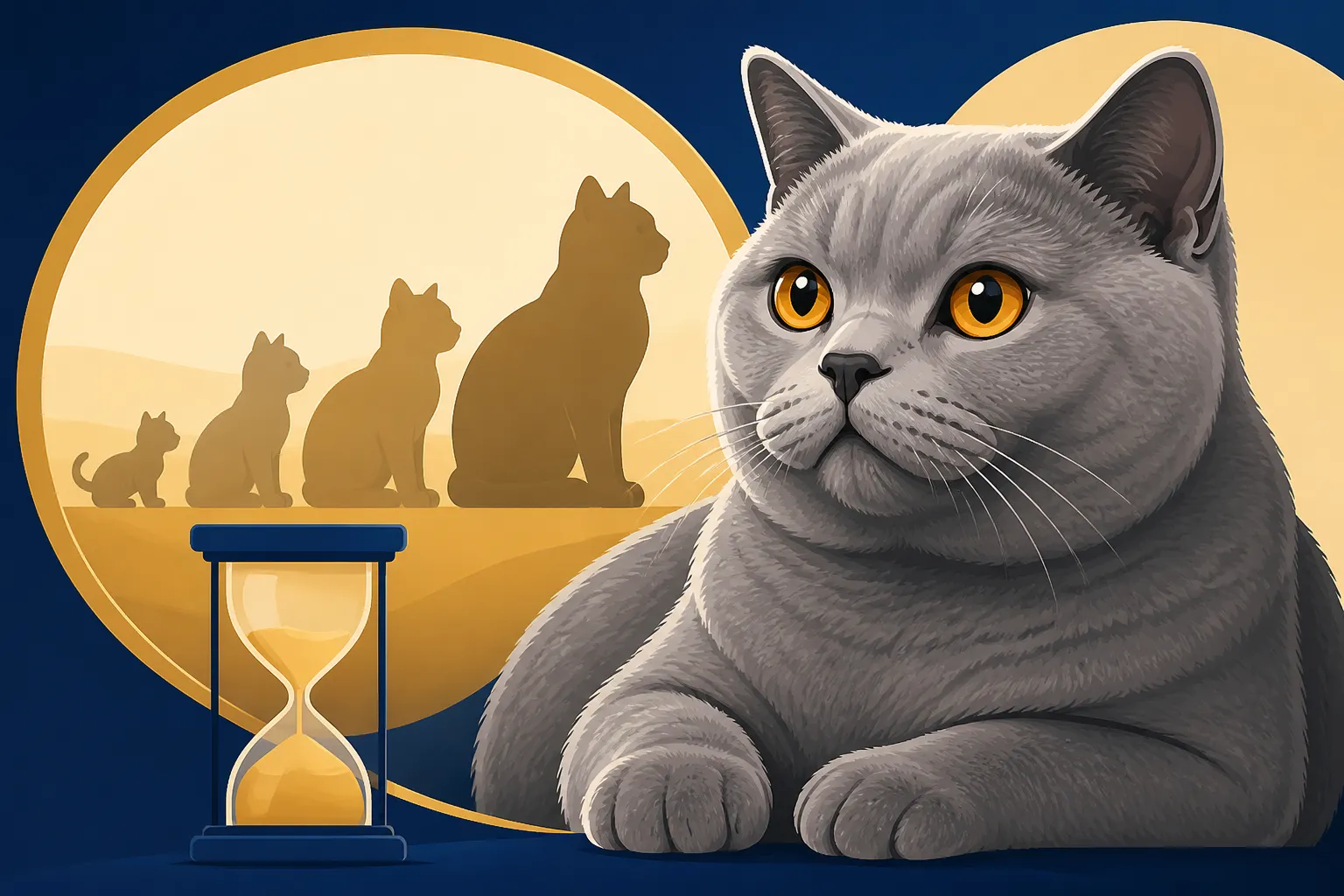
How Old the British Shorthair Breed Is
It's easy to look at a British Shorthair today, with their plush coats and famously round faces, and imagine they're a relatively new, designer breed. But that couldn't be further from the truth! Many people wonder how far back their lineage truly goes, often mistaking them for a more recent creation. This comprehensive guide will take you on a journey through time, exploring the incredible, centuries-old history of the British Shorthair, from its humble beginnings as a working cat to its celebrated status as a pedigreed darling.
The Deep Roots: Ancestors from Roman Times
When you gaze into the calm, copper eyes of a British Shorthair, you’re looking back through centuries of history. These aren't cats that sprang into existence a few decades ago; their roots are deeply intertwined with the very fabric of Britain itself. Understanding their ancient origins helps us appreciate the resilience and natural characteristics that define them today.
Tracing the Feline Lineage in Britain
Imagine a time long before formal cat shows or breeders, when cats arrived on the shores of Britain not as pampered pets, but as essential workers. It's widely believed that the ancestors of today's British Shorthairs first set paw on the island alongside the Roman legions. These Roman cats were brought over to protect grain stores from rodents, a vital task for feeding an army and its burgeoning settlements. They weren't just passengers; they were critical members of the logistical chain. As the Roman Empire expanded its reach across the land, so too did these cats, intermingling with any native wildcats (though the impact of this is debated) and spreading throughout the developing towns and countryside.
These early feline settlers weren't a specific "breed" in the modern sense. They were sturdy, adaptable working cats, selected by necessity for their hunting prowess and ability to thrive in various environments. They lived alongside humans, but largely fended for themselves, developing a robust constitution that would later become a hallmark of the British Shorthair. So, when you ask Whether Roman Cats Founded the British Shorthair, the answer is a resounding "quite likely, yes!" Their arrival marked the beginning of domestic cats becoming a permanent fixture in the British landscape.
A Natural Selection for Survival
Over hundreds of years, these Roman descendants continued to adapt to the unique climate and conditions of Britain. This wasn't a process of selective breeding by humans, but rather natural selection at its finest. Only the strongest, healthiest, and most well-suited cats survived and reproduced. They needed dense, water-resistant coats to withstand the damp, often chilly British weather, and a solid, muscular build for hunting and self-preservation. Their short, thick fur, for example, developed not for aesthetics, but for warmth and protection, much like the wool of a sheep.
This long period of natural development meant that the British Shorthair’s foundational traits – its robust health, calm demeanor, and distinctive physical attributes – were forged in the crucible of survival. They became efficient hunters, independent yet tolerant of human presence. This inherent hardiness is a legacy that remains in the breed today, often contributing to their generally The Twelve to Seventeen Years a British Shorthair Gets and relatively healthy disposition, though modern breeding introduces other considerations.
The Victorian Era: From Street Cat to Show Cat
Fast forward many centuries, and these humble working cats, now firmly established across Britain, began to catch the eye of a new kind of admirer: the cat fancier. The Victorian era, with its burgeoning interest in animal husbandry and organized exhibitions, proved to be the pivotal moment when the British Shorthair transitioned from a common domestic cat to a recognized, pedigreed breed.
Harrison Weir and the First Cat Show
The catalyst for this transformation was a man named Harrison Weir. Often hailed as the "Father of the Cat Fancy," Weir was an artist, writer, and devoted animal lover. He was fascinated by the beauty and variety of domestic cats, particularly the sturdy, short-haired cats found in Britain's homes and streets. Prior to his efforts, cats were largely regarded as utilitarian animals, not subjects for organized display or breeding for specific traits. Weir believed they deserved the same recognition and appreciation as dogs, which were already being exhibited in competitive shows.
In 1871, Harrison Weir organized the first-ever organized cat show, held at the Crystal Palace in London. This monumental event fundamentally changed the perception of cats. Weir championed the "British Shorthair" (though the name was still fluid, often referring to a British Blue at this point) as a distinct type, selecting specimens that best exemplified the characteristics he admired: a strong, cobby body, round head, and dense, plush coat. His dedication to elevating the status of the common domestic cat is why he's such a crucial figure in the breed's history, and understanding Who Harrison Weir Was to the British Shorthair is key to appreciating their origins.
Establishing the Early Breed Standard
At the Crystal Palace show, cats were judged not just on their general appeal, but against emerging standards. Harrison Weir himself penned the first breed standard for the British Shorthair. He sought to define the ideal characteristics: a broad, round head, full cheeks (especially on males), a short, thick neck, a cobby body, and short, strong legs. The coat was to be short, dense, and "crisp" to the touch, standing away from the body. Eye color was also considered important, with vibrant orange or copper eyes being favored, particularly for the blue varieties.
These early standards were critical for differentiating the British Shorthair from other domestic cats and for guiding the first generations of selective breeding. While many cats shown were essentially beautiful domestic shorthairs, the act of defining them and judging them against a consistent ideal began the process of creating a true breed. It laid the groundwork for the British Shorthair's distinctive "teddy bear" look that we recognize today, though it would take many more decades and trials to solidify it. The focus was on robustness, good health, and a calm, dignified temperament, traits inherited from their working ancestors.
The Tumultuous 20th Century: Near Extinction and Rebuilding
The enthusiasm of the Victorian era gave way to challenging times in the 20th century. The British Shorthair, like many other European breeds, faced severe setbacks that pushed it to the brink of extinction. Its survival is a testament to the dedication of a few tenacious breeders.
The Impact of World Wars
The two World Wars had a devastating impact on the nascent cat fancy. During times of rationing and economic hardship, maintaining pedigreed animals became an unimaginable luxury for most. Food was scarce, breeding programs were halted, and many established lines simply vanished. Breeders were faced with impossible choices, and the focus shifted entirely to human survival. The sheer numbers of British Shorthairs dwindled dramatically, and the quality of those remaining suffered due to the lack of consistent breeding efforts and proper nutrition.
This period represents a critical nadir for the breed. The genetic pool shrank precariously, and breeders feared that the distinctive traits so carefully cultivated in the late 19th century would be lost forever. It's a stark reminder of Why British Shorthair Numbers Collapsed in the Wars, highlighting the fragility of even well-established breeds in times of global crisis. The post-war era brought with it the monumental task of rebuilding, almost from scratch, what had been lost.
The Persian Influence and Outcrossing
To save the British Shorthair from complete disappearance, breeders were forced to make difficult decisions. With so few true British Shorthairs left, and even fewer unrelated lines, introducing new blood was imperative to restore genetic diversity and reinforce desired traits. This led to strategic outcrossing with other breeds, most notably the Persian. The Persian, with its dense coat, cobby body, and round head, offered many physical characteristics that complemented the British Shorthair's original type.
This crossbreeding was a double-edged sword. On one hand, it saved the breed from extinction, helping to re-establish the desired plush coat and rounded features that are so characteristic today. On the other hand, it introduced new challenges. The Persian brought with it the longhair gene, which means that even today, a British Shorthair litter can occasionally produce longhaired kittens. More significantly, it introduced Polycystic Kidney Disease (PKD), a genetic condition that was prevalent in Persian lines at the time. This is a crucial historical point, as Polycystic Kidney Disease Came Into the British Shorthair With the Persians, making health screening for this condition a vital part of responsible breeding today. Without the courage and foresight of those breeders who used breeds like the Persian, the British Shorthair as we know it might not exist. Which Breeds Rebuilt the British Shorthair is a question that reveals the ingenuity required to save a beloved lineage.
Modern Recognition and Global Popularity
The post-war rebuilding efforts paid off, and the British Shorthair slowly but surely re-established itself. Its unique charm and desirable temperament began to capture hearts not just in its native Britain, but across the globe.
The Long Road to International Recognition
Despite its deep historical roots, the formal, international recognition of the British Shorthair as a distinct breed came much later than its initial appearance at the Crystal Palace. The various cat registries around the world each had their own timelines for acceptance. In its home country, the Governing Council of the Cat Fancy (GCCF) recognized the British Shorthair quite early, solidifying its place in the British cat fancy. However, across the Atlantic, it took considerably longer.
The Cat Fanciers' Association (CFA), one of the largest cat registries in North America, granted championship status to the British Shorthair in 1980. Prior to this, they were often shown in miscellaneous classes or not at all. Similarly, The International Cat Association (TICA) also recognized the breed, contributing to its growing global presence. These milestones were vital, as they provided official standards and platforms for breeders to exhibit their cats, furthering the breed's development and ensuring its genetic integrity. The journey to When the CFA Recognized the British Shorthair and When TICA Recognized the British Shorthair highlights the dedication involved in establishing a breed on the world stage.
The Resurgence and Enduring Appeal
With official recognition secured and dedicated breeders working tirelessly, the British Shorthair began a remarkable resurgence in popularity. Their calm, unflappable demeanor makes them excellent companions, fitting seamlessly into most households. They are known for their quiet nature, preferring to observe rather than be the center of constant commotion. Their distinct "teddy bear" appearance, characterized by their round faces, large round eyes, and dense, plush coats, has made them instantly recognizable and incredibly appealing.
Today, the British Shorthair is one of the most popular pedigreed cat breeds worldwide. They are cherished for their affectionate but independent personalities, often described as "velcro with boundaries" – they love to be near their humans but aren't typically demanding lap cats. This blend of ancient hardiness, careful post-war breeding, and a truly lovely temperament has ensured their enduring appeal, solidifying their place as beloved family members and show champions.
Why "Old" Matters for the British Shorthair
Understanding the historical lineage of the British Shorthair isn't just a fascinating dive into the past; it has tangible implications for the breed's health, temperament, and ongoing care in the present day.
The Health Implications of Historical Breeding
The British Shorthair's long history of natural selection before formal breeding began contributes to its generally robust constitution. These were survivalists, after all, not created in a laboratory for specific aesthetics alone. This is why many owners find them to be generally Whether the British Shorthair Is a Healthy Breed. However, the later outcrossing, particularly with the Persian, did introduce certain genetic predispositions that modern breeders and owners need to be aware of. As mentioned, Polycystic Kidney Disease (PKD) is one such example, which necessitates responsible screening practices.
Beyond genetic diseases, their sturdy build and calm disposition can also make them prone to issues like obesity if their diet and exercise aren't carefully managed. They are not naturally highly active cats; their ancestors conserved energy for hunting. This means owners must be proactive in engaging them in play, especially with toys readily available from places like Chewy, to ensure they maintain a healthy weight. Knowing their history helps us anticipate potential health concerns and underscores What a British Shorthair Breeder Should Have Tested to ensure the healthiest possible future for the breed.
Preserving the Legacy: Responsible Breeding and Ownership
For dedicated British Shorthair enthusiasts, the breed's age and history are a powerful motivator for responsible stewardship. This means carefully selecting breeding pairs to maintain genetic diversity, adhering to strict health screening protocols, and prioritizing temperament as much as physical appearance. The goal is not just to produce beautiful cats, but healthy, well-adjusted companions that embody the best traits of their ancient ancestors.
For pet owners, understanding the breed's history instills a deeper appreciation for their unique characteristics. It explains why they might prefer to sit next to you rather than on you, a nod to their independent heritage. It explains their powerful hunting instinct, even if it's only directed at a feather wand. By recognizing the long and sometimes challenging journey the British Shorthair has taken, owners and breeders alike commit to protecting its legacy, ensuring that this truly ancient and beloved breed continues to thrive for many more centuries to come.
Here's a quick look at some key historical milestones for the British Shorthair:
| Era | Key Event | Significance |
|---|---|---|
| Roman Britain (43 AD) | Introduction of domestic cats to the British Isles | Ancestors arrived, began adapting to local conditions. |
| Pre-1871 | Natural selection of sturdy, short-haired domestic cats | Developed robust health, dense coats, and calm temperament. |
| 1871 | First organized cat show at Crystal Palace | Harrison Weir championed the "British Shorthair" type; first breed standards set. |
| Early 20th Century | World Wars I & II | Devastated breed numbers, brought British Shorthair near extinction. |
| Post-WWII | Outcrossing with Persians (and others) | Saved the breed, but introduced new traits (longhair gene) and health concerns (PKD). |
| 1980 | CFA grants championship status | Significant milestone for international recognition and popularity in North America. |
| Present Day | Global popularity and established breed standards | One of the world's most beloved and recognized pedigreed cat breeds. |
Disclaimer
This article is for general informational purposes only and does not constitute professional advice. Laws, prices and regulations vary by location and change over time. Consult a qualified professional for guidance on your specific situation.