Whether a British Shorthair Is Hypoallergenic
British Shorthair cats and cat allergies explained, focusing on protein triggers, dander, and why the breed is not hypoallergenic.
The daily stuff, done right.
Feeding amounts by life stage, coat and skin routines, dental and nail care, exercise needs, and what changes as they age.
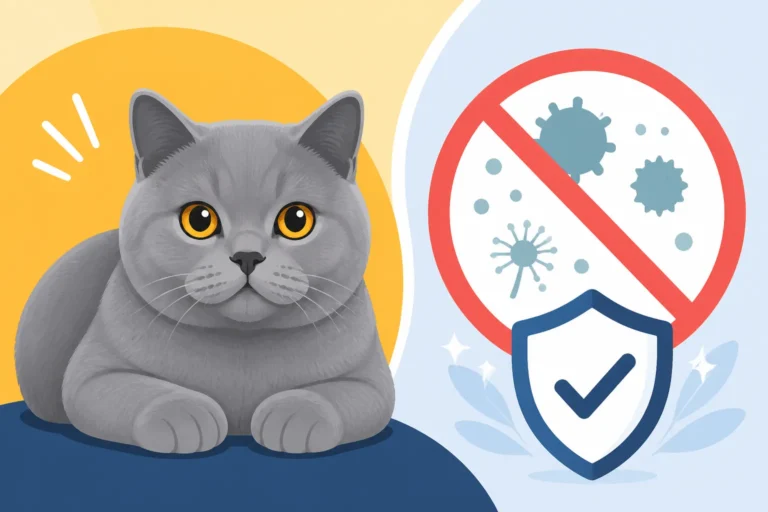
British Shorthair cats and cat allergies explained, focusing on protein triggers, dander, and why the breed is not hypoallergenic.
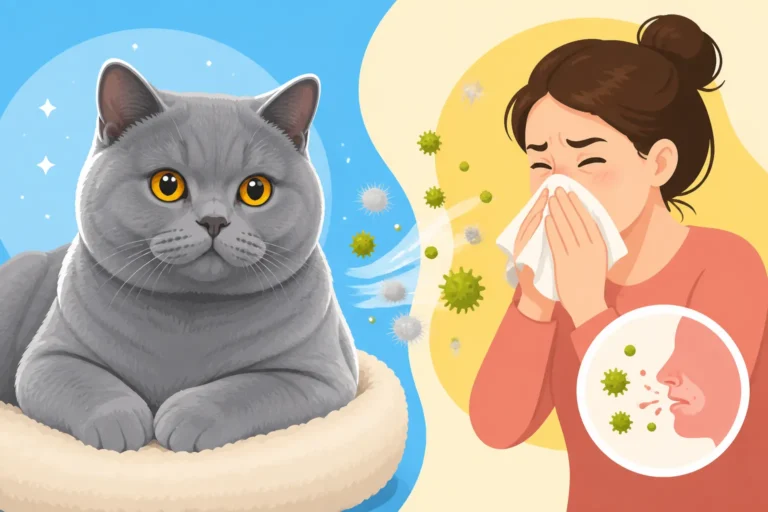
British Shorthair cats produce Fel d 1 protein in saliva and dander, showing the popular plush breed is not truly hypoallergenic.
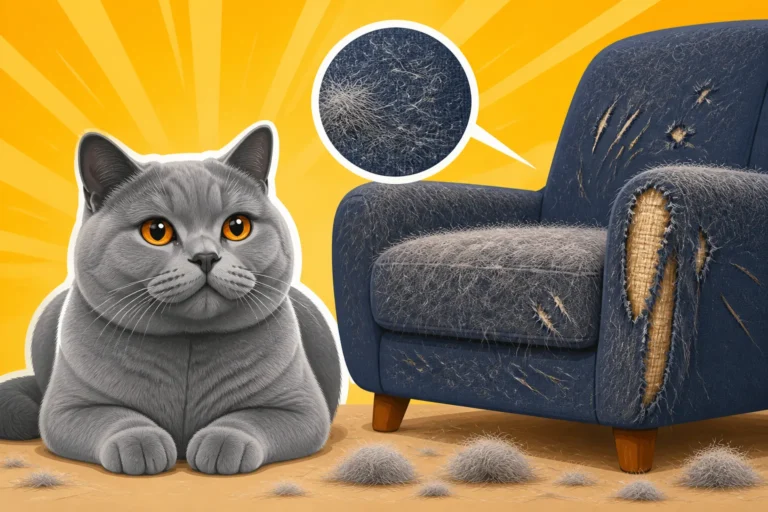
British Shorthair fur accumulation on furniture results from dense double coats and continuous year round shedding cycles.
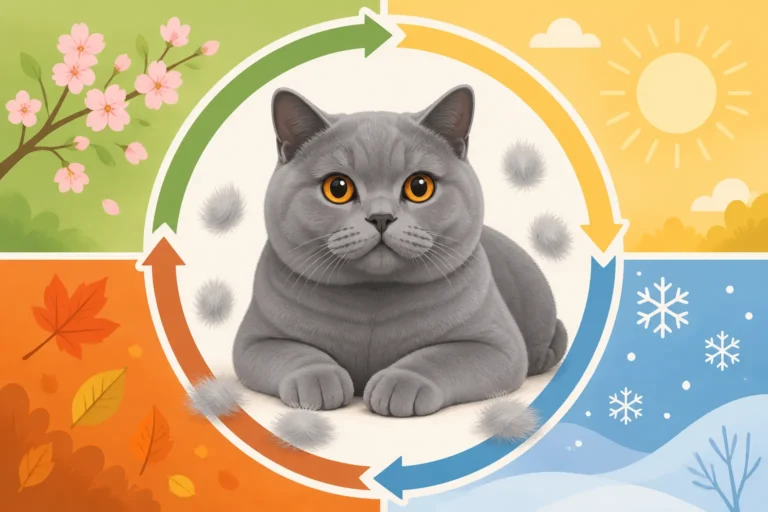
Indoor British Shorthair shedding happens all year because controlled indoor environments alter natural seasonal fur cycles.
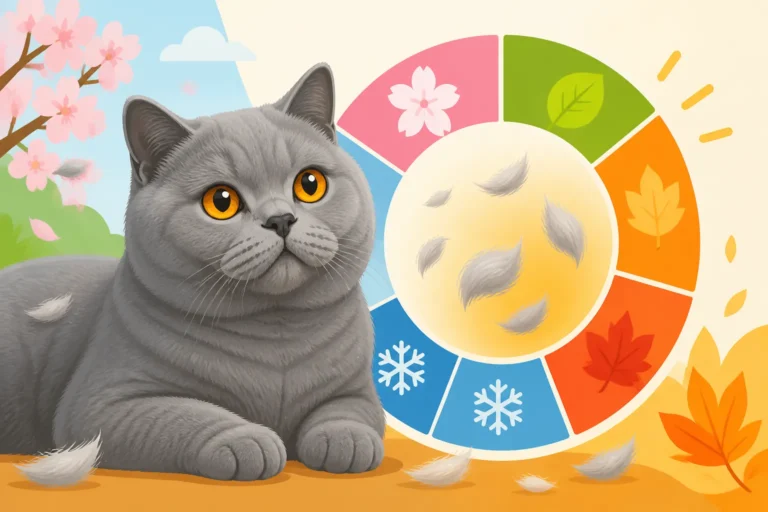
British Shorthair shedding peaks from February through April as cats lose heavy winter undercoats during spring.
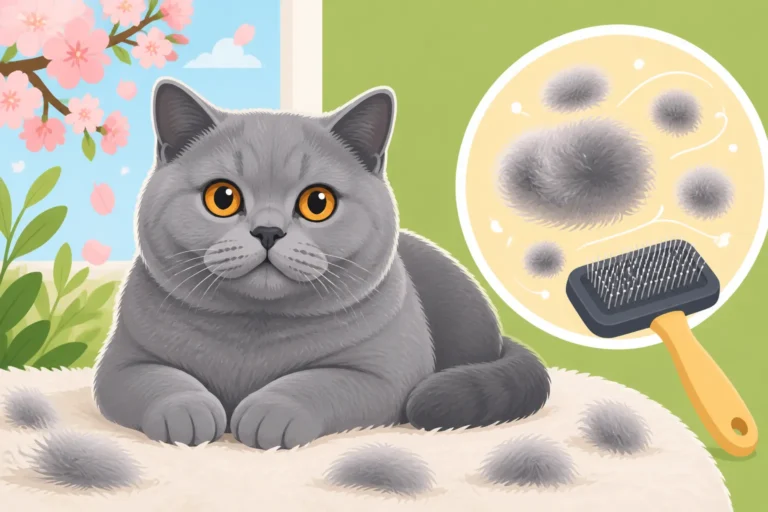
British Shorthair spring shedding causes thick winter coat loss and requires management of dense undercoat fur.
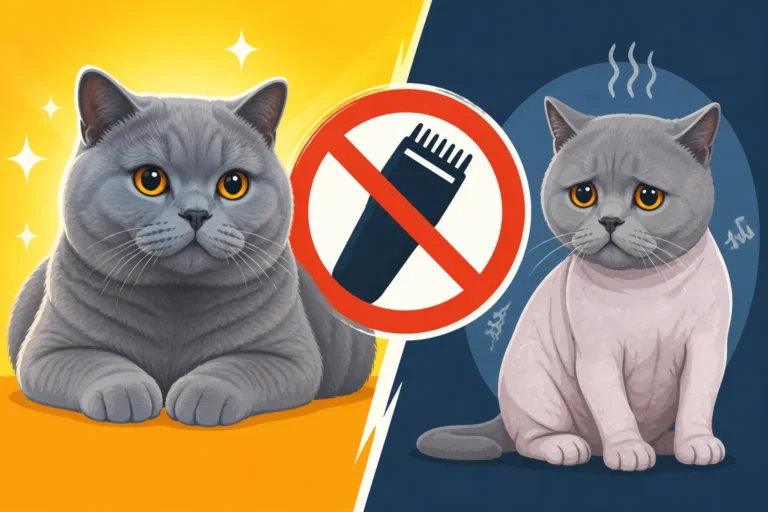
Shaving a British Shorthair disrupts its double coat, destroying natural temperature regulation and physical skin protection.
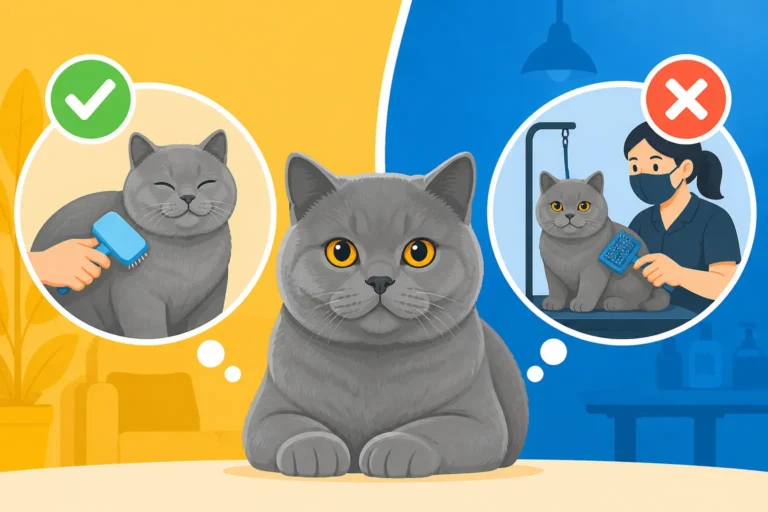
British Shorthair cats have dense double coats that trap dead hair, creating mats requiring specialized tools and potential professional grooming.
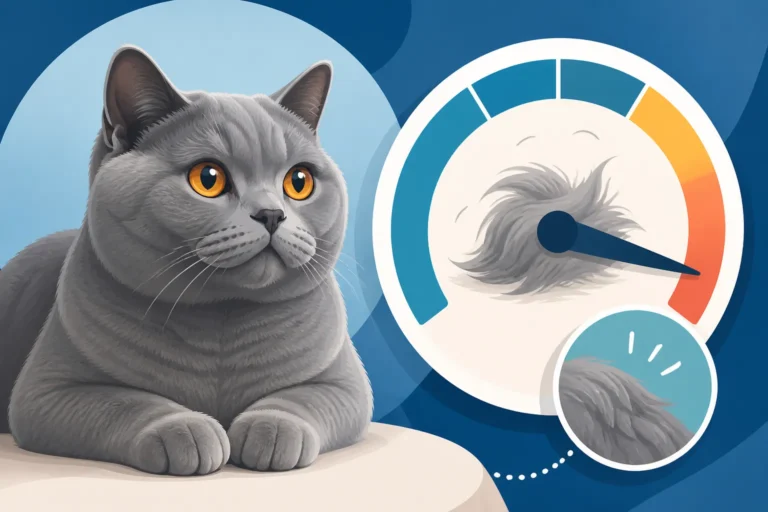
British Shorthair matting frequency depends on dense double coats, seasonal shedding cycles, and friction points.
British Shorthair matting locations and coat structures explained, highlighting common knot zones like armpits and underlegs.